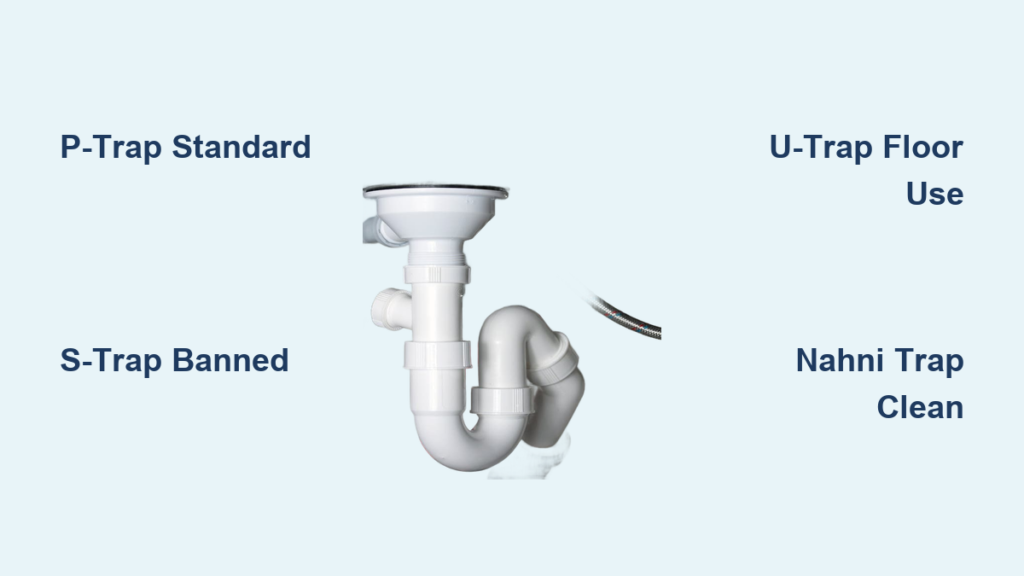
A foul smell wafting up from your sink might not be coming from the drain itself. It could be a failing trap underneath. Sink trap types vary widely, and the difference between a code-compliant P-trap and an outdated S-trap can affect your home’s safety, odor control, and plumbing performance. These small U-shaped components hold a water seal that blocks sewer gases, pests, and harmful fumes from entering your living space.
This guide walks you through every major sink trap type, explains how each works, and shows you how to identify, maintain, and replace them. Whether you’re a homeowner, renter, or DIYer, you’ll learn what to look for under your sink and when to call a plumber.
P-Trap: Modern Code-Compliant Standard
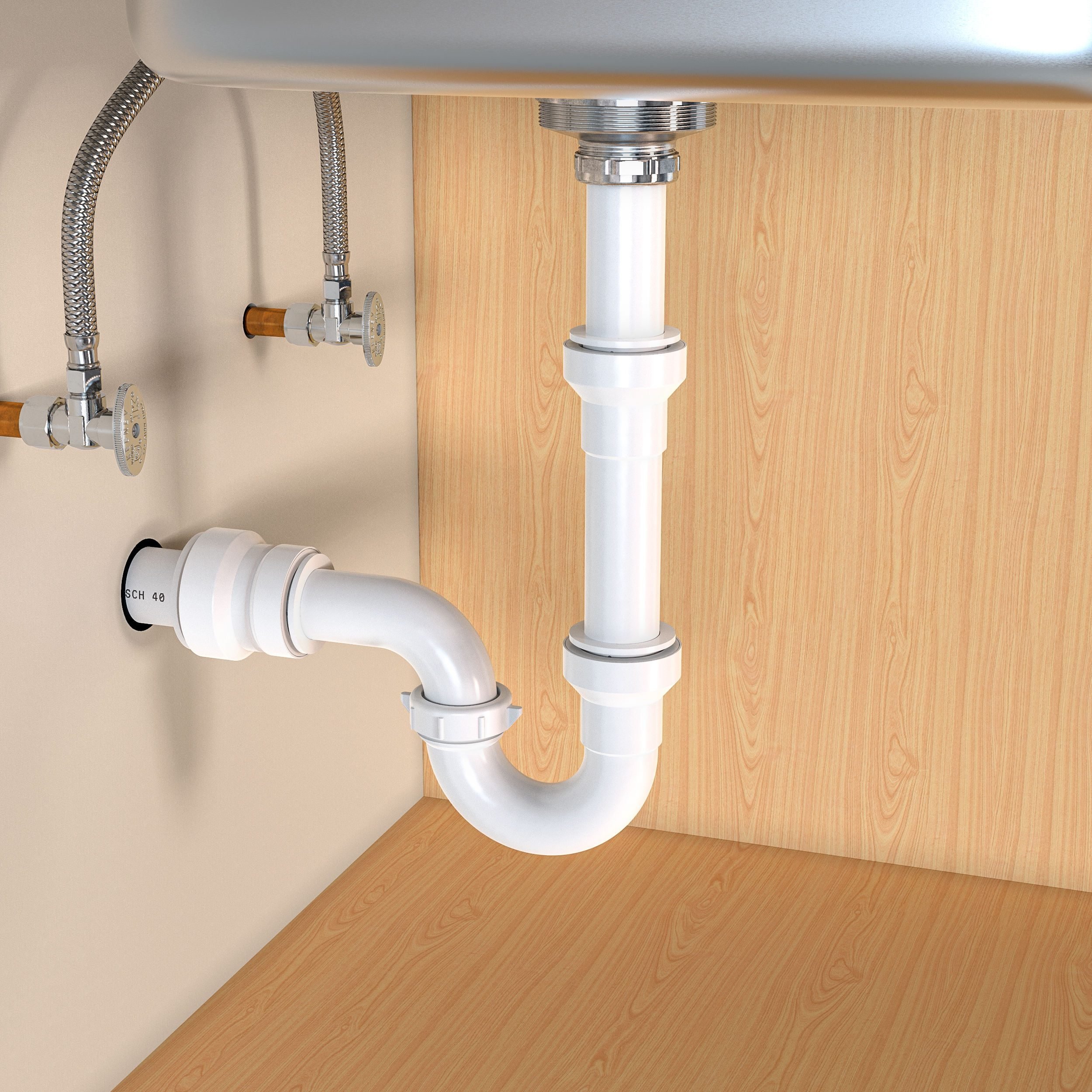
The P-trap is the most widely used trap in modern plumbing and the only type approved by current building codes for new construction. You’ll find it under bathroom sinks, kitchen basins, showers, and bathtubs.
Why P-Traps Are Code-Compliant
P-traps earned their code-approved status because they resist siphoning when properly vented. Their design features a horizontal outlet that connects to the wall or floor drain line, which reduces the negative pressure that can pull water out of the trap. This makes them far more reliable than older designs like the S-trap.
Key Benefits of P-Traps
- Reliable gas barrier: Water seal stays intact after repeated use
- Easy to clean: Slip joints allow quick disassembly
- Vent-compatible: Works seamlessly with standard venting systems
- Durable: Long service life with minimal maintenance
Visual Identification Tips
Look under your sink. If the pipe drops down, forms a U-bend, then runs horizontally into the wall, you have a P-trap. The shape resembles the letter “P” on its side. Most modern P-traps are made from PVC or chrome-plated metal.
S-Trap: Outdated and Banned

The S-trap was once common in homes built before the 1970s, but it is now prohibited in new construction due to a critical design flaw: it siphons water out of the trap during rapid drainage.
Why S-Traps Fail
The S-trap exits straight down through the floor, forming an “S” shape. When water flows quickly down the drain, it creates negative pressure that pulls the standing water out of the trap. Once the seal breaks, sewer gases can enter your home unchecked.
Risks of Using an S-Trap
- Sewer gas infiltration: Foul odors and potential health hazards
- Faster evaporation: Infrequently used sinks lose their water seal quickly
- Code violations: Not allowed in new installations or major renovations
Can You Keep an S-Trap?
Finding an S-trap in an older home isn’t an emergency, but it should be replaced during any remodeling project. If the fixture is used regularly, the water seal stays intact. For unused sinks, run water for 2 to 3 seconds every few days to refill the trap and maintain the barrier.
U-Trap: Designed for Floor and Underground Use

The U-trap serves ground-level and buried plumbing systems, making it ideal for floor drains, outdoor showers, and concealed pipeline runs.
Where U-Traps Are Installed
- Basement floor drains
- Outdoor shower drains
- Underground utility lines
- Hidden plumbing installations
How U-Traps Work
Like the P-trap, the U-trap holds a water seal in a deep U-shaped bend. Its vertical inlet and outlet allow it to sit flush with the floor or be buried underground while still maintaining a constant barrier against sewer gases and pests.
Installation Requirement: Proper Slope
To prevent sediment buildup, all connected pipes must slope correctly, typically 1/4 inch per foot. Without adequate pitch, debris accumulates and leads to clogs and poor drainage.
Multi-Trap: Multiple Fixtures, One Trap

A multi-trap connects two or more drain lines into a single trapping system, acting as both a junction point and a trap.
Best Applications
- Double kitchen sinks
- Bathroom vanities with two basins
- Laundry and utility rooms with shared drains
Space-Saving Design Advantage
Instead of installing separate traps for each fixture, a multi-trap consolidates the system. This reduces piping, saves space, and simplifies installation. It’s an ideal solution for tight under-sink areas.
Maintenance Access Is Critical
Because multiple drains feed into one trap, debris buildup is more likely. Always install an access cover or cleanout plug so you can remove hair, grease, and solids without disassembling the entire system.
Nahni Trap: Floor Drain Specialist

The Nahni trap is a specialized floor drain trap used in wet areas like bathrooms, balconies, and shower rooms.
Purpose-Built for Wet Zones
Designed to sit beneath floor-level drains, the Nahni trap maintains a permanent water seal that prevents odors, insects, and sewer gases from rising through floor openings.
Common Locations
- Bathroom floor drains
- Balcony drainage points
- Toilet connections in some regions
- Commercial wet areas
Monthly Cleaning Required
Due to its floor-level position, the Nahni trap collects hair, soap scum, and debris quickly. Remove the grate and clean the trap monthly to avoid clogs and maintain odor control.
Sink Trap Types Comparison
| Trap Type | Best For | Code Approved? | Siphoning Risk | Maintenance Level |
|---|---|---|---|---|
| P-Trap | Sinks, tubs, showers | Yes | Low (with venting) | Low |
| S-Trap | Legacy systems only | No | High | Medium |
| U-Trap | Floor and underground | Yes | Low | Medium |
| Multi-Trap | Dual sinks, shared drains | Yes | Medium | Medium (needs access) |
| Nahni Trap | Floor drains | Yes | Low | High (monthly clean) |
This comparison highlights why P-traps dominate modern plumbing: they’re reliable, code-compliant, and low-maintenance when properly installed.
Venting: Essential for P-Trap Function
Even the best P-trap fails without proper venting. Vents allow air into the drain system, preventing the negative pressure that can siphon water from the trap.
Signs of Poor Venting
- Gurgling sounds from drains
- Slow drainage after flushing
- Sewer odors near sinks
How Venting Works
A vent pipe runs from the drain line to the roof, equalizing pressure throughout the system. When water flows down the drain, air enters through the vent, preventing suction that could break the water seal.
Fixing Vent Issues
If you suspect a vent blockage (often after heavy rain or debris buildup), contact a plumber. They can inspect and clear the vent stack to restore proper trap function.
Slope Matters: U-Trap and Drain Line Angles
For U-traps and any horizontal drain pipe, slope is critical. Water must flow fast enough to carry waste but slow enough to refill the trap.
Recommended Pipe Slope
- 1/4 inch per foot for 1.5 to 2 inch pipes
- Too flat: sediment accumulates
- Too steep: water rushes past, leaving solids behind
How to Check Slope
Use a level and tape measure during installation. For existing lines, look for standing water or slow drainage, which are signs of inadequate pitch.
Maintenance Tips for Every Trap Type
Regular care keeps traps functioning and odor-free. Follow these guidelines based on your specific sink trap type.
P-Trap: Clean Every 6 to 12 Months
- Place a bucket under the trap
- Loosen slip nuts with a wrench
- Remove and flush out debris
- Reassemble and test for leaks
S-Trap: Prevent Seal Loss
- Run water for 2 to 3 seconds every 3 to 5 days in unused sinks
- Plan for replacement during renovations
U-Trap: Inspect for Sediment
- Check for slow drainage
- Ensure connected pipes maintain proper slope
- Flush with hot water monthly
Multi-Trap: Use the Access Cover
- Open the cleanout plug quarterly
- Remove accumulated debris
- Reinstall securely
Nahni Trap: Monthly Cleaning
- Remove the floor grate
- Scoop out hair and sludge
- Flush with vinegar and hot water
- Replace the grate
When to Replace a Trap
Not all traps need immediate replacement, but some do. Know when to act.
Replace Immediately
- Cracked or leaking trap
- Persistent sewer smell despite cleaning
- S-trap in a renovated space
Plan for Future Replacement
- S-trap in an older home (upgrade during remodel)
- Corroded metal traps (switch to PVC)
- Frequent clogs due to poor design
Hire a Plumber When
- You’re unsure of the trap type
- Venting issues are suspected
- New installation or major renovation is needed
- Code compliance is required
Code Compliance: What You Need to Know
Modern plumbing codes strictly regulate trap types to ensure safety and performance.
Current Code Rules
- Only P-traps are allowed in new construction
- S-traps are prohibited in new installations
- All traps must maintain a 2-inch minimum water seal
- Proper venting is mandatory
Grandfather Clause for Old Homes
Homes with existing S-traps don’t need immediate replacement unless you’re remodeling. At that point, upgrading to a P-trap is required for code compliance.
Troubleshooting Common Trap Problems
Quick diagnosis can prevent bigger issues. Use this guide to identify and fix common problems.
Sewer Odors in the Room
Likely cause: Broken water seal
Check:
– Is the trap dry? Run water to refill
– Is it an S-trap? It may have siphoned out
– Is there a crack? Inspect for leaks
Fix: Refill the trap or replace it with a P-trap.
Gurgling Drains
Cause: Negative pressure from poor venting
Fix: Ensure the P-trap is vented; call a plumber to inspect the roof vent.
Slow Drainage
Cause: Partial blockage in the trap
Fix:
– Clean the P-trap or Nahni trap
– Check slope in U-trap lines
– Use the access cover on multi-traps
Frequently Asked Questions About Sink Trap Types
What is the most common sink trap type?
The P-trap is the most common sink trap type in modern homes. It’s the only trap approved by current plumbing codes and is used under bathroom sinks, kitchen sinks, showers, and bathtubs.
Why are S-traps no longer allowed?
S-traps are banned because they siphon water out of the trap during rapid drainage, which breaks the water seal and allows sewer gases to enter the home. Modern codes require P-traps with proper venting to prevent this problem.
How do I know which trap I have?
Look under your sink. If the pipe curves down, forms a U-bend, and runs horizontally into the wall, you have a P-trap. If it curves down and exits through the floor in an S-shape, you have an S-trap. Floor drains typically use Nahni traps, while underground systems use U-traps.
How often should I clean my sink trap?
P-traps should be cleaned every 6 to 12 months. Nahni traps need monthly cleaning due to their floor-level position. Multi-traps should be inspected quarterly using the access cover.
Can I replace an S-trap with a P-trap myself?
Simple replacements may be possible for experienced DIYers, but hiring a plumber is recommended. Proper venting and code compliance are essential, and mistakes can lead to sewer gas leaks or drainage problems.
What happens if a trap dries out?
If a trap dries out, the water seal is broken and sewer gases can enter your home. To fix this, run water for a few seconds to refill the trap. In infrequently used sinks, run water every few days to prevent evaporation.
Key Takeaways for Choosing the Right Sink Trap Type
Understanding sink trap types helps you maintain a safe, odor-free home. The P-trap remains the gold standard for sinks, tubs, and showers, while U-traps and Nahni traps serve specialized roles in floor and underground applications. S-traps, though still found in older homes, should be replaced during renovations to meet code and prevent gas leaks.
Regular maintenance, like running water in unused sinks and cleaning floor drains monthly, keeps your system sealed and functioning properly. Start by identifying the trap under your sink today, then schedule a quick maintenance check or plan a replacement if needed.