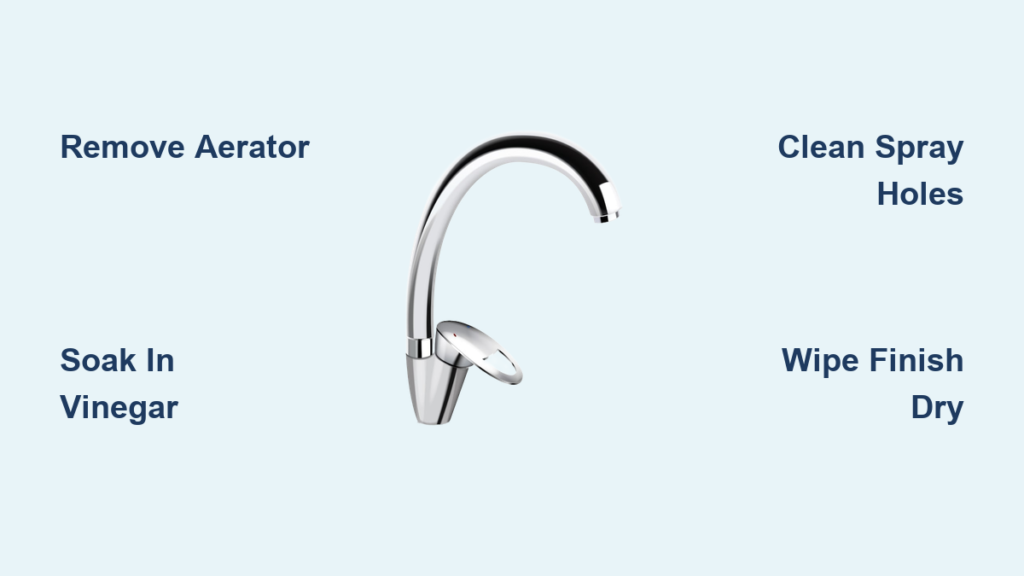
Mineral deposits, limescale, and grime creeping up your sink faucet? You are not alone. How to clean sink faucet buildup is one of the most common household maintenance questions, especially in areas with hard water. Over time, calcium, magnesium, and other minerals left behind by evaporating water create stubborn white crust, reduce water pressure, and dull your faucet is shine. Left unchecked, this buildup can lead to clogs, leaks, and premature faucet failure. The good news: most buildup can be removed quickly with simple, affordable methods using items like vinegar, baking soda, or store-bought descalers.
In this guide, you will learn how to safely dissolve mineral deposits, clean key components like the aerator and spray head, restore full water flow, and prevent future buildup with smart daily habits and long-term solutions.
Identify Faucet Buildup Early
Catching buildup early saves time and protects your fixture. The sooner you address mineral deposits, the easier they are to remove.
Visual Signs of Mineral Accumulation
Look for these warning signs on your faucet:
- White, chalky residue around the spout tip or handle base
- Cloudy film that does not wipe away with water alone
- Discoloration including yellow, brown, or black spots indicating iron or manganese deposits
- Rough texture instead of the smooth, shiny finish your faucet originally had
Functional Problems to Watch For
Buildup does not just look bad. It directly affects how your faucet performs.
- Reduced water flow or noticeably weak stream
- Sputtering or pulsing from the aerator
- Uneven spray pattern in pull-down faucets
- Stiff or sticky handles caused by mineral-packed joints
If your faucet sprays sideways or takes forever to fill a pot, buildup is likely the culprit.
Gather Safe Cleaning Tools
Avoid damaging your faucet with improper tools or harsh cleaners. Using the right supplies ensures you remove buildup without scratching finishes or voiding warranties.
Essential Non-Abrasive Tools
Stock these items before starting your cleaning project:
- Microfiber cloth for wiping and polishing
- Soft-bristled toothbrush ideal for crevices
- Wooden toothpick to dislodge debris without scratching
- Plastic bag and rubber band for vinegar soaks
- Small bowl or container for soaking small parts
Never use steel wool, abrasive pads, or metal scrapers. These tools scratch finishes permanently and can damage protective coatings.
When to Turn Off Water Supply
You only need to shut off water when removing parts like the aerator or spray head. Turn off the under-sink valves before detaching any component. Open the faucet to release remaining pressure. Place a towel in the sink to catch any dropped parts. For surface cleaning only, no water shut-off is needed.
Remove Mineral Buildup with Vinegar Soak
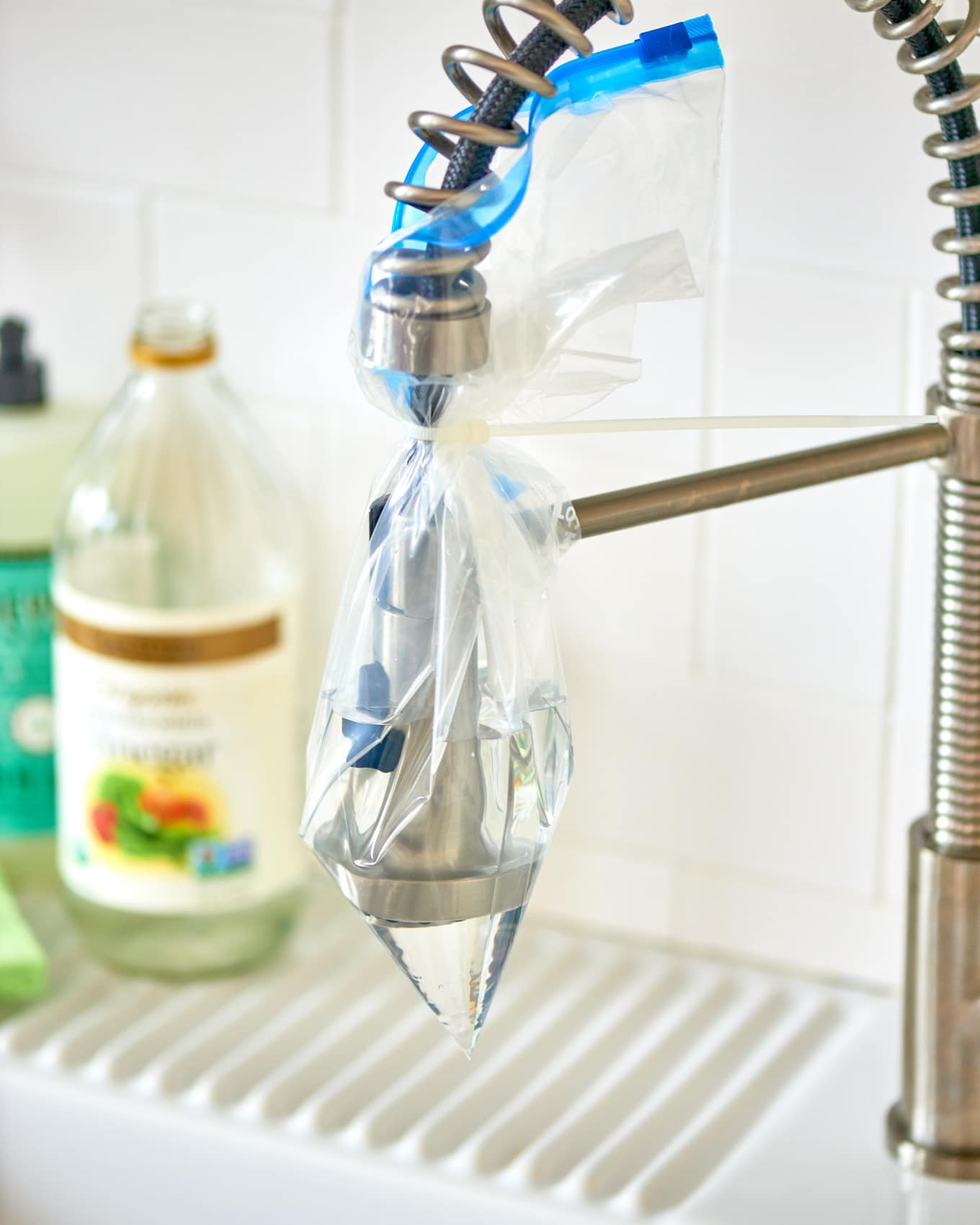
Vinegar dissolves limescale naturally and safely. The acetic acid in white vinegar reacts with calcium carbonate to break down stubborn deposits without damaging your faucet finish.
Apply Vinegar Using the Bag Method
This technique works best for faucet spouts and spray heads.
- Fill a plastic bag with undiluted white vinegar
- Place the bag over the faucet tip, ensuring affected areas are submerged
- Secure the bag with a rubber band or twist tie
- Let it soak. Light buildup needs 30 minutes. Heavy crust requires 1 to 2 hours. Extreme cases can soak overnight
- Remove the bag and scrub gently with a toothbrush
- Rinse thoroughly and dry with a microfiber cloth
Bubbling during the soak is a good sign. It means vinegar is actively reacting with calcium deposits.
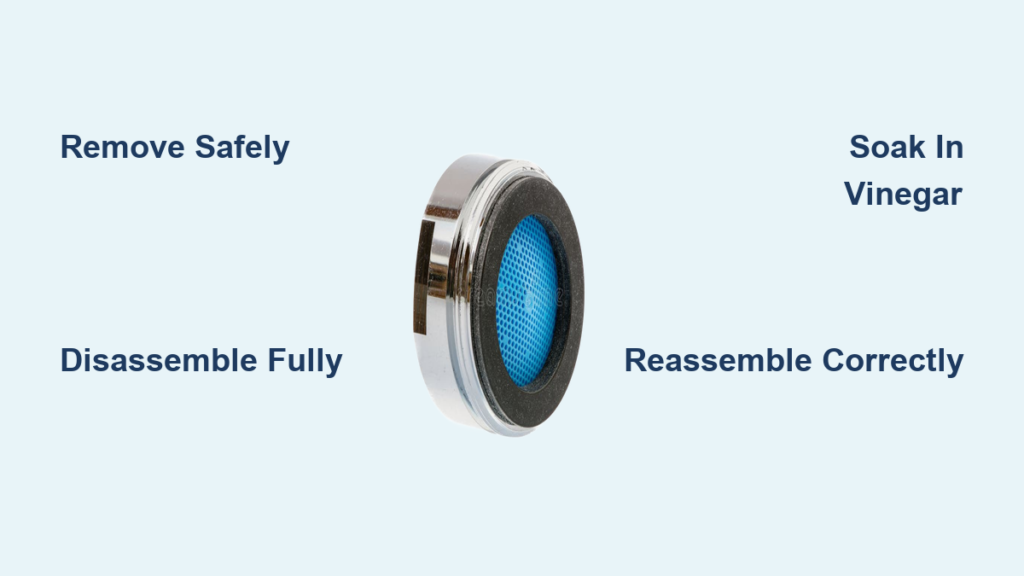
Clean the Aerator Separately
The aerator traps the most debris and is the most common cause of low water pressure.
- Unscrew the aerator from the faucet tip by hand. If it is stuck, wrap pliers in cloth for grip
- Disassemble if possible by removing the screen, gasket, and flow restrictor
- Soak in undiluted vinegar for 30 to 60 minutes
- Use a toothbrush to scrub the mesh clean
- Rinse under running water until the flow runs clear
- Reassemble and hand-tighten back onto the faucet
Flow restored? You have just fixed the most common cause of reduced water pressure.
Tackle Tough Residue with Baking Soda Paste

For stubborn, caked-on deposits that vinegar alone cannot shift, baking soda adds scrubbing power. The foaming reaction helps lift away baked-on minerals.
Make a Foaming Cleaning Paste
- Mix equal parts baking soda and white vinegar in a small bowl
- Stir until you have a thick paste consistency
- Apply the paste to areas with visible crust, focusing on handle bases, spout joints, and the faucet neck
- Let sit for 15 to 30 minutes
- Scrub gently with a soft toothbrush
- Rinse thoroughly with clean water
Rinse and Dry Completely
Always flush away all residue with clean water. Dry the faucet completely with a microfiber cloth to prevent new water spots from forming. Leaving the surface wet allows minerals to redeposit.
Caution: Test baking soda paste on an inconspicuous area first if your faucet has a matte, brushed, or unlacquered finish.
Use Commercial Cleaners for Fast Results
For heavy buildup or when you need fast results, commercial descalers work quickly. These products are stronger than vinegar but require careful handling.
Choose the Right Descaler
CLR Calcium, Lime and Rust Remover works fast on stubborn deposits:
- Mix equal parts CLR and water
- Apply with a toothbrush to affected areas
- Rinse immediately. Do not let it sit on the finish
- Dry thoroughly with a microfiber cloth
Other safe options include Formula 409, Windex, and Fantastik. All are approved for use on Delta faucets when used as directed.
Cleaners to Avoid
Never use these products on your faucet:
- Bleach or ammonia-based cleaners
- Soft Scrub or similar abrasive creams
- Scrubbing Bubbles bathroom cleaner
- Green Scotch-Brite heavy-duty pads
These can corrode finishes, void warranties, and damage seals.
Clean Spray Holes on Pull-Down Faucets
Modern pull-down faucets often feature special spray hole designs that make cleaning easier. Knowing your faucet type saves time.
Wipe Rubber Nozzles with Your Finger
Many newer models like Delta Touch-Clean faucets use soft rubber spray holes. Simply rub with your fingertip to push out mineral buildup. No scrubbing or chemicals needed. This feature alone can cut cleaning time by 80 percent.
Deep Clean Non-Rubber Spray Holes
For older models without rubber nozzles:
- Remove the spray head if detachable
- Soak in vinegar for 1 to 2 hours
- Use a toothpick to clear individual holes
- Reattach and test the spray pattern
Follow a Maintenance Cleaning Schedule
Preventing buildup is easier than removing it. A consistent maintenance routine keeps your faucet flowing freely and looking shiny.
Daily: Wipe Faucet Dry
After each use, dry the spout and handles with a microfiber cloth. This takes just 10 seconds but prevents 90 percent of evaporation-driven mineral deposits.
Weekly: Full Surface Clean
- Spray the entire faucet with dish soap and water mix or Formula 409
- Wipe all surfaces including the base and crevices
- Rinse and dry completely
This removes light film and kills germs on high-touch handles.
Monthly: Clean the Aerator
In homes with hard water above 7 gpg, clean the aerator monthly. Soak it in vinegar for 30 to 60 minutes. Replace if damaged or if flow remains low after cleaning. New aerators cost only 5 to 15 dollars.
Prevent Future Buildup Long-Term
Stopping the cycle of cleaning and re-buildup requires addressing the root cause: hard water.
Install a Water Softener
The best long-term solution removes calcium and magnesium through ion exchange. A whole-house water softener protects all plumbing, not just faucets. It also reduces soap scum and improves lather.
Use a Point-of-Use Filter
For renters or targeted treatment, install a filter under the sink. This reduces mineral content at one faucet only. It is more affordable than a full softener.
Choose Smart Faucet Features
When replacing your faucet, look for these low-maintenance options:
- Touch-Clean spray holes that wipe clean instantly
- SpotShield finish that resists water spots and fingerprints
- Brilliance finish that resists corrosion and tarnish
These features last longer and require less cleaning.
Know When to Replace Instead of Clean
Sometimes cleaning is not enough. Knowing when to replace saves money and frustration.
Replace the Aerator First
A new aerator costs only 5 to 15 dollars and fixes 80 percent of flow issues. Available in laminar, aerated, or spray types. If a new aerator does not restore proper flow, the problem lies deeper in the faucet.
Signs You Need a Full Faucet Replacement
Replace your faucet if you see:
- Cracks or corrosion in the spout or base
- Persistent leaks even after cartridge replacement
- Outdated design with hard-to-clean crevices
- Frequent clogs despite regular maintenance
Modern faucets save water, last longer, and are much easier to maintain.
Recommended Tools and Products
Use what works and avoid what damages. Here is your cleaning arsenal.
| Product | Best For | Notes |
|---|---|---|
| White vinegar | All mineral removal | Non-toxic, effective, cheap |
| Baking soda paste | Stubborn crust | Test on delicate finishes first |
| CLR | Heavy limescale | Rinse immediately, wear gloves |
| Formula 409 | Routine disinfecting | Safe for most finishes |
| Microfiber cloth | Wiping and drying | Prevents streaks and spots |
| Soft toothbrush | Detail cleaning | Reuse an old one |
| Wooden toothpick | Debris removal | Will not scratch metal |
Protect Your Faucet Warranty
Proper maintenance protects your investment and keeps your warranty valid.
Follow Manufacturer Guidelines
Most faucet brands require:
- Non-abrasive cleaners only
- No bleach or ammonia
- Immediate rinsing after any chemical use
Using the wrong cleaners can void your warranty.
Extend Faucet Life by 5 to 10 Years
With proper care, a well-maintained faucet in hard water can outlast cheap replacements. Clean regularly, dry after use, use soft tools, and consider a water softener if your water tests above 7 gpg.
Frequently Asked Questions About Sink Faucet Buildup
How often should I clean my faucet aerator?
Clean your aerator every 1 to 3 months. In homes with hard water above 7 gpg, clean it monthly to prevent buildup from restricting flow.
Can I use vinegar on all faucet finishes?
White vinegar is safe on chrome, stainless steel, and most finishes. Avoid using vinegar on natural stone, aluminum, gold-plated fixtures, or unlacquered brass. Always test on an inconspicuous area first.
Why does my faucet still have low pressure after cleaning?
If cleaning the aerator does not restore pressure, the issue may be deeper in the faucet cartridge or valve. Try replacing the aerator first. If that fails, the faucet may need replacement.
What is the fastest way to remove heavy limescale?
For heavy limescale, use CLR mixed 1 to 1 with water. Apply with a toothbrush, let sit for 1 to 2 minutes, then rinse immediately. Do not leave it on longer than recommended as it can damage finishes.
Does drying my faucet really prevent buildup?
Yes. Wiping your faucet dry after each use prevents the evaporation that leaves behind mineral deposits. This single habit prevents up to 90 percent of buildup.
Should I hire a plumber for faucet buildup?
Most buildup is easily handled with DIY methods. Hire a plumber only if you have tried cleaning and replacing the aerator but still have low pressure, leaks, or damage that suggests internal issues.
Key Takeaways for Cleaning Sink Faucet Buildup
Keeping your sink faucet clean and functional requires the right approach. First, identify buildup early by watching for white residue, reduced flow, or sputtering. Vinegar soaks work wonders for most mineral deposits and are safe for all finishes. Second, clean your aerator every 1 to 3 months. This small component causes most pressure problems and is easy to remove and soak. Third, dry your faucet after every use. This 10-second habit prevents the evaporation that leads to new mineral deposits. Finally, consider long-term solutions like water softeners or low-maintenance faucet features if you live in a hard water area. By following these steps, you will keep your sink faucet flowing strongly, looking shiny, and working properly for years to come.