Picking the wrong kitchen sink can cost you years of frustration. From constant splashing to stubborn stains, a poor choice turns a daily task into a daily annoyance. With dozens of materials, sizes, and styles on the market, knowing how to choose a kitchen sink requires more than just browsing a showroom.
This guide walks you through every decision point. You’ll learn how to compare materials, pick the right configuration, and match your sink to your countertop and faucet. By the end, you’ll have a clear checklist to find a sink that fits your kitchen, your cooking style, and your budget.
Compare Kitchen Sink Materials
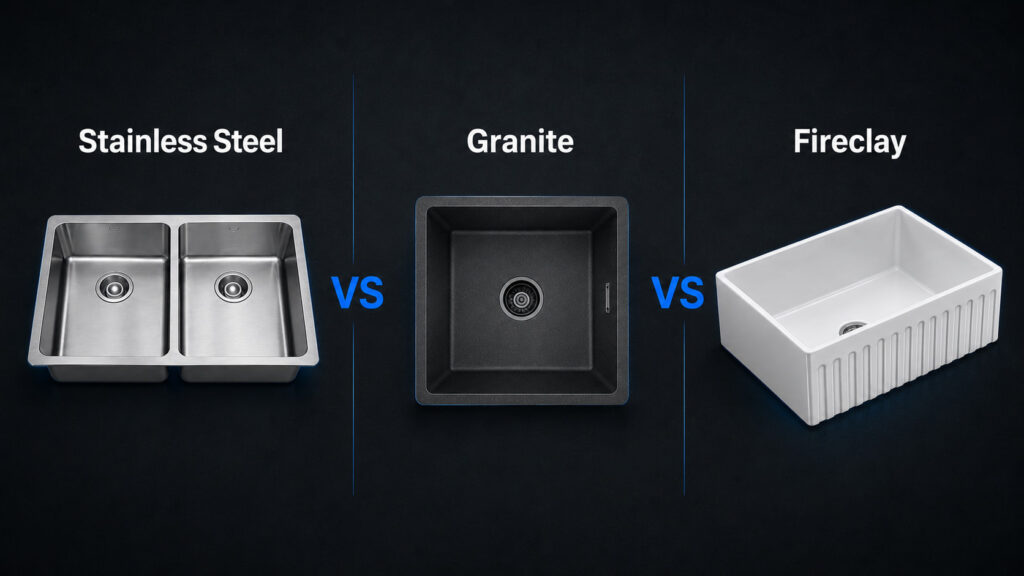
Your sink’s material determines how it looks, how long it lasts, and how much care it needs. Here’s a breakdown of the most common options.
Stainless Steel
Stainless steel is the most popular choice for good reason. It is durable, affordable, and matches nearly any kitchen style. Most quality sinks use 16- to 18-gauge steel. A lower gauge number means thicker, stronger metal.
These sinks handle heat, stains, and heavy use without damage. The non-porous surface resists bacteria and wipes clean with soap and water. Many models include sound-dampening pads to reduce noise. The trade-off is that polished finishes can show water spots and fine scratches over time.
Best for: Busy kitchens, modern designs, and homeowners who want low upkeep.
Fireclay
Fireclay sinks are made by firing clay at extremely high temperatures, then coating it with a smooth, glossy glaze. The result is a heavy, chip-resistant sink with a timeless, farmhouse-inspired look.
These sinks handle heat, stains, and discoloration well. However, the weight (often over 100 pounds) means your cabinets must be strong enough to support them. Installation usually requires a professional. The glaze can also crack under heavy impact, so care is needed.
Best for: Traditional, rustic, or farmhouse-style kitchens.
Cast Iron
Cast iron sinks feature a thick iron core coated with a porcelain enamel finish. They come in a wide range of colors, making them ideal for adding a bold or vintage touch to your kitchen. The enamel is highly resistant to heat and scratches when cared for properly.
The main drawback is chipping. If you drop a heavy pot, the enamel can crack and expose the iron underneath, leading to rust. These sinks are also very heavy and need strong cabinetry. Avoid abrasive cleaners and never leave standing water in the bowl for long periods.
Best for: Homeowners who want color variety and a classic look.
Composite Granite
Composite granite sinks combine crushed granite with acrylic resin to create a tough, stone-like surface. They resist scratches, stains, and heat better than most materials. The non-porous finish also blocks bacteria and does not need sealing.
These sinks are quieter than stainless steel and come in colors that mimic natural stone. Cleaning is simple with mild soap and a soft cloth. Very dark or very light shades may show wear over time, and bleach-based cleaners can discolor the surface.
Best for: Modern kitchens and families who want style with minimal maintenance.
Understand Sink Configurations

The number and shape of bowls affect how you cook, clean, and organize your space.
Single Bowl Sinks
A single large bowl gives you maximum space for washing big pots, baking sheets, or even rinsing a small pet. It works well in compact kitchens where every inch matters. With no divider, cleanup is faster and large items slide in easily.
The downside is no multitasking. You cannot wash and rinse at the same time, which can slow down meal prep. Adding a drying rack or cutting board that fits over the bowl helps boost function.
Best for: Small kitchens and cooks who use oversized cookware.
Double Bowl Sinks
Double bowl sinks offer flexibility. Use one side for washing and the other for rinsing, or dedicate one to prep and the other to cleanup. Bowls can be equal in size or split unevenly (1/3 and 2/3) for more prep space.
This setup suits most households and fits standard 33-inch or wider base cabinets. Make sure your cabinet interior is at least 36 inches wide for a comfortable fit.
Best for: Everyday cooking and families with diverse kitchen needs.
Triple Bowl Sinks
Triple bowl sinks add a small third compartment, often used for soaking dishes, food prep, or a built-in soap dispenser. They offer excellent organization and are common in larger kitchens with deep cabinets.
The trade-off is reduced counter space. The middle bowl is usually too small for large items, so it is best for staging rather than heavy washing.
Best for: Large kitchens and serious home cooks.
Apron Front (Farmhouse) Sinks
Apron front sinks extend past the edge of the cabinet, creating a bold, statement look. Most are deeper than standard sinks, which improves ergonomics and reduces back strain. They come in single or double bowl designs.
Because the front is exposed, scratches and stains are more visible. They also require custom cabinetry or modifications during installation. Despite this, they add major character to any kitchen.
Best for: Open-concept kitchens and design-focused remodels.
Choose the Right Installation Type
How your sink attaches to the countertop affects both appearance and cleanability.
Top-Mount (Drop-In) Sinks
Top-mount sinks drop into a cutout in the countertop, with the rim resting on the surface. They are the easiest to install and work with almost any countertop material, including laminate. They are also the most affordable and simple to replace.
The rim creates a slight ledge that can collect crumbs and water, making cleaning a bit harder. The seam between sink and counter can also trap bacteria over time.
Best for: DIY projects, budget remodels, and laminate countertops.
Undermount Sinks
Undermount sinks attach beneath the countertop for a clean, seamless look. You can wipe spills directly into the sink with no edges to catch debris. This style works best with stone, quartz, or concrete counters.
Installation is more complex and requires a professional. The seal must be watertight to prevent water damage to the cabinet below. Undermount sinks are not compatible with laminate counters.
Best for: High-end kitchens and stone countertops.
Flush Mount (Zero-Radius) Sinks
Flush mount sinks sit perfectly level with the countertop surface, creating a sleek, modern look. They are welded or bonded directly to materials like quartz or solid surface. Cleaning is effortless, as you can sweep crumbs straight into the bowl.
Installation is precise and usually done during countertop fabrication. This option is limited to specific countertop materials.
Best for: Contemporary kitchens with quartz or solid surface counters.
Integrated Sinks
Integrated sinks are molded from the same material as the countertop, forming a single seamless unit. This eliminates seams entirely, making them the most hygienic option. They are common in solid surface or concrete kitchens.
They are expensive and difficult to modify once installed. Repairs require professional refinishing, so plan carefully before choosing this style.
Best for: Custom builds and minimalist, modern designs.
Match Sink Size to Your Space

The right dimensions keep your sink functional and comfortable to use.
Standard Sink Dimensions
Most kitchen sinks range from 22 to 33 inches in length. A 30-inch double bowl fits standard 36-inch base cabinets. Always measure your cabinet interior before buying. Do not assume all “standard” sinks match your space.
Depth typically runs 7 to 10 inches. Deeper bowls reduce splashing and fit tall cookware, but they can cause back strain if the counter sits at a standard height.
Finding the Right Depth
A depth of 9 to 10 inches works for most people. It holds large pots and minimizes splash without forcing you to bend too far. If you are shorter or have mobility concerns, consider a slightly shallower bowl.
A sloped bottom improves drainage and prevents standing water. If possible, test the sink in a showroom to check ergonomics, or read user reviews for comfort feedback.
Pay Attention to Gauge and Thickness
For stainless steel sinks, gauge refers to metal thickness. A lower gauge means thicker, stronger steel.
A 16-gauge sink is heavier, more durable, and resists dents and vibration. An 18-gauge sink is lighter and more affordable but may feel flimsier. Look for undercoated sound insulation to reduce noise. Avoid sinks with a gauge of 20 or higher, as they tend to be noisy and damage easily.
Plan for Faucet and Drain Compatibility

Your sink must work with your faucet and plumbing setup to avoid leaks and installation headaches.
Faucet Hole Count
Most sinks come with 1 to 4 pre-drilled holes for faucets, sprayers, or soap dispensers. The standard is 3 holes: one for the spout and two for handles. If you want a single-hole faucet, confirm the sink supports it. Some modern or undermount sinks have no holes, meaning the faucet must mount through the countertop.
Check the faucet’s reach as well. The spout should extend far enough over the bowl to prevent splashing.
Drain and Disposal Fit
Standard drain openings measure 3.5 inches and fit most garbage disposals. Some sinks offset the drain to free up space for a large basket strainer. If you plan to add a disposal, confirm the sink’s drain layout works with your plumbing. Specialty sinks like fireclay may have unique setups that limit disposal options.
Choose a Finish That Holds Up
The finish affects how your sink ages and how much cleaning it needs.
A brushed or satin finish hides water spots and minor scratches well, making it ideal for busy kitchens. A polished finish looks sleek and shiny but shows fingerprints and smudges easily. It works best in low-traffic kitchens or display spaces.
To prevent damage, avoid leaving wet sponges or metal pans in the sink. Rinse after using acidic foods like lemons or tomatoes, and clean regularly with mild soap. A sink grid adds extra protection against scratches.
Balance Budget and Long-Term Value
Kitchen sinks range from under $100 to over $2,000. Material, brand, and installation needs drive the price.
Stainless steel delivers the best value with strong durability at a low cost. Fireclay and cast iron cost more but add resale value and timeless style. Composite granite sits in the mid-range and offers excellent wear resistance.
Save on top-mount stainless steel in standard sizes if you are on a budget or updating a rental. Splurge on undermount fireclay or composite sinks for a primary home where you plan to stay long term. Always include installation costs in your budget, since heavy or undermount sinks often require professional help.
Frequently Asked Questions About Choosing a Kitchen Sink
What is the most durable kitchen sink material?
Composite granite and fireclay are among the most durable options. Both resist scratches, stains, and heat well. Stainless steel is also highly durable when you choose a lower gauge (16 or 18).
What size kitchen sink do I need?
Measure your base cabinet first. Most standard sinks fit a 36-inch cabinet, with the sink itself measuring 30 to 33 inches. Smaller kitchens may use 22- to 27-inch sinks to save counter space.
Are undermount sinks better than drop-in sinks?
Undermount sinks offer easier cleanup and a sleeker look, but they cost more and require professional installation. Drop-in sinks are more affordable and work with any countertop, including laminate.
How deep should a kitchen sink be?
A depth of 9 to 10 inches is ideal for most users. It reduces splashing and fits large pots without being too deep to reach comfortably.
Can I install a garbage disposal in any sink?
Most sinks with a standard 3.5-inch drain opening support garbage disposals. Some specialty sinks, like certain fireclay models, have unique drain setups that may not fit standard disposals. Always check the sink’s specifications before buying.
What is the best kitchen sink for a small kitchen?
A single bowl sink in a compact size (22 to 27 inches) maximizes space in a small kitchen. Top-mount styles are easier to install and more affordable for tight layouts.
Final Thoughts on Choosing the Right Kitchen Sink
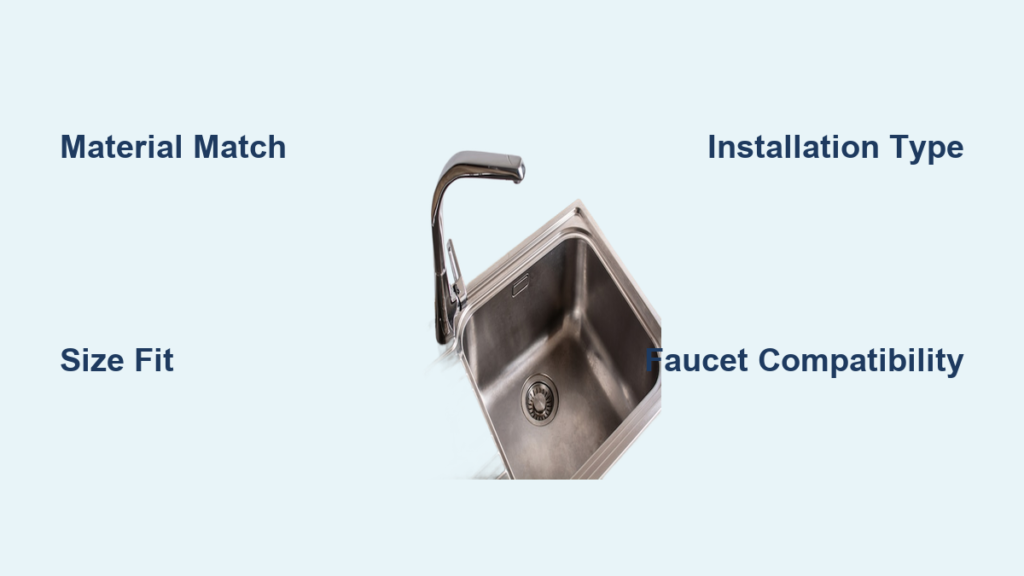
Choosing a kitchen sink comes down to matching your habits to your space. Start with material, since it drives durability, maintenance, and cost. Then pick a configuration that fits how you cook and clean. Make sure the installation type works with your countertop, and confirm compatibility with your faucet and drain setup.
Measure your cabinet before you shop, and always factor in installation costs. A well-chosen sink lasts for years and makes daily tasks easier. Take your time, compare your options, and invest in a sink that fits both your kitchen and your lifestyle.