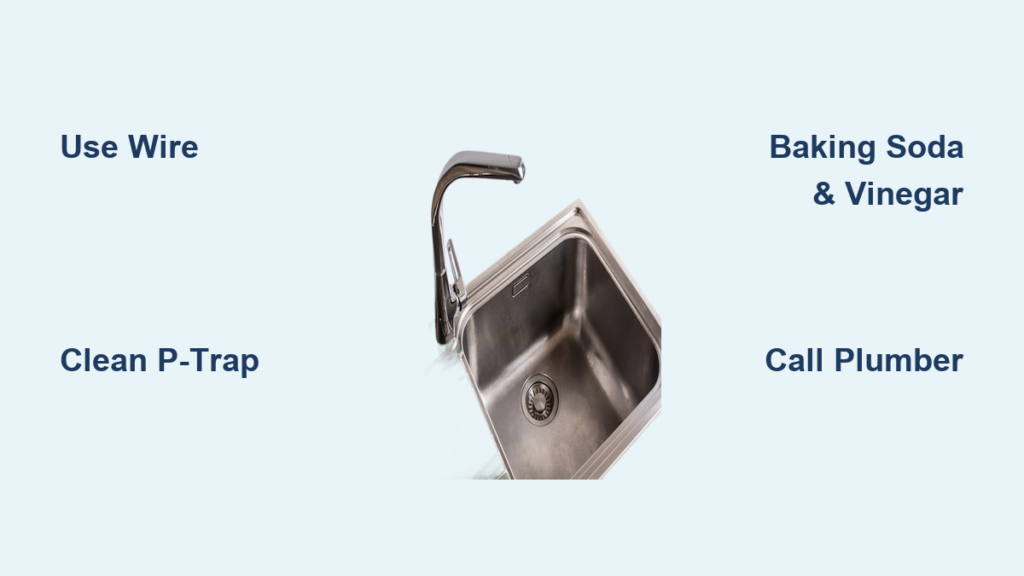
You turn on the faucet, wash your dishes, and—nothing. Water pools in both sides of your kitchen sink, refusing to drain. A clogged kitchen sink is one of the most common household plumbing issues, but it doesn’t have to mean a call to the plumber. Most blockages are caused by everyday culprits: grease, food scraps, coffee grounds, and fibrous leftovers like pasta or noodles. The good news? With a few simple tools and the right approach, you can clear the clog in minutes, often without harsh chemicals.
When water backs up on both sides of a double sink, the clog is likely in the shared pipe or P-trap, not the garbage disposal. This guide walks you through three proven methods to unclog your kitchen sink: using a wire to break up soft clogs, cleaning the drain trap, and applying a natural baking soda and vinegar solution. You’ll also learn when to call a pro and how to prevent future backups. Whether you’re dealing with a slow drain or a full stoppage, these steps will get your sink flowing again, safely and affordably.
Use a Wire to Break Up the Clog
This method works best when the blockage is soft or fibrous, such as leftover spaghetti, mashed potatoes, or grease buildup. If water is backing up on both sides of the sink, the clog is likely in the shared drain pipe, just past where the two sink drains connect. A simple wire can often dislodge it.
Insert Wire into the Drain
Grab a long, flexible wire like a straightened coat hanger or a piece of solder. Straighten it completely so it slides smoothly into the drain. If you have pliers, use them for better control.
Locate the drain on the side where the two pipes join, usually the right side if your disposal is on the left. Insert the wire into the drain opening and begin pushing it down gently.
Twist and Push Through the Blockage
As you push, twist the wire to help it navigate bends and break apart debris. When you feel resistance, you’ve hit the clog. Keep working the wire back and forth, without forcing it, to loosen the material.
Watch the water level in the sink. As the clog breaks up, you’ll see the water start to drain. Once it drops completely, run hot water from the faucet to flush out any remaining particles through both sides.
Pro Tip: If the wire doesn’t clear the drain, the clog may be deeper. Move on to cleaning the P-trap.
Clean the Drain Trap and Wall Tube

If the wire method fails, the blockage is likely trapped in the P-trap (the curved pipe under the sink) or the wall tube (the vertical pipe leading up from the trap). Removing and cleaning these components often solves the problem.
Prepare for Water Drainage
Place a bucket or bowl directly under the P-trap to catch any standing water. Even if the sink looks empty, the trap holds water to block sewer gases, so expect a quart or two to spill out.
Loosen and Remove the Slip Nuts
Use your hands to unscrew the slip nuts connecting the trap to the wall tube and the sink tailpiece. If they’re tight, use pliers or a wrench, but don’t over-tighten when reassembling, as this can crack plastic fittings.
Once loose, carefully remove the P-trap and wall tube. Lay them on a towel or in the sink for inspection.
Clear Debris from the Pipes
Look inside both pipes. Common finds include noodles, coffee grounds, grease clumps, or food particles. Use your fingers, a screwdriver, or the same wire to scrape out gunk from the interior surfaces.
Pay special attention to the curved section of the P-trap, since this is where debris collects. Rinse both parts with hot water to ensure they’re fully clear.
Reassemble the Trap System
Reconnect the pipes in reverse order: slide the wall tube into the trap, then reattach both ends with the slip nuts. Hand-tighten only; snug is enough. Over-tightening can damage PVC or metal joints.
Once secure, turn on the faucet and let water run through both sides. If it drains freely, the clog is gone.
Warning: If water still backs up after cleaning the trap, the blockage is deeper in the main drain line. Skip to professional help.
Apply Baking Soda and Vinegar
This natural method is ideal for minor clogs, grease buildup, or preventive maintenance. It avoids harsh chemicals, protects your pipes, and uses ingredients you likely already have. The foaming reaction between baking soda and vinegar helps dissolve organic gunk coating the inside of your drain.
Flush with Boiling Water First
Start by pouring one pot of boiling water down the drain. This softens surface-level grease and prepares the pipe for deeper cleaning.
Note: Do not use boiling water if you have PVC pipes and suspect a complete blockage, since pressure from trapped steam can damage joints. In that case, use very hot tap water instead.
Add Baking Soda
Pour 1 cup of baking soda directly into the drain. Let it sit for 5 to 10 minutes so it can penetrate grease and debris.
Pour in White Vinegar
Slowly add 1 cup of white vinegar. The mixture will immediately begin to fizz and foam, which is the chemical reaction breaking down grime. Let it bubble for another 5 to 10 minutes.
Pro Tip: Cover the drain with a plug or cloth to contain the reaction and increase pressure, boosting cleaning power.
Finish with Hot Water Flush
After the fizzing stops, pour a second pot of boiling water down the drain to flush away loosened debris. Then, run hot tap water for 5 minutes to clear any residue from the entire pipe system.
Use Monthly for Prevention
Even if your sink drains well, use this method once a month to prevent buildup. It’s safe for all pipe types and keeps drains flowing smoothly.
Time Required: Under 15 minutes
Best For: Light clogs, grease film, routine maintenance
When to Call a Plumber
Some clogs are beyond DIY fixes. If you’ve tried all three methods and water still won’t drain, it’s time to call a professional.
Clog Is in the Main Drain Line
If the P-trap is clean but water backs up, the blockage is likely in the main drain line, deep in the plumbing system. This requires specialized tools.
Use of a Drain Snake or Hydro-Jetting
Plumbers use a drain snake (plumber’s snake) to reach clogs 20–50 feet down the line. For severe buildup, hydro-jetting uses high-pressure water to scour the entire pipe.
Warning: These tools require skill. Improper use can damage pipes or push clogs further. Do not attempt unless experienced.
Signs You Need a Pro
- Water backs up in other fixtures (e.g., toilet gurgles when sink drains)
- Foul odors persist after cleaning
- Multiple drains are slow or clogged
- Repeated clogs in the same sink
A licensed plumber can diagnose and clear deep blockages safely and permanently.
Compare Unclogging Methods
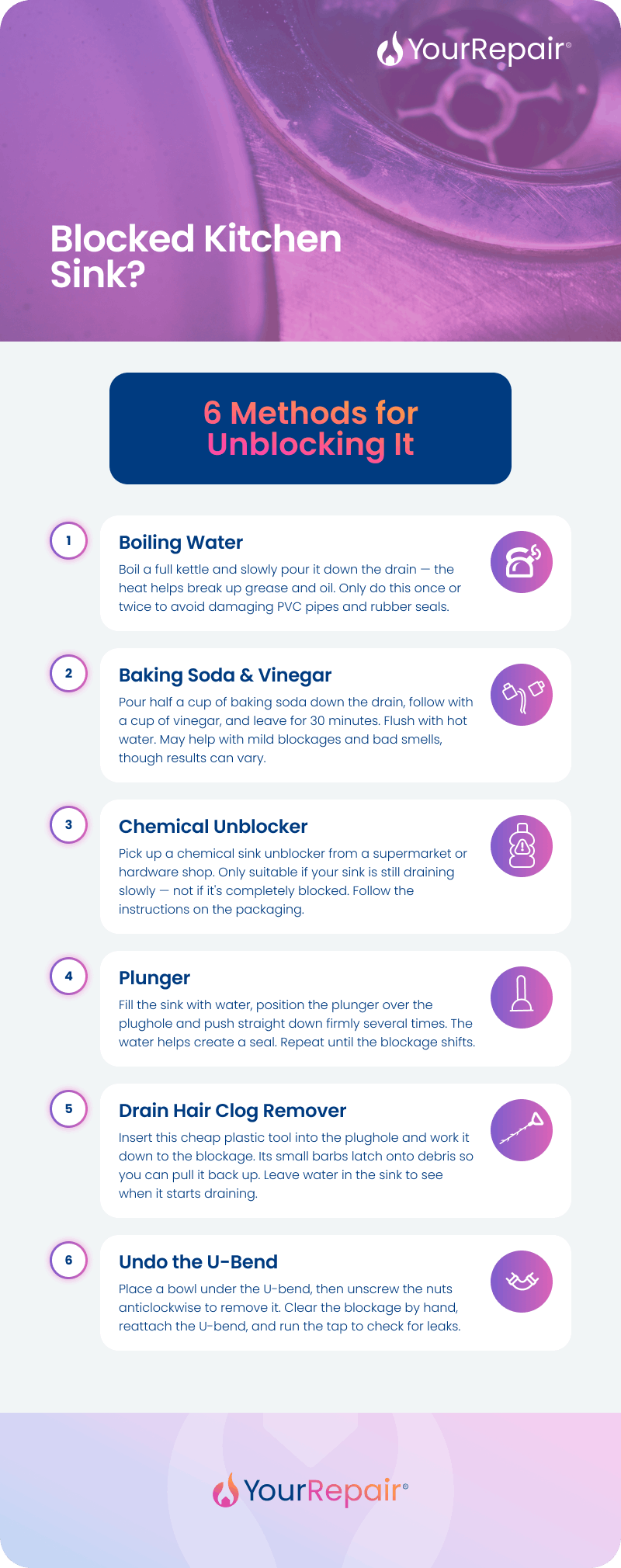
Choosing the right method saves time and effort. Here’s how the three approaches stack up.
Wire Method: Quick Fix for Soft Clogs
- Best for: Food scraps, grease, pasta
- Time: Minutes
- Difficulty: Easy to moderate
- Cost: Free (uses household items)
- Success rate: High for shallow clogs
Limitation: Won’t reach deep or solid blockages
Trap Cleaning: Definitive for Visible Debris
- Best for: Clogs in P-trap or wall tube
- Time: 15–30 minutes
- Difficulty: Moderate
- Cost: Free
- Success rate: Very high if clog is in the trap
Tip: Always place a bucket underneath—messes happen.
Baking Soda and Vinegar: Natural and Preventive
- Best for: Grease film, minor buildup, maintenance
- Time: Under 15 minutes
- Difficulty: Easy
- Cost: Minimal
- Success rate: Moderate for light clogs
Bonus: Safe, eco-friendly, and great for monthly upkeep
| Method | Best For | Time | Cost | Difficulty |
|---|---|---|---|---|
| Wire | Soft/fibrous clogs | Minutes | Free | Easy-Moderate |
| Trap Cleaning | Clogs in P-trap | 15–30 min | Free | Moderate |
| Baking Soda & Vinegar | Grease, maintenance | Under 15 min | Low | Easy |
| Professional Help | Deep/main line clogs | Varies | $$$ | N/A |
Prevent Future Sink Clogs
A little maintenance goes a long way. Avoid repeat clogs with these simple habits.
Avoid Pouring Grease Down the Drain
Grease solidifies in pipes, creating stubborn blockages. Scrape oily pans into the trash or compost instead.
Use a Drain Strainer
Place a mesh strainer in each sink to catch food particles. Empty it into the trash after each use.
Flush with Hot Water Regularly
After washing dishes, run hot water for 30 seconds to flush away small particles and prevent buildup.
Monthly Baking Soda Treatment
Once a month, perform the baking soda and vinegar flush. It keeps pipes clean and odor-free, with no chemicals needed.
Pro Tip: Keep a straightened wire or small drain snake under the sink. It’s a $5 tool that can save a $150 plumber call.
Frequently Asked Questions About Unclogging a Kitchen Sink
What causes a kitchen sink to clog on both sides?
When water backs up on both sides of a double sink, the clog is in the shared pipe or P-trap, not the garbage disposal. Common culprits include food debris, grease, coffee grounds, and fibrous materials like pasta.
Can I use boiling water on PVC pipes to unclog a sink?
You should avoid boiling water on PVC pipes if you suspect a complete blockage, since trapped steam pressure can damage the joints. Use very hot tap water instead. Boiling water is safe for metal pipes and for partial clogs.
How long does the baking soda and vinegar method take?
The entire process takes under 15 minutes, including two 5–10 minute waiting periods for the baking soda and vinegar to react. It works best for minor clogs, grease film, and preventive maintenance.
What tools do I need to remove a P-trap?
You only need a bucket or bowl to catch water, and optionally pliers or a wrench if the slip nuts are tight. A screwdriver or wire helps scrape out debris from the trap’s interior.
When should I call a plumber for a clogged kitchen sink?
Call a plumber if the P-trap is clean but water still backs up, if multiple drains are slow, if you smell foul odors after cleaning, or if you notice water backing up in other fixtures like the toilet.
How can I prevent kitchen sink clogs long-term?
Use a mesh drain strainer, avoid pouring grease down the drain, run hot water for 30 seconds after each use, and perform a monthly baking soda and vinegar flush to keep pipes clear.
Final Takeaways for Unclogging Your Kitchen Sink
Clearing a clogged kitchen sink doesn’t require expensive tools or professional help in most cases. Start with the baking soda and vinegar method for light clogs or prevention. If that fails, try the wire method to break up soft debris. When water still won’t drain, remove and clean the P-trap, which catches most visible blockages.
Only call a plumber if all methods fail or you suspect a deep main line clog. And remember: prevention is cheaper than repair. Use strainers, avoid grease, and maintain your drains monthly.
Your next step: pick up a straightened wire or small drain snake and store it under the sink today. When the next clog hits, you’ll be ready to fix it in minutes.