Hard water leaves behind stubborn white crust on your faucet, a familiar frustration in kitchens and bathrooms across homes with limescale-prone water. This chalky buildup, known as water scale or limescale, forms when minerals like calcium and magnesium dry on metal surfaces. Over time, it dulls chrome, clogs aerators, and can even reduce water flow. But you don’t need harsh chemicals or expensive tools to fix it. With simple household items, especially white vinegar, you can dissolve water scale safely and restore your faucet’s shine in under an hour.
This guide reveals the most effective, proven methods for removing water scale from any faucet. You’ll learn step-by-step soaking techniques, how to clean hidden spots like aerators and set-screw holes, and which cleaners work best without damaging finishes. We’ll also cover how to prevent future buildup so your faucet stays spotless longer.
Identify Water Scale Buildup on Your Faucet
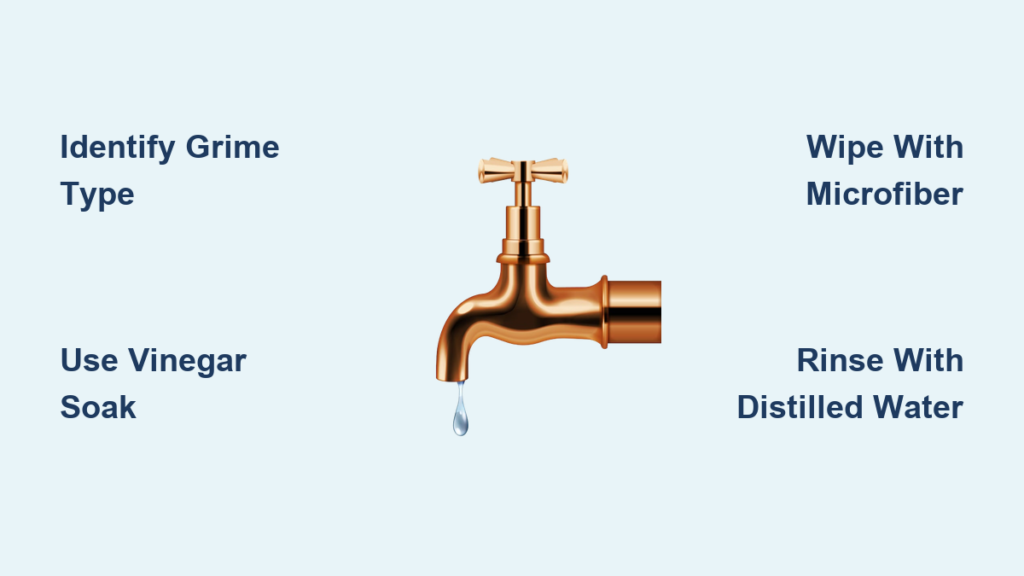
Before cleaning, confirm you’re dealing with mineral deposits and not soap scum or rust. Knowing exactly what you’re fighting makes your cleaning approach more effective.
Signs of Limescale
Watch for these common indicators that water scale has formed on your faucet. White, chalky, or crusty residue appears around the spout or handle. The finish on chrome or stainless steel looks dull or cloudy. Water flow from the tap sputtering or reduced pressure often signals a clogged aerator. Faucet handles feel stiff or sticky due to mineral buildup in the joints.
Limescale forms wherever water pools and evaporates, especially at joints, spouts, and aerators. The longer it sits, the harder it becomes. Early detection means easier removal.
Test Your Faucet Finish Before Cleaning
Not all finishes react the same to cleaning agents. Using vinegar on the wrong surface can cause etching or discoloration, ruining your faucet’s appearance.
Check Finish Sensitivity First
Dip a Q-tip in white vinegar and rub it on a hidden area like the underside of the handle or base. Wait 5 minutes, then wipe clean and inspect. If the finish looks unchanged, it’s safe to proceed with vinegar. If it’s dull, discolored, or etched, avoid acid-based cleaners and try a milder approach instead.
Avoid using vinegar on oil-rubbed bronze, unsealed stone, gold-plated fixtures, or antique finishes. These materials can be damaged by acidic cleaners.
Soak Your Faucet with Vinegar to Dissolve Scale
White vinegar is the top choice for removing water scale because it’s safe, cheap, and highly effective. The 5% acetic acid chemically breaks down calcium carbonate, the main component of limescale.
Wrap Method for Spouts and Handles
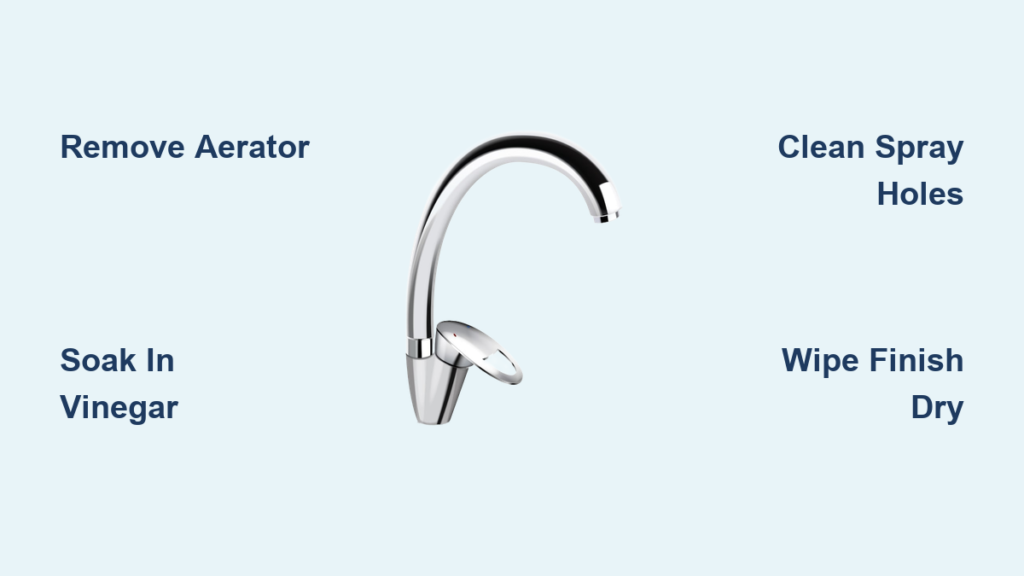
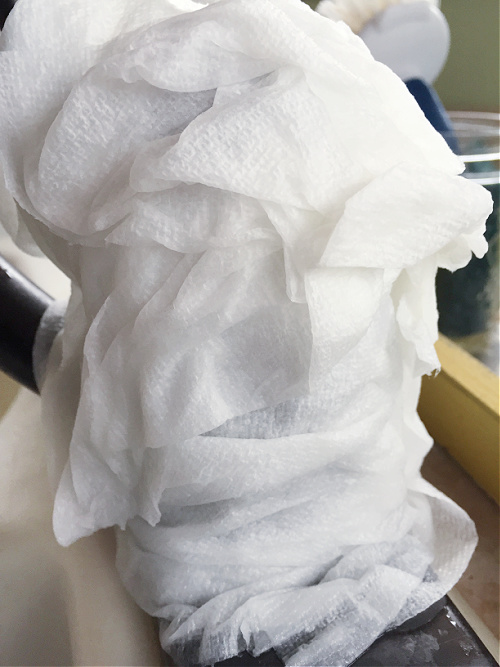
Soak a soft rag or paper towel in white vinegar and wrap it tightly around the scaled area. Press into crevices and joints to ensure good contact. Secure with a rubber band or zip tie. Let sit for 15 to 30 minutes for light buildup, or 30 to 60 minutes for heavy deposits. Remove and check results. Repeat if needed.
Re-wet the rag during longer soaks to maintain effectiveness.
Bag Method for Full Coverage
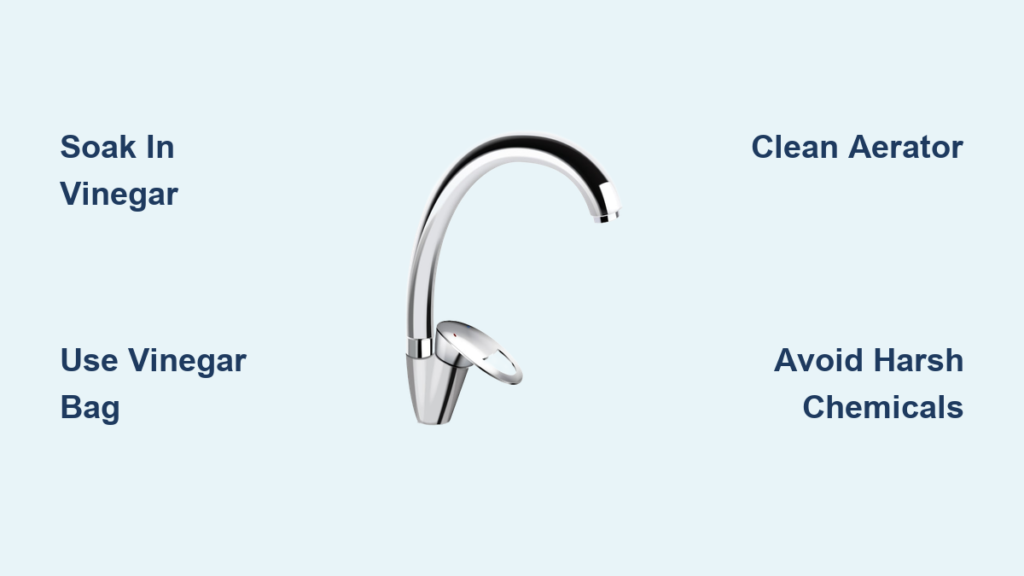
Fill a plastic bag with vinegar and place it over the faucet spout. Secure with a rubber band or tape so the scaled areas stay submerged. Soak for 30 minutes for moderate buildup, or overnight for severe deposits. Remove the bag and scrub away loosened scale.
This method ensures total coverage of the entire spout area.
Clean the Aerator to Restore Water Flow
Clogged aerators are the number one cause of weak water pressure. Even if your faucet looks clean, the aerator inside may be packed with mineral deposits.
Remove and Soak the Aerator
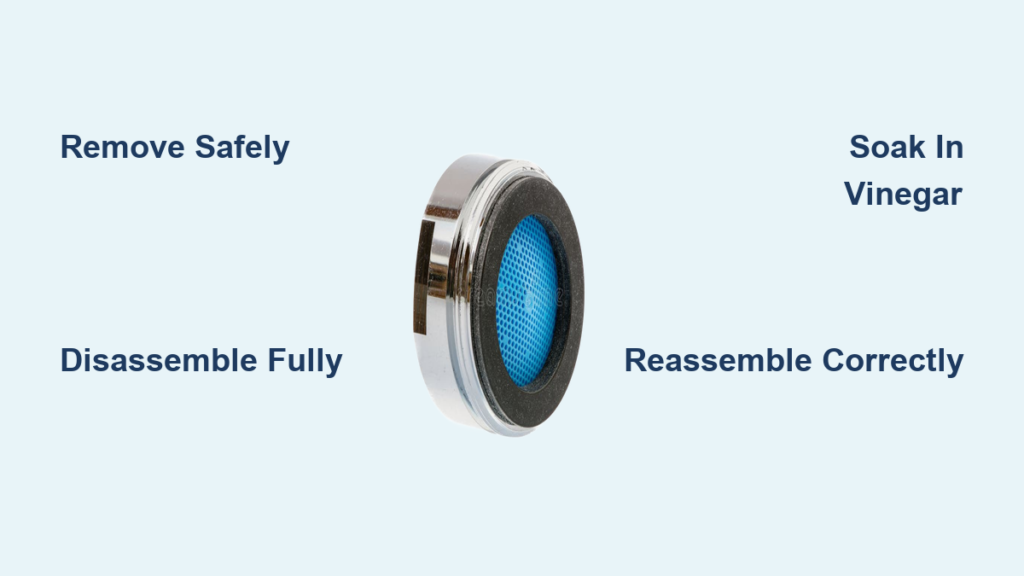
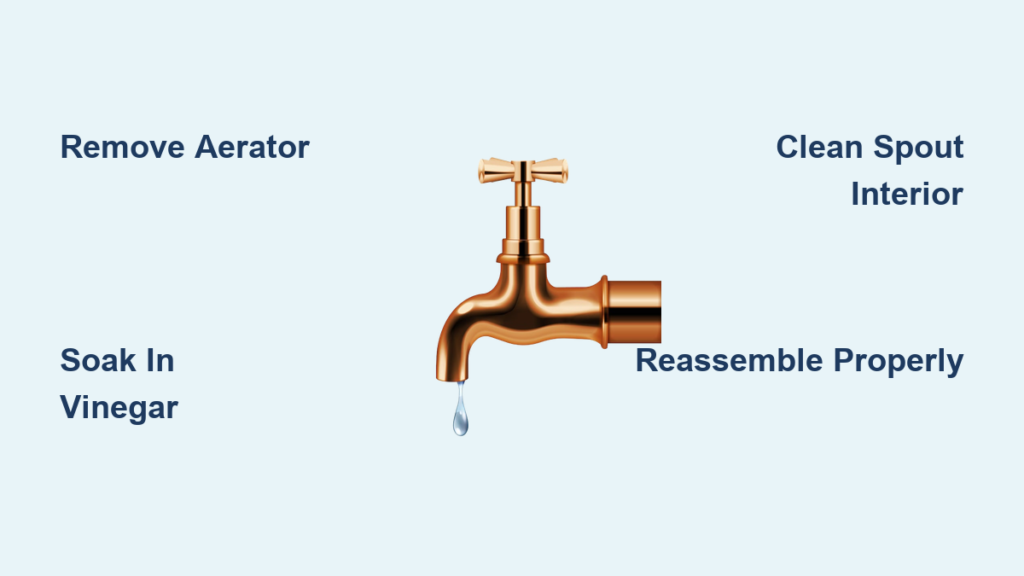
Turn off the water supply, then unscrew the aerator at the tip of the faucet. Use pliers wrapped in cloth if it’s stuck. Disassemble the aerator if possible, removing washers, screens, and spacers. Place all parts in a bowl of vinegar and soak for 30 minutes to several hours. Overnight soaking works best for severe clogs.
Scrub the interior with a toothbrush to remove trapped particles. Rinse thoroughly under running water until the flow runs clear. Dry completely and reassemble. Hand-tighten only when reinstalling. Overtightening can damage the threads.
Scrub Away Stubborn Residue Gently
:max_bytes(150000):strip_icc()/how-to-clean-chrome-5119447-hero-10cf76a4e8c34890aefeffe23728e7de.jpg)
After soaking, most scale wipes away easily. Use the right tools to avoid scratching your faucet’s finish.
Safe Scrubbing Tools
A worn kitchen sponge works well. Use the green abrasive side that has been softened by prior use. A soft-bristled toothbrush reaches into crevices. Your fingernail can lift softened deposits without causing damage. A Q-tip targets set-screw holes and tight spaces.
Use circular motions when scrubbing. Never use steel wool, metal scrapers, or new abrasive pads. These scratch finishes and create tiny grooves where more minerals can collect.
Use Baking Soda Paste for Tough Buildup
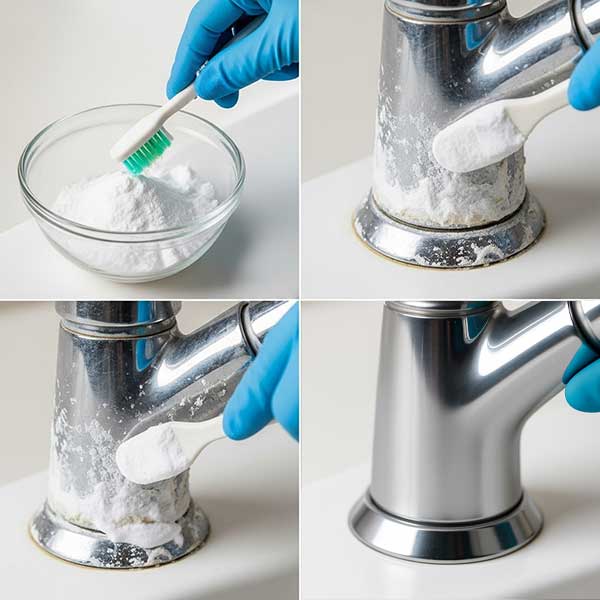
For old, hardened deposits that resist vinegar alone, combine it with baking soda for extra cleaning power.
Make and Apply the Paste
Mix 1 part baking soda with 2 parts vinegar. Let it fizz briefly, then stir into a thick paste. Apply directly to remaining scale and let sit for 30 minutes or overnight for very stubborn deposits. Scrub gently with a soft brush, then rinse thoroughly and dry.
The paste clings to vertical surfaces and slowly dissolves even crusty buildup. Never mix large amounts in sealed containers. The carbon dioxide buildup can cause pressure explosions.
Alternative Methods for Removing Water Scale
When vinegar isn’t enough, or you want faster results, try these options.
Lemon Juice for Light Buildup
Rub a cut lemon wedge directly on the faucet and let sit for 10 to 15 minutes. Scrub with a soft sponge, then rinse and dry. Citric acid works similarly to vinegar and leaves a fresh citrus scent.
Toothpaste for Polishing
Use fluoride toothpaste, not gel or whitening varieties. Apply to an old toothbrush and scrub for 1 minute. Let sit for 5 to 10 minutes, then rinse with cold water. This method works great for light stains and restoring shine on chrome or stainless steel.
CLR for Severe Buildup
Mix 1 part CLR with 8 parts water. Apply via cloth or use the bag method. Wait 10 to 15 minutes maximum, then scrub lightly. Rinse thoroughly with cold water and dry with a microfiber cloth.
Never mix CLR with bleach. Toxic fumes can result. Avoid CLR on aluminum, bronze, or natural stone surfaces.
Target High-Risk Areas on Your Faucet
Some spots collect more scale than others. Focus your cleaning efforts on these zones for maximum results.
Focus on These Areas
The spout base and neck collect deposits every time water flows. Handle joints and pivot points trap moisture. The set-screw hole, that small dimple on lever handles, harbors hidden buildup. Pull-down spray nozzles and aerator screens are prime locations for clogs.
Use a Q-tip dipped in vinegar to clean inside narrow holes. Even tiny deposits in these spots affect performance.
Dry and Polish Your Faucet Properly
Final drying prevents new water spots and mineral re-deposition. This step is crucial for lasting results.
Finish Strong
Wipe away all residue with a damp cloth, then rinse thoroughly with clean water. Dry completely with a microfiber towel and buff to a high shine. A dry faucet is a clean faucet. Moisture left behind invites new scale to form.
Prevent Future Water Scale Buildup
Stop limescale before it starts with simple daily habits.
Daily Prevention
Wipe your faucet dry after each use. Use a microfiber cloth to remove water droplets. This single step cuts mineral buildup by up to 80%.
Weekly Maintenance
Spray a 1 to 1 vinegar-water mix on your faucet and wipe with a cloth. No rinsing needed. This keeps surfaces clear between deep cleanings.
Monthly Deep Clean
Repeat the full vinegar soak process and remove and clean the aerator. Staying ahead of buildup prevents it from becoming visible.
Consider a Water Softener for Long-Term Protection
If limescale returns quickly, your water is likely very hard. A water softener addresses the root cause.
Long-Term Solutions
A whole-house water softener removes calcium and magnesium at the source. An under-sink filter reduces minerals at the point of use. Many plumbing companies offer free water hardness analysis to help you decide.
Softened water protects faucets, appliances, skin, and hair while reducing your cleaning time.
Avoid Damaging Your Faucet During Cleaning
Even safe cleaners can cause harm if misused. Follow these guidelines to protect your fixtures.
Do’s and Don’ts
Do use distilled white vinegar for best results. Test all cleaners on hidden areas first. Rinse thoroughly after cleaning. Dry completely to prevent new spots. Clean the aerator monthly.
Don’t use steel wool, abrasive pads, or scrapers. Don’t leave vinegar on for more than 8 hours. Never mix vinegar with bleach or ammonia. This creates toxic fumes. Don’t use CLR on oil-rubbed bronze or natural stone. Always follow manufacturer cleaning guidelines.
Damage from improper cleaning often voids warranties.
Protect Your Countertops While Cleaning
Vinegar can damage natural stone if spilled. Take precautions to protect your surfaces.
Keep Granite and Marble Safe
Apply vinegar only to the faucet, not the surrounding stone. Use a folded cloth or paper towel under the faucet to catch drips. Wipe any spills immediately. Ensure stone is sealed every 6 to 12 months.
Accidental small drips won’t harm sealed granite, but prolonged exposure can etch marble.
Frequently Asked Questions About Removing Water Scale from Faucets
Does vinegar damage faucet finishes?
Vinegar is safe on chrome, stainless steel, and most plated finishes when used properly. Always test on a hidden area first and limit exposure to under 8 hours. Avoid vinegar on oil-rubbed bronze, gold plating, or unsealed natural stone.
How long does it take to remove water scale?
Most jobs take 30 to 60 minutes including soak time. Light buildup removes in 15 to 30 minutes. Severe, neglected deposits may need overnight soaking. The actual active scrubbing time is only 10 to 15 minutes.
Can I use vinegar on a clogged aerator?
Yes. Remove the aerator and soak it in vinegar for 30 minutes to several hours. Overnight soaking works best for severe clogs. Scrub with a toothbrush, rinse thoroughly, and reinstall.
What is the best way to prevent water scale from coming back?
Wipe your faucet dry after each use. Spray it weekly with a 1 to 1 vinegar-water mixture. Clean the aerator monthly. For persistent problems, consider installing a water softener.
Is CLR safer than vinegar for removing scale?
CLR works faster than vinegar for severe buildup but requires more caution. Never mix it with bleach. Don’t use it on aluminum, gold, bronze, or natural stone. Rinse thoroughly and wear gloves.
Why does my faucet still have low water pressure after cleaning?
The aerator is likely still clogged. Remove it completely and soak overnight. Check the rubber washer inside for damage. Reassemble carefully without overtightening.
Final Thoughts on Removing Water Scale from Your Faucet
You don’t need expensive products or professional help to remove water scale from your faucet. With white vinegar, a plastic bag, and a toothbrush, you can dissolve mineral buildup safely and restore full function and shine. The process takes less than an hour and costs pennies.
For long-term success, dry your faucet daily and clean the aerator monthly. These small habits prevent scale from accumulating and keep your fixtures looking new. If hard water is a constant battle in your home, investing in a water softener eliminates the root cause entirely, protecting your plumbing, appliances, and fixtures for years to come.