You turn on the tap, and there it is again—black gunk clinging to the aerator, oozing from the spout, or smearing on your hands. It is gross, unsightly, and makes you wonder if your water is safe. The good news is that in most cases, black gunk from faucets is not dangerous, but it is a clear sign of underlying plumbing or water quality issues. This guide will help you identify the source, clean it effectively, and stop it from coming back using proven methods based on water chemistry and real-world plumbing expertise.
The black residue is typically a mix of oxidized minerals like manganese and iron, bacterial biofilm, deteriorating rubber parts, or even mold. While vinegar alone might clean the surface, it will not kill the bacteria or stop the problem at its source. Without proper diagnosis and long-term fixes, the slime returns within days. You will learn how to clean every part of your faucet, disinfect your plumbing, and choose the right filtration system whether you are on city water or a well.
Identify the Source of Black Gunk Before Cleaning
Before cleaning, you need to know what you are dealing with. Not all black gunk is the same, and the wrong fix wastes time and fails.
Check the Appearance and Location
Slimy, gel-like film on aerator or spout likely indicates manganese-oxidizing bacteria feeding on dissolved minerals. Black specks floating in hot water probably come from degrading rubber washers or supply lines. Dry, powdery black spots near the base or under the sink could be black mold growing in damp areas. A rotten egg smell with black residue points to hydrogen sulfide and sulfur bacteria. If all fixtures are affected, the issue is whole-house like corroded pipes or contaminated filter.
Conduct a Simple Home Test
Remove the aerator and inspect inside. Soak it in white vinegar for 30 minutes. If the gunk dissolves and water clears, it is mineral-based. If slime remains, it is likely biofilm or rubber debris. For accurate results, test your water, especially if you use well water. Look for iron levels above 0.3 ppm that cause staining, manganese above 0.05 ppm that causes black residue, pH levels, and total coliform bacteria.
Pro Tip: Test water at multiple taps. If only one faucet is affected, the issue is localized to that fixture.
Remove and Disassemble the Faucet Aerator

Most black gunk accumulates in the aerator, the small screen at the tip of the faucet.
Unscrew the Aerator Safely
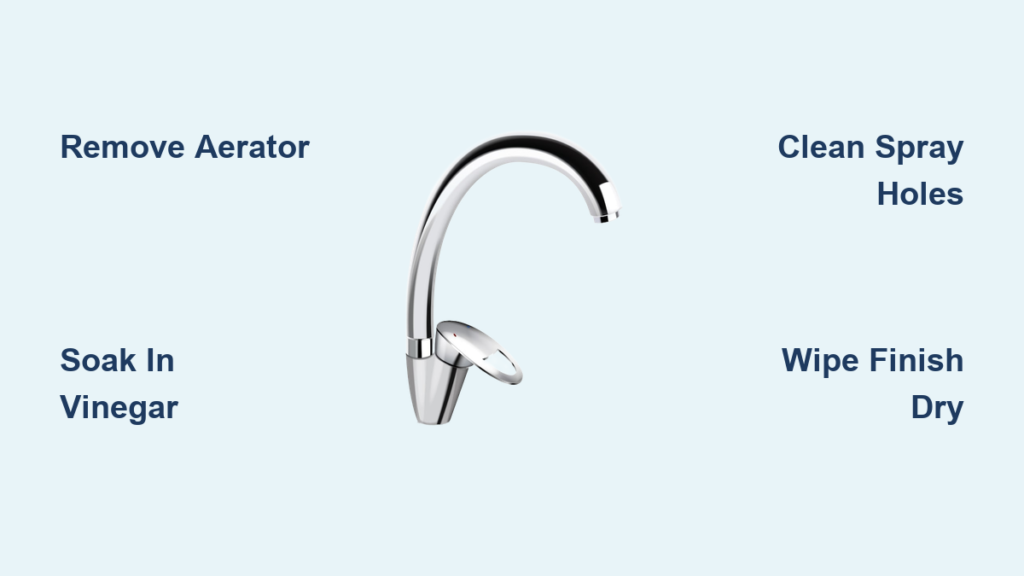
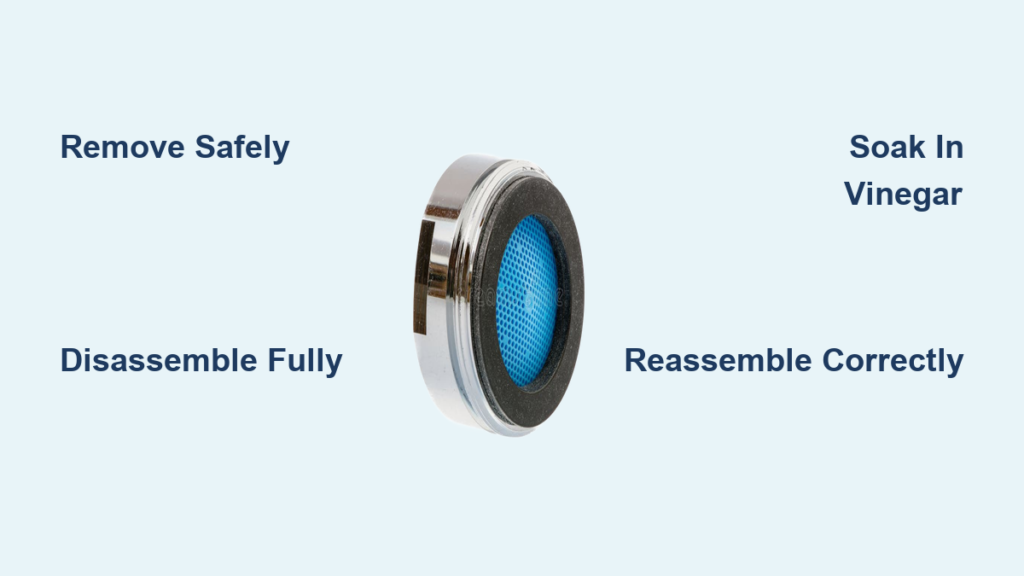
Turn off the water under the sink. Use an aerator key for recessed models common on Moen faucets. If you do not have one, wrap needle-nose pliers in tape to avoid scratching chrome. Gently twist counterclockwise to remove.
Take It Apart
Most aerators have five components. Lay outer housing, rubber washer, mesh screen, flow restrictor, and inner casing on a clean towel. Inspect each part for torn washers, corroded screens, and cracked housings.
Warning: Do not force it. If stuck, soak in vinegar first to loosen mineral buildup.
Soak in White Vinegar to Dissolve Minerals

Vinegar is the go-to for breaking down hard water scale and mineral deposits.
Use Undiluted White Vinegar
Fill a bowl or plastic bag with plain white vinegar at 5% acetic acid. Submerge all metal parts, avoiding rubber washers if they look brittle. Soak for 30 minutes to overnight depending on buildup severity.
What Vinegar Removes
Vinegar effectively dissolves calcium and magnesium from hard water, iron oxide rust, and manganese dioxide black mineral sludge.
What Vinegar Does Not Kill
Vinegar does not eliminate bacteria, biofilm, or mold. This is why cleaning with vinegar alone leads to quick return of the gunk.
Pro Tip: For heavy buildup, add a pinch of baking soda to create a foaming reaction that helps lift grime.
Scrub with Baking Soda Paste for Biofilm
After soaking, some sticky residue may remain. This is likely bacterial slime that vinegar cannot touch.
Make a Cleaning Paste
Mix two tablespoons of baking soda with one tablespoon of water. Apply to the aerator screen and spout tip. Use a soft-bristle toothbrush to scrub gently.
Why Baking Soda Works
Baking soda is mildly abrasive, removing film without scratching chrome or nickel finishes. It neutralizes odors and lifts organic gunk when combined with vinegar in a two-step process.
Warning: Never use steel wool or harsh scrubbers. They permanently scratch finishes and create more places for gunk to accumulate.
Clean the Faucet Spout and Base
Do not forget the areas around the faucet where gunk collects.
Wipe Down Exterior Surfaces
Dampen a microfiber cloth with dish soap and warm water. Wipe the spout, handles, and base thoroughly. For stubborn film, use a vinegar-soaked cloth and let it sit for 10 minutes before wiping.
Check for Black Mold
If gunk is dry, flaky, and near the base, it could be black mold. Treat with 3% hydrogen peroxide by spraying directly, waiting 10 minutes, and wiping clean. Improve ventilation under the sink to prevent recurrence.
Clear Clogged Aerator Holes with a Needle
Even after cleaning, tiny holes in the aerator may stay blocked.
Use a Pin or Needle
Gently poke each hole in the mesh screen to clear debris. Flush with water to test flow. Reassemble only when all holes are clear and water sprays evenly.
Pro Tip: Hold the aerator under running water while reassembling to flush out loose particles.
Reinstall and Flush the Faucet
Now put it all back together properly.
Reassemble in Order
Stack parts as they came out, matching each component to its position. Hand-tighten the aerator without over-tightening to avoid cracking the housing.
Turn Water Back On
Open the shutoff valve fully. Run water for one to two minutes to flush debris from the line. Check that water sprays evenly. If not, disassemble and re-clean.
Disinfect Plumbing to Kill Biofilm
If gunk returns within days, bacteria are still active in your pipes.
Use Hydrogen Peroxide
Hydrogen peroxide kills bacteria and breaks down biofilm without harmful residues.
Step-by-Step Disinfection
Turn off the main water supply. Open all faucets to drain pipes. Pour one gallon of 3% hydrogen peroxide into the system through a toilet tank or via a hose connected to an outdoor spigot. Run water at each faucet until the peroxide smell appears. Let sit for one to two hours. Flush all fixtures until water runs clear and odor-free.
Warning: Never mix peroxide and bleach. This creates toxic chlorine gas that can cause serious harm.
Treat Well Water with Shock Chlorination
For private wells with recurring black slime, chlorination is a proven fix.
Prepare the Solution
Calculate your well volume. Use unscented liquid bleach at 5 to 6% sodium hypochlorite. The dose is one quart per 100 gallons of water.
Steps
Pour bleach into the well. Circulate through all plumbing. Let sit for 12 to 24 hours. Flush until no chlorine smell remains.
Pro Tip: Test water for bacteria after treatment. Repeat annually if needed.
Install a Whole-House Filtration System

For lasting results, treat the water before it enters your home.
Best Filters for Black Gunk
High manganese and iron require a manganese greensand filter. Bacterial biofilm needs a UV sterilizer paired with KDF-55 filter. Low pH acidic water calls for a calcite neutralizer. Sediment and chlorine issues respond well to carbon block filter.
Top Options
Radiant Life Whole House Filter removes 95% or more of iron and manganese. KDF-55 System uses catalytic media to oxidize metals and inhibit bacteria. UV Sterilizer kills 99.9% of bacteria, viruses, and mold spores.
Pro Tip: Pair systems for complete protection. Use a filter plus UV light for the best results.
Replace Deteriorating Rubber Parts
Old rubber components are a hidden source of black specks.
Common Culprits
Rubber washers in faucet cartridges, O-rings in handles, and flexible supply lines especially braided plastic ones all degrade over time.
Replacement Guide
Shut off water under the sink. Disconnect supply lines. Inspect for black flakes or swelling. Replace with braided stainless steel supply lines and EPDM rubber washers for longer life.
Pro Tip: Upgrade to brass or ceramic cartridge faucets for durability and reduced maintenance.
Prevent Black Gunk from Returning
Cleaning is temporary. Prevention keeps your water clear.
Clean Aerators Every One to Three Months
Schedule aerator cleaning like changing a toothbrush. Soak in vinegar, scrub, and flush regularly.
Flush Unused Fixtures Weekly
Run guest bathroom sinks and showers for two to three minutes. This prevents stagnation and bacterial growth that leads to biofilm formation.
Maintain Your Water Heater
Flush your water heater annually to remove sediment. Set temperature to 140 degrees Fahrenheit to inhibit bacteria, using an anti-scald valve for safety.
Replace Filters on Schedule
Sediment pre-filter needs replacement every three to six months. Carbon filter every six to twelve months. UV bulb annually.
Avoid Common Cleaning Mistakes
Many people repeat the same errors. Do not let them sabotage your efforts.
Using Only Vinegar Removes Minerals but Leaves Bacteria Alive
Vinegar dissolves hard water deposits but does not kill microorganisms. The gunk returns within days.
Ignoring Water Chemistry
Low pH or high manganese keeps causing issues. Test and correct pH to the ideal range of 6.5 to 8.5.
Skipping Whole-House Solutions
Point cleaning does not stop biofilm in pipes. Invest in filtration if gunk is persistent across multiple fixtures.
Mixing Chemicals
Never mix bleach and hydrogen peroxide. Never mix vinegar and bleach. Both combinations create toxic gases.
When to Call a Professional
Some problems need expert help.
Seek Help If
Black water persists after cleaning and disinfection. You suspect mold behind walls or under flooring. Your well water tests positive for coliform or E. coli. You are unsure how to install a filtration system.
Pro Tip: Hire a certified water treatment specialist for system design and installation.
Frequently Asked Questions About Cleaning Black Gunk from Faucets
What causes black gunk to come out of my faucet?
Black gunk is usually caused by oxidized manganese and iron combining with bacterial biofilm, creating a slimy substance. It can also come from deteriorating rubber washers, black mold in damp areas, or corroded pipes. Identifying the specific cause helps determine the right solution.
Is black gunk from the faucet dangerous?
In most cases, black gunk from oxidized minerals and non-pathogenic bacteria is not hazardous. However, black mold can cause respiratory issues and allergies. If you suspect mold or notice health symptoms, test your water and consult a professional.
How do I clean black gunk from my faucet aerator?
Remove the aerator and soak it in undiluted white vinegar for 30 minutes to overnight. Scrub with a baking soda paste, rinse thoroughly, and use a needle to clear any clogged holes. Reassemble and flush the faucet for one to two minutes.
Why does black gunk keep coming back after cleaning?
If black gunk returns quickly, the root cause is still present. This could be high manganese or iron in your water, bacterial biofilm in your pipes, or deteriorating rubber parts. Systemic solutions like whole-house filtration or water treatment are needed.
What is the best filter for black gunk in water?
For high manganese and iron, a manganese greensand filter works best. For bacteria and biofilm, pair a KDF-55 filter with a UV sterilizer. A whole-house carbon filter helps with city water issues. Test your water to choose the right system.
Can I use bleach to clean black gunk from my faucet?
You can use shock chlorination for well water, but it does not address the root cause long-term. For cleaning, hydrogen peroxide is safer and more effective for biofilm removal. Never mix bleach with other cleaning chemicals.
Key Takeaways for Cleaning Black Gunk from Your Faucet
Black gunk on faucets is more than just dirty water. It is a signal that something in your plumbing or water supply needs attention. The most common cause is oxidized manganese and iron combined with bacterial biofilm, creating that slimy black residue that clings to aerators and spouts.
Start with accurate diagnosis. Remove the aerator and soak it in vinegar to dissolve minerals. Use baking soda to tackle biofilm. If the gunk returns quickly, bacteria in your pipes are likely the culprit. Systemic solutions like hydrogen peroxide disinfection, whole-house filtration, or UV sterilization address the problem at its source rather than just cleaning the symptoms.
Prevention matters more than cure. Clean aerators every one to three months, flush unused fixtures weekly, replace aging rubber parts, and test your well water annually. For persistent issues, invest in a filtration system tailored to your water chemistry. Clean water is not just about looks. It protects your plumbing, your appliances, and your peace of mind.