
Nothing disrupts your daily routine like a faucet handle that refuses to turn. Whether it’s frozen in place or stiff to rotate, this common plumbing issue affects kitchens and bathrooms alike. The good news? In over 90% of cases, you can fix a faucet handle that won’t turn without calling a plumber or replacing the entire fixture. Most problems stem from mineral buildup, worn internal parts, or lack of lubrication, issues easily resolved with basic tools and a little know-how.
This guide walks you through diagnosing the cause, removing and cleaning components, replacing worn parts, and reassembling your faucet for smooth, fingertip operation. You’ll save time, money, and avoid a costly service call.
Identify What’s Causing the Stiffness
Before disassembling your faucet, pinpoint what’s causing the resistance. A handle that won’t turn usually results from one of several common issues, and knowing which helps you choose the right fix.
Check for Mineral Buildup
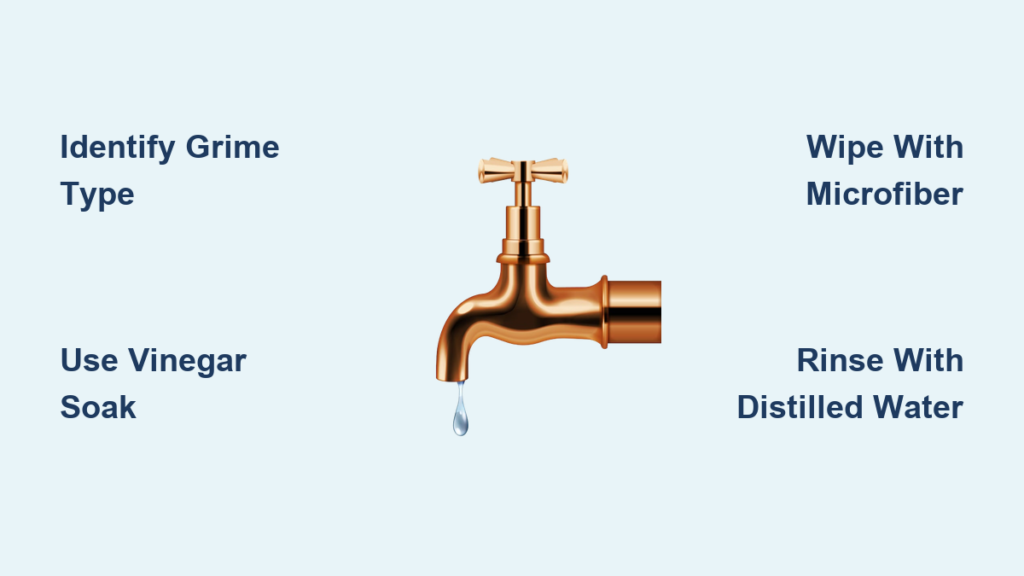
Hard water leaves behind calcium and magnesium deposits that accumulate on internal parts. Over time, limescale coats the cartridge, stem, O-rings, and pivot points, restricting movement. If you live in a hard water area and haven’t cleaned your faucet in over a year, scaling is likely the culprit. Look for white, chalky residue around the base or inside removed parts.
Inspect for Worn Valve Cartridge
In single-handle faucets, the cartridge controls water flow and temperature. As it ages, internal rubber seals crack or warp, and plastic components degrade. A damaged cartridge binds inside the faucet body, making the handle hard to turn. If your faucet also drips or leaks around the base, suspect cartridge failure.
Look for Black Powder at Handle Base
If you see dark, powdery residue where the handle meets the faucet, you’re dealing with a degraded rubber gasket, common in Price Pfister models. This gasket sits between the handle hub and faucet body. When it breaks down into black dust, it increases friction and can eventually lock the handle in place. Replacing the gasket and its plastic spacer ring often restores smooth operation.
Test for Dry or Cracked O-Rings
O-rings provide both a watertight seal and smooth rotation. When they dry out or lose elasticity, they create friction against metal or ceramic surfaces. This leads to stiffness, wobbling, or base leaks. Since O-rings are cheap and easy to replace, swap them during any service, even if they look okay.
Rule Out Over-Tightened Components
One of the most preventable causes of a stuck handle is over-tightening. If the set screw, bonnet nut, or mounting nut under the sink is torqued too hard, it compresses internal parts and causes mechanical binding. This is especially common in undermount sinks where the handle hub presses into the countertop. Loosening these components slightly can free up movement.
Gather Tools and Supplies for the Job
You don’t need professional plumbing tools to fix a faucet handle. Most repairs use basic household items and inexpensive supplies.
Required Tools
You will need these essential tools for the repair:
- Allen wrench (hex key) for removing set screws hidden under handle caps
- Flathead screwdriver to pry off decorative caps without scratching
- Adjustable wrench or pliers to loosen mounting nuts under the sink
- Vise-Grip pliers for grip on stubborn nuts or hubs
- Needle-nose pliers to extract small O-rings or washers
- Strap wrench to remove screw-on handles without marring finishes
- Rubber mallet to gently tap stuck parts loose
Cleaning and Maintenance Supplies
Keep these supplies on hand for the cleaning process:
- White vinegar (distilled) as a natural descaler for mineral deposits
- Water to mix with vinegar in a 1:1 solution
- Soft-bristled toothbrush to scrub crevices and threads
- Microfiber cloth to protect surfaces and dry parts
- Non-scratch scrub pad to clean bonnet or trim ring safely
- Bucket or container to hold vinegar solution for soaking
Replacement Parts to Have Ready
Depending on what you find inside, you may need:
- Valve cartridge that must match your faucet brand and model
- Rubber gasket, critical for Pfister-style faucets
- Plastic spacer ring, replaced with gasket in Pfister models
- O-rings and washers, available in repair kits or individually
- New handle assembly, free from Pfister under lifetime warranty
Use the Right Lubricant
Apply silicone-based plumber’s grease to all rubber seals, O-rings, and moving parts. It prevents drying, reduces friction, and extends component life. Never use petroleum jelly, motor oil, or WD-40 as long-term lubricants because they degrade rubber over time.
Remove the Faucet Handle Safely
Disassembling the faucet starts with removing the handle. Do this carefully to avoid damaging the finish or losing small parts.
Locate and Remove the Set Screw
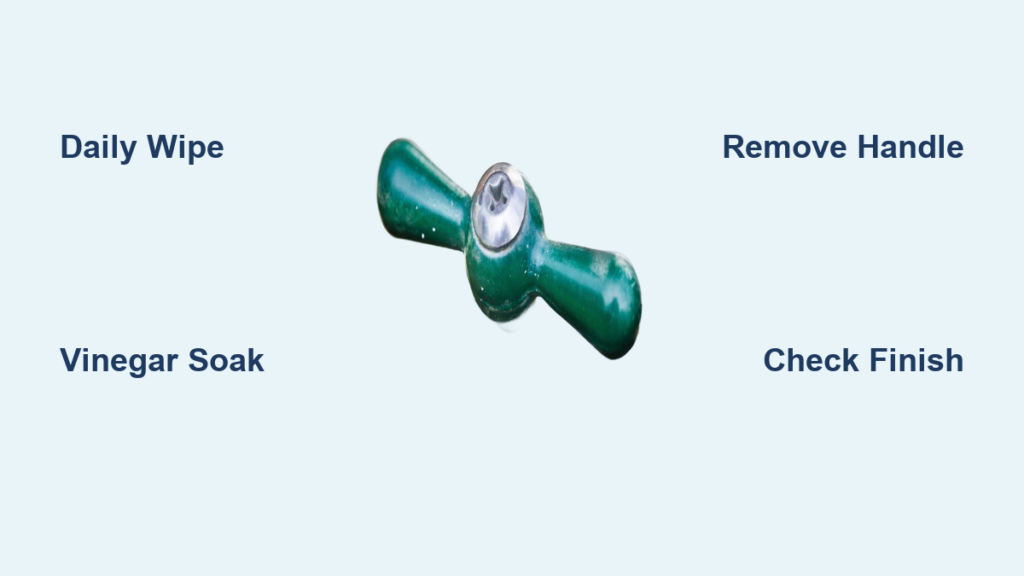
Find the decorative cap on top or side of the handle, often marked “H” and “C.” Use a flathead screwdriver to pry it off gently. Underneath, you’ll see a set screw, usually an Allen (hex) or Phillips type. Loosen it with the correct tool. Don’t remove the screw completely yet, just enough to release the handle.
Pull the Handle Off
Grasp the handle firmly and pull straight up. If it’s stuck, try these steps:
- Wrap the base with a soft cloth to protect the finish
- Wiggle side to side gently, don’t pry or twist
- Spray penetrating oil (like WD-40) around the base and wait 5-10 minutes
- Try again
For screw-on handles common in Pfister models, use a strap wrench on the bonnet and turn counterclockwise to unscrew the hub.
Disassemble and Inspect Internal Parts
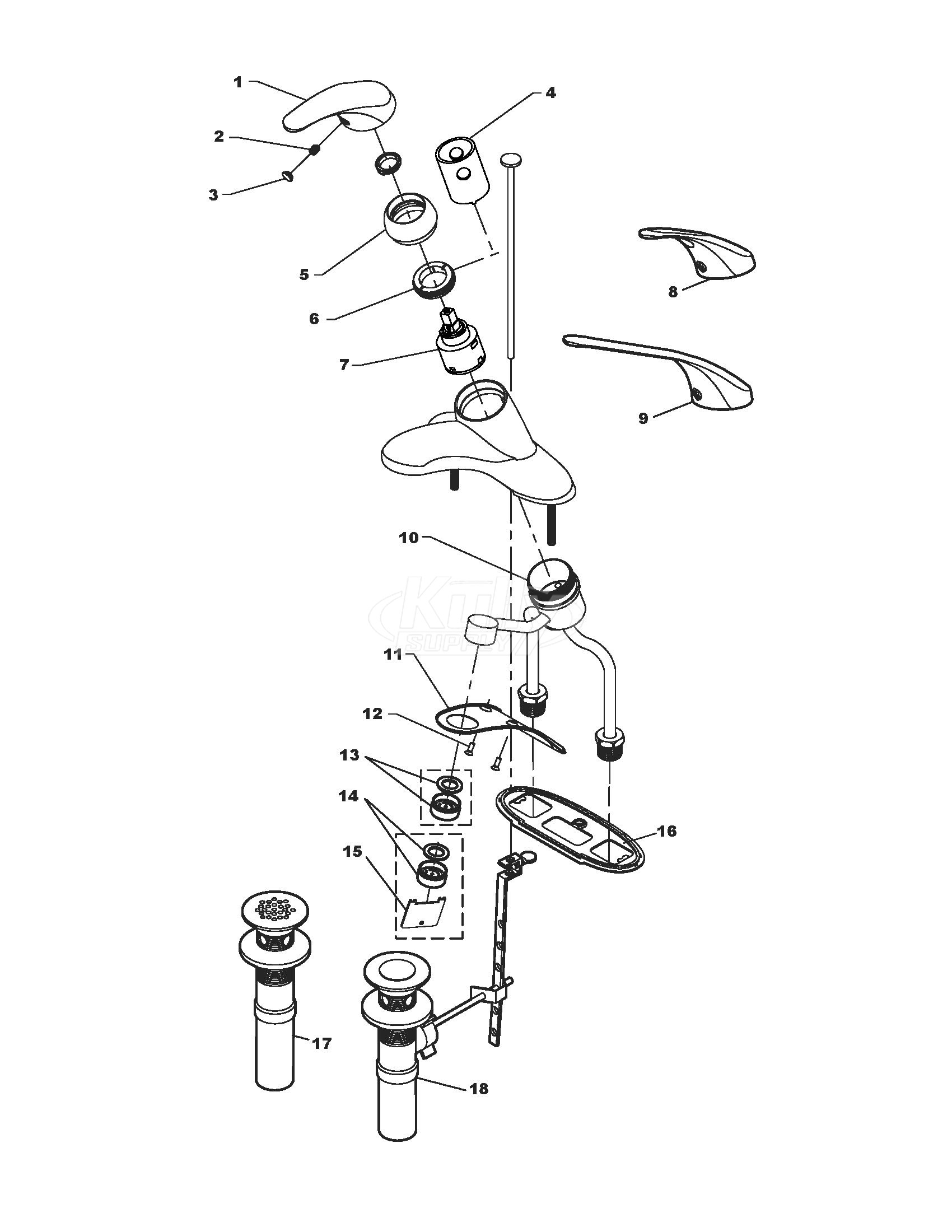
With the handle off, expose the internal components for cleaning and inspection.
Extract Key Components in Order
Remove these parts in this sequence:
- Friction ring
- Stem extension
- Bonnet nut
- Trim ring
- O-rings
- Washer (if present)
- Valve cartridge or stem assembly
Lay all parts out on a towel in the order you remove them. This makes reassembly easier and prevents misalignment.
Remove and Inspect the Cartridge
In single-handle faucets, the cartridge slides into the faucet body. Some models have a retaining nut, remove it first. Then, grip the cartridge with pliers or a cartridge puller tool and pull straight out. Inspect for:
- Cracks or warping
- Discoloration or erosion
- Mineral buildup in grooves or on shafts
If the cartridge is damaged, replace it with an exact match because universal types often don’t fit properly.
Clean All Components Thoroughly
Mineral deposits are the number one cause of stiffness. Cleaning with vinegar removes limescale safely and effectively.
Soak Parts in Vinegar Solution
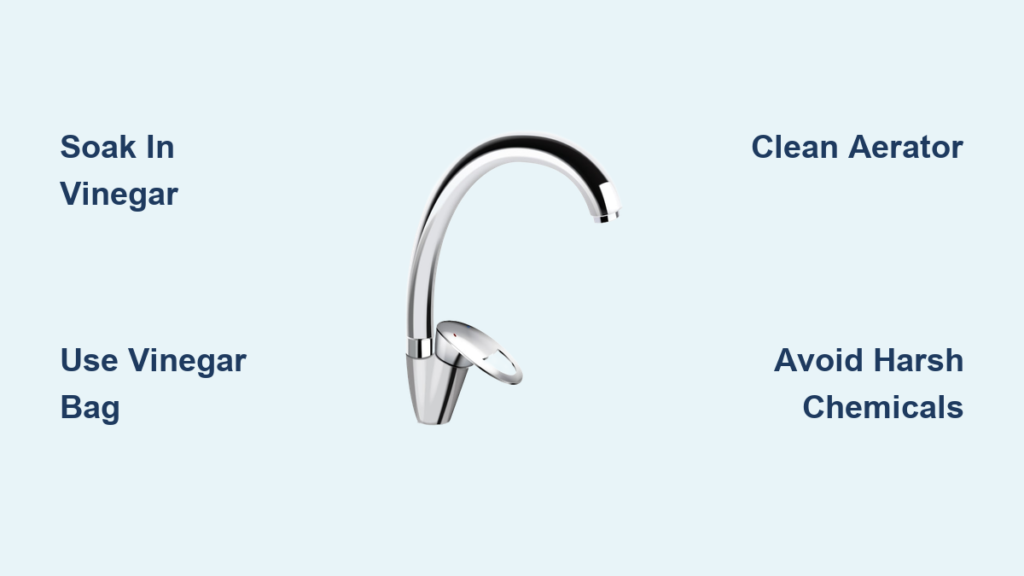
Mix 50% white vinegar and 50% water in a container. Soak metal parts (avoid rubber or plastic unless specified) for 15-30 minutes. For heavy buildup, extend to one hour.
Do not soak rubber O-rings or gaskets because vinegar can degrade them.
Scrub Crevices and Threads
Use a soft-bristled toothbrush to scrub these areas:
- Cartridge grooves
- Threads on the stem or bonnet
- Interior of the faucet body
- Trim ring and friction ring
For stubborn deposits on chrome parts, use a non-scratch pad with vinegar or a mild abrasive. Rinse all parts with clean water and dry completely before reassembly.
Lubricate Moving Parts Correctly
Re-lubrication is critical for smooth operation. Skipping this step leads to rapid re-stiffening.
Apply Silicone Grease
Use silicone-based plumber’s grease only. Coat these components:
- All O-rings (entire surface)
- Both sides of the friction ring
- Stem extension contact points
- Cartridge shaft and threads
- Interior walls of the faucet body where O-rings slide
Never use Vaseline or motor oil because they break down rubber seals.
Flip Washer Upside Down (Optional Trick)
Some users find that flipping the washer or valve piece upside down before reinsertion helps seat the O-ring properly and reduces resistance.
Reassemble the Faucet Properly
Reassembly must be precise. Misalignment causes binding, wobble, or leaks.
Insert the Cartridge Correctly
Slide the cartridge back into the faucet body, aligning splines or orientation marks. Ensure it seats fully.
Reinstall Components in Order
Follow this sequence for reassembly:
- Trim ring slides onto bonnet
- Stem extension inserts with grease applied
- Friction ring gets lubricated on both sides
- Handle aligns splines and must sit straight when valve is closed
Push the handle down until fully seated.
Secure the Set Screw
Reinstall the set screw and tighten just enough to hold the handle firmly. Do not over-tighten because this compresses O-rings and causes binding.
Tighten rule: Hand-tighten, then a quarter-turn with the tool.
Fix Pfister-Style Handles with Black Powder

If your faucet shows black powder at the base, you’re dealing with a failed rubber gasket, common in Pfister models.
Remove the Handle Hub
Turn the handle counterclockwise to unscrew the hub. If stuck, use rubber-grip pliers or a cloth-wrapped strap wrench. Apply penetrating oil around the base and tap gently with a rubber mallet if needed.
Replace Gasket and Spacer Ring
Remove the old rubber gasket from the hub neck. Check for black residue because this confirms degradation. Replace both the rubber gasket and the plastic spacer ring included in kits. Never reuse old parts.
Reattach in the Off Position
Position the handle in fully right (off) before screwing the hub back on. Tighten gently because over-tightening forces the hub into the countertop and causes binding.
Get Free Replacement Parts from Pfister
Pfister offers free mechanical replacement kits under its lifetime warranty, even without proof of purchase.
How to Request Free Parts
Follow these steps to get your free kit:
- Take photos of your faucet, including entire unit, handle, and model number
- Call Pfister customer service
- A representative will identify your model, open a service case, and email a link to upload photos if needed
- Receive kit by mail in approximately 3 weeks
The kit includes a new handle, rubber gasket, and plastic spacer ring.
Troubleshoot If Handle Still Won’t Turn
If the handle remains stiff after reassembly, recheck these common issues.
Recheck Alignment
Misaligned splines or O-rings prevent smooth rotation. Disassemble and ensure the cartridge is fully seated, the handle sits straight when valve is closed, and no parts are twisted or pinched.
Loosen the Mounting Nut
A loose or over-tightened mounting nut under the sink can cause binding. Use Vise-Grip pliers to adjust it slightly. Tighten if wobbly, loosen if compressed.
Flush the System
Turn water back on slowly. Run the faucet for 30 seconds to circulate lubricant, flush debris, and break in new components. Test full range of motion from cold to hot.
When to Replace Instead of Repair
Most stiff-handle issues are repairable, but replacement is needed if the faucet body is cracked or corroded, the cartridge is fused and won’t budge, multiple repairs have failed, or the model is obsolete and parts unavailable.
However, over 90% of cases are fixable with cleaning, lubrication, or a $10 cartridge.
Prevent Future Stiffness
Avoid repeat issues with simple maintenance.
Clean Monthly
Wipe handle and base with vinegar solution to prevent mineral buildup.
Service Internals Annually
Every 12-18 months, disassemble the faucet, clean with vinegar, replace O-rings, and re-lubricate with silicone grease.
Install a Water Softener
If you have hard water, a softener reduces limescale by up to 90% and extends faucet life.
Avoid Over-Tightening
Always hand-tighten set screws and nuts, then a quarter-turn with a tool.
Frequently Asked Questions About Fixing a Faucet Handle That Won’t Turn
Why won’t my faucet handle turn at all?
The most common causes are mineral buildup from hard water, worn or dry O-rings, a damaged valve cartridge, or a degraded rubber gasket (especially in Pfister models). Over-tightened components can also cause mechanical binding that prevents rotation.
Can I fix a faucet handle without calling a plumber?
Yes. Over 90% of stiff handle issues can be resolved with basic tools, vinegar for cleaning, silicone grease for lubrication, and replacement parts that cost under $10. Most homeowners complete the repair in 20-45 minutes.
What happens if I don’t fix a stiff faucet handle?
Left unaddressed, the handle will eventually seize completely, making the faucet unusable. The underlying issue (mineral buildup, worn seals) can also lead to leaks, reduced water flow, or damage to the valve cartridge that requires more expensive repairs.
How do I know if the cartridge needs replacing?
Signs include the handle being difficult to turn, dripping or leaking around the base, inconsistent water temperature, or visible cracks or warping on the cartridge itself. If cleaning and lubrication don’t improve the situation, the cartridge likely needs replacement.
Is it safe to use WD-40 on my faucet?
WD-40 can be used as a penetrating oil to loosen stuck parts, but never use it as a long-term lubricant on rubber components. It degrades O-rings and gaskets. Use silicone-based plumber’s grease for lubrication after cleaning.
How often should I maintain my faucet to prevent stiffness?
Perform basic monthly cleaning with vinegar on the exterior. Internally service the faucet every 12-18 months by cleaning components, replacing O-rings, and re-lubricating with silicone grease.
Key Takeaways for Fixing a Stiff Faucet Handle
Fixing a faucet handle that won’t turn is a simple, cost-effective DIY task that saves hundreds compared to hiring a plumber. The process involves turning off the water supply, removing the handle and internal components, cleaning away mineral deposits with vinegar, replacing worn O-rings and gaskets, applying silicone grease to all moving parts, and reassembling carefully without over-tightening.
Most cases resolve with thorough cleaning and lubrication alone. For Pfister faucets showing black powder at the base, simply replace the rubber gasket and plastic spacer ring, available free from the manufacturer under warranty. With minimal tools, high success rates, and most repairs completed in under an hour, there’s no reason to live with a stiff or stuck faucet handle. Perform annual maintenance to keep your faucet operating smoothly for years to come.