You step into the shower, turn the handle, and expect warm, steady water. But behind that simple motion is a sophisticated system working silently inside your wall. How does a shower faucet work? It’s not just about turning water on and off. Modern shower valves precisely mix hot and cold water, prevent scalding, and route flow to the right outlet, all while adapting to pressure changes in your home’s plumbing.
This guide breaks down exactly how shower faucets function, from water entry to temperature control. You’ll learn the core components, how different valve types respond to pressure and heat, and what makes luxury showers so reliable. Whether you’re replacing a trim, upgrading to a multi-head system, or just curious about your morning routine, this is everything you need to know.
The Shower Valve: Your Hidden Control Center
A shower faucet, more accurately called a shower valve, is the hidden control center behind your wall. It manages three critical functions. It mixes hot and cold water, regulates flow volume, and directs water to the correct outlet such as the showerhead, tub spout, or handheld sprayer.
Unlike a sink faucet, the shower valve does the heavy lifting before water reaches the trim. The handle you turn doesn’t control water directly. It signals the internal cartridge to adjust the mix.
Anti-Scald Protection Matters
One of the most important jobs of a modern shower valve is preventing sudden temperature changes. When someone flushes a toilet or runs a dishwasher, cold water pressure can drop. Without a safety mechanism, your shower would suddenly blast you with scalding hot water.
Modern valves use pressure-balancing or thermostatic technology to detect these shifts. They automatically adjust flow to keep the temperature safe and stable.
Key Components Inside the Wall
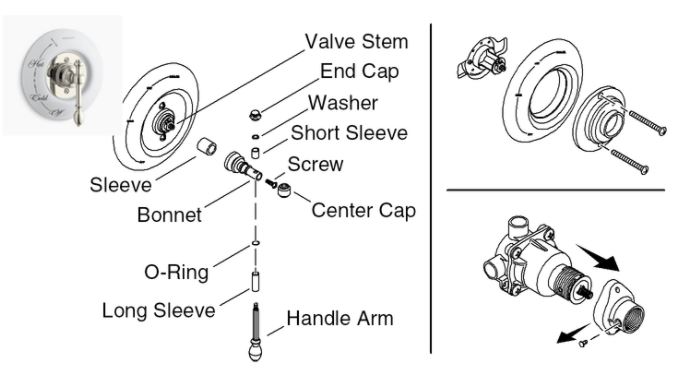
Rough-In Valve Body
Installed during construction, the rough-in valve is the main housing embedded in your wall framing. It connects to the hot and cold water supply lines, the shower riser pipe leading to the showerhead, and the tub spout in combo units.
Made from brass or high-grade plastic, it holds the internal mixing mechanism and must be perfectly aligned before tiling.
The Mixing Cartridge
This is the brain of the system. Located inside the valve body, the mixing cartridge blends hot and cold water based on your handle position. Older faucets used rubber washers. Modern ones use ceramic disks in valves from Delta and Moen, spools or pistons in pressure-balancing valves, or wax-filled actuators in thermostatic valves.
Cartridges are brand-specific and often replaceable without removing the entire valve.
Connection Ports
Ports are the valve’s entry and exit points. Two inlet ports bring hot and cold water, typically with hot on the left and cold on the right. One or more outlet ports send water to the showerhead, tub spout, or diverter.
Port configurations include three-port valves for shower-only setups and four-port valves for tub/shower combos that include a tub spout outlet.
Service Stops
Not all valves have them, but service stops are a game-changer. These small levers let you shut off water at the valve without turning off the main supply. This makes replacing trim or fixing leaks fast and convenient, especially in apartments or multi-unit buildings.
Delta-Specific Features
Delta valves include a plastic cage that serves two purposes. It acts as a depth gauge for tile installers and provides alignment guides for secure trim attachment. This ensures the trim sits flush with the finished wall and simplifies future access.
How Water Flows Through the System

Step One: Water Enters the Valve
Cold water comes directly from your main supply. Hot water passes through the water heater first. Both enter the rough-in valve through separate inlets, typically on the left for hot and the right for cold.
Step Two: Mixing Begins
Inside the valve, the mixing cartridge starts blending the two streams. The handle position determines the ratio. Turning left adds more hot water. Turning right adds more cold water.
Step Three: Temperature Is Stabilized
Depending on the valve type, different mechanisms keep the water safe. A pressure-balancing valve uses a spool to detect pressure changes. A thermostatic valve uses a wax actuator to sense actual water temperature.
If cold pressure drops, such as when a toilet flushes, the valve instantly reduces hot water flow to prevent scalding.
Step Four: Water Exits to Outlet
Mixed water leaves through the outlet port. It goes to the shower riser for the showerhead, to the tub spout in combo units, or to a diverter for multiple outlets like handheld sprayers or body jets.
The trim handle or diverter knob controls where the water goes.
Types of Shower Valves and How They Work
Pressure-Balancing Valve
This valve reacts to pressure imbalances, not temperature. If cold water pressure drops, a spool or piston shifts to reduce hot water flow, keeping the mix safe.
The self-cleaning ceramic disks resist mineral buildup. These valves require half-inch inlets, limiting flow to about five to seven gallons per minute. They do not retain temperature memory, so you re-adjust the setting each shower.
Pressure-balancing valves work best for standard showers, tub/shower combos, and budget-friendly installations.
Popular models come from Moen, Delta, and HammerHead.
Thermostatic Valve
Instead of monitoring pressure, a thermostatic valve senses actual water temperature using a wax-filled actuator or bimetallic strip. It adjusts the mix to maintain exact temperature, even during pressure swings.
These valves offer independent controls for temperature and flow. They retain temperature memory, delivering the same setting every time. With three-quarter-inch inlets, they support higher flow rates above ten gallons per minute, ideal for multi-head systems.
Thermostatic valves work best for luxury showers with rain heads, body jets, and handheld sprayers. They suit homes with fluctuating water pressure and households with children or elderly members.
Popular models include the Hansgrohe iBox and Delta thermostatic cartridges.
Diverter Valves
Diverter valves do not control temperature. They only redirect flow between different outlets.
A two-way diverter switches between two outlets, such as a fixed showerhead and a handheld sprayer. One outlet is active at a time.
A three-way diverter routes water to three outlets independently or together. This enables simultaneous flow from a rain head and body jets. These work best with thermostatic valves due to higher flow needs.
Integrated diverters are built into the trim for a clean look but require wall modification. External diverters attach to the shower arm, needing no plumbing changes, making them ideal for renters.
Installation: What You Need to Know
Match Your Plumbing Type
Your valve must connect to your existing pipes. Copper connection works for older homes with copper plumbing. IPS or half-inch NPT provides flexible installation with adapters. PEX suits new builds with crimp or clamp connections and requires no soldering.
Delta offers PEX-ready valves with built-in adapters.
Choose the Right Port Count
A single showerhead requires a three-port valve. A tub and shower combo requires a four-port valve. Multi-head showers need four or more ports or a separate diverter.
You can cap unused ports, but you cannot add missing ones later.
Trim and Valve Compatibility
Never assume compatibility, even within brands. Delta trims do not fit Peerless valves despite shared ownership. Moen and Kohler have multiple valve models, so verify the match. HammerHead simplifies this with matched valve-trim systems.
Always check manufacturer specs before buying.
Install with Correct Orientation
Orientation markings must face upward. This includes labels for hot, cold, tub, and shower. If installed upside down, the diverter may not work, water may go to the wrong outlet, and temperature control fails.
The standard is hot on the left, cold on the right.
Safety and Code Compliance
Anti-Scald Protection Is Required
Most building codes mandate anti-scald valves in new construction and major renovations. Only pressure-balancing valves and thermostatic valves qualify. Both prevent dangerous temperature spikes when water pressure changes.
Use Temperature Limit Stops
Many valves include adjustable limit stops, a safety feature that caps the maximum hot water setting. Set it to one hundred five to one hundred ten degrees Fahrenheit to prevent burns. This is especially important in homes with children or elderly members.
Professional Installation Recommended
According to the Plumbing-Heating-Cooling Contractors Association, improper valve installation can lead to leaks, scalding risk, and code violations. Hire a licensed plumber for rough-in and final trim work.
Maintenance and Troubleshooting
Common Problems and Fixes
A leaking handle or low flow is often caused by worn O-rings, seats, or springs. Fix this by replacing the internal parts, not the whole cartridge. Delta cartridges can be disassembled and repaired with inexpensive kits.
A stuck spool in a pressure-balancing valve is caused by mineral buildup in hard water areas. Fix this by removing and cleaning the spool or replacing the cartridge.
Temperature inconsistency indicates a failing thermostat in thermostatic valves or scale accumulation. Fix this by replacing the thermal actuator or flushing the system.
Repair Versus Replace
Most issues are cartridge-specific. Replace only the faulty part. Full valve replacement is only needed if the body is cracked or ports are damaged. Keep spare cartridges, O-rings, and seats on hand for quick fixes.
Best Valve by Use Case
For a single showerhead, use a three-port pressure-balancing valve with a single-handle trim.
For a tub and shower combo, use a four-port valve with a tub spout.
For a shower plus handheld sprayer, use a pressure-balancing valve with a two-way diverter.
For a luxury multi-head shower, use a thermostatic valve with a three-way diverter and three-quarter-inch inlets.
For a renter upgrade, use an external diverter on the shower arm.
For hard water areas, use a thermostatic valve or a self-cleaning cartridge.
For a child-safe shower, use a thermostatic valve with a limit stop and memory setting.
Performance Comparison: Pressure Versus Thermostatic
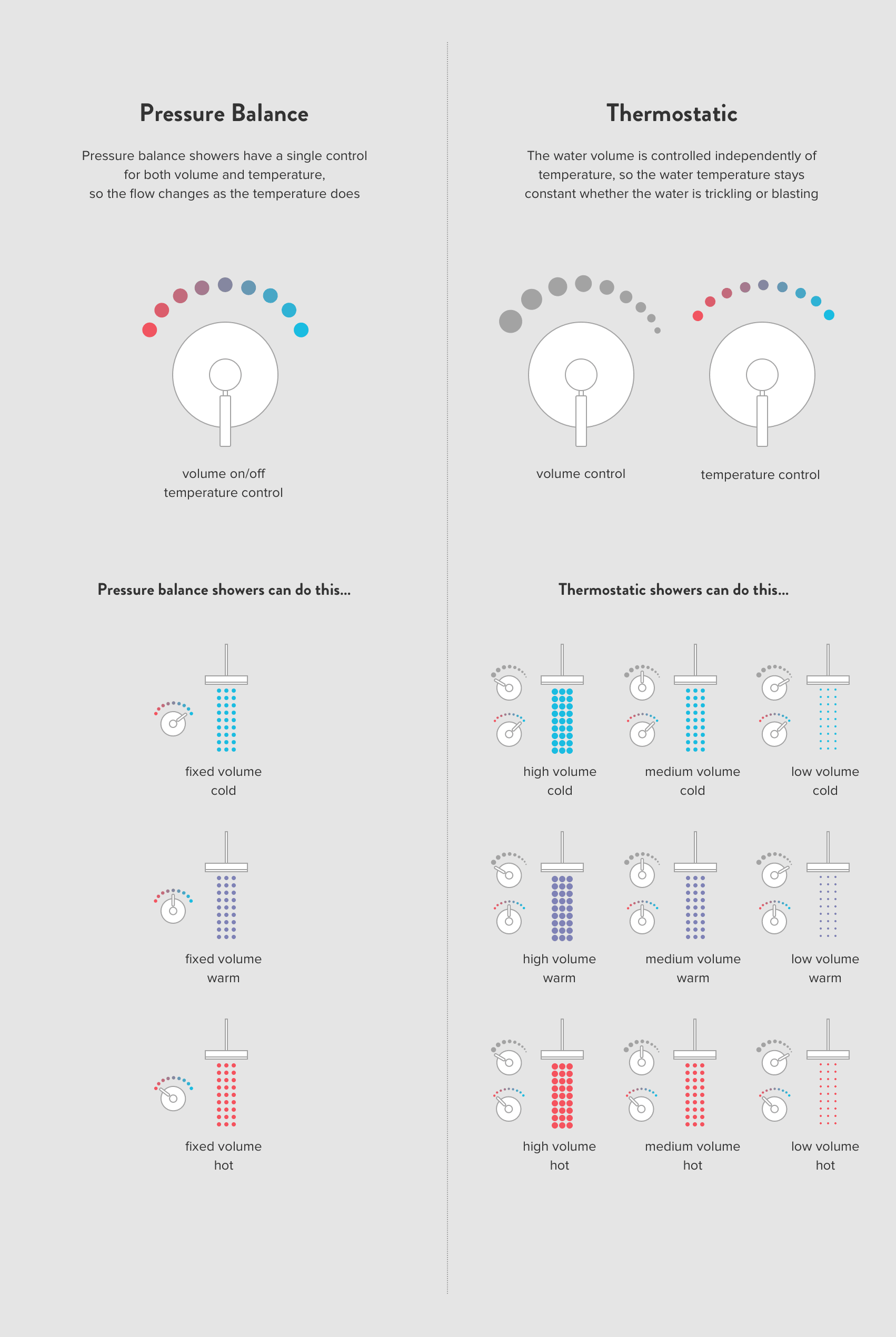
Pressure-balancing valves offer good temperature stability because they react to pressure. They support flow up to half-inch inlets at about five to seven gallons per minute. They have no memory setting and lower installation costs. Maintenance is moderate because the spool can stick. They work best for standard showers.
Thermostatic valves offer excellent temperature stability because they sense actual temperature. They support flow up to three-quarter-inch inlets at over ten gallons per minute. They have temperature memory and higher installation costs. Maintenance is low. They work best for multi-outlet, high-end systems.
Adding a diverter increases complexity but enables flexible use. Integrated diverters reduce wall clutter. External diverters offer easy upgrades.
Final Tips for Long-Term Performance
Always verify your plumbing type before buying a valve. Match the valve and trim exactly because compatibility is not guaranteed by brand. Install with orientation marks facing up to avoid flow issues. Use a thermostatic valve for multi-head or child-safe showers. Keep spare parts on hand including cartridges, O-rings, and seats. Consider service stops for easier future repairs.
Understanding how a shower faucet works empowers you to make smarter choices from installation to daily use. Whether you’re upgrading for luxury or just fixing a drip, knowing what’s behind the wall makes all the difference.
Frequently Asked Questions About Shower Faucets
What is the difference between a shower faucet and a shower valve?
These terms refer to the same thing. The shower valve is the mechanical unit installed inside the wall that controls water mixing and flow. The faucet trim is the visible handle and plate that you interact with. The valve does the work while the trim provides the control interface.
How does a pressure-balancing valve prevent scalding?
A pressure-balancing valve uses an internal spool or piston that detects changes in water pressure between the hot and cold supply lines. When something else in the house uses water and causes cold pressure to drop, the valve automatically reduces hot water flow to maintain a safe temperature mix.
Can I install a shower valve myself?
You can handle the trim installation if you have basic tools, but the rough-in valve work requires plumbing knowledge and often a permit. Professional installation ensures code compliance, proper orientation, and leak-free connections.
Why does my shower temperature fluctuate during use?
This usually indicates a failing pressure-balancing cartridge or mineral buildup in the valve. If you have a pressure-balancing valve, the spool may be stuck from hard water deposits. A thermostatic valve experiencing this issue likely has a failing thermal actuator.
What causes low water flow from my showerhead?
Low flow is typically caused by a worn cartridge, clogged aerator, or restricted supply line. Check the aerator first, then inspect the cartridge and supply lines for restrictions or damage.
How often should I replace the shower valve cartridge?
Cartridges typically last ten to fifteen years depending on water quality and usage. Signs you need replacement include leaking handles, difficulty turning the handle, temperature inconsistency, or reduced flow. Many cartridges are replaceable without removing the entire valve body.