Nothing is more frustrating than running your dishwasher and watching dirty water rise into your kitchen sink. This common plumbing problem affects countless homeowners, especially in older kitchens. The backup happens when wastewater cannot exit the drainage system efficiently, causing it to reverse flow into your sink during or after a cycle.
The good news? In most cases, a dishwasher emptying into the sink is fixable in under 30 minutes using basic tools. The most common culprit is a clogged P trap, but kinked drain hoses, blocked garbage disposals, and faulty air gaps can also cause this issue. This guide covers every possible cause and provides step-by-step fixes you can do yourself.
Clear the P Trap to Stop the Backup Fast
A clogged P trap is the number one reason dishwashers empty into sinks. This U-shaped pipe under your sink holds water to block sewer gases, but it also collects grease, food particles, and debris over time. When the dishwasher pumps water out, a partially blocked P trap cannot drain fast enough, forcing water backward into the sink.
How to Remove and Clean the P Trap
- Place a bucket or tray beneath the P trap to catch residual water and sludge.
- Use pliers or a wrench to loosen the two slip nuts connecting the trap to the sink tailpiece and drainpipe. Turn counterclockwise.
- Gently pull the U-shaped pipe down and out. Finding it full of gunk is normal in older kitchens.
- Rinse the trap under hot water. Use a bottle brush or bent wire (like a straightened coat hanger) to dislodge stubborn buildup.
- Flush both ends of the connecting pipes with hot water to clear remaining residue.
- Slide the trap back into place and hand-tighten the slip nuts. Finish with a quarter-turn using pliers, but avoid over-tightening, as this can crack PVC fittings.
- Run water through the sink to check for leaks, then run a short dishwasher cycle to confirm the backup stops.
Pro Tip: Clean your P trap monthly if you have an older kitchen. This single habit prevents the majority of dishwasher backup issues.
Inspect the Garbage Disposal for Hidden Blockages

If your dishwasher drains through a garbage disposal, clogs in the disposal or its drain line can stop water flow entirely. Even if the disposal runs normally, internal obstructions can trap water and cause backups.
Steps to Clear a Blocked Disposal
- Turn off power to the disposal at the breaker box before any inspection.
- Loosen the slip nut where the P trap connects to the disposal and swivel the trap aside to expose the drain opening.
- Shine a flashlight inside the disposal and look for visible obstructions like bones, fruit pits, or fibrous food matter.
- Use a long tool such as a broom handle to push debris loose. Never insert your hand, even with power off.
- Restore power, run the disposal with cold water, then test your dishwasher to see if the backup is resolved.
Safety Warning: Never insert tools while the disposal is running, and always use tools instead of hands when clearing blockages.
Fix Drain Hose Height and Routing Issues
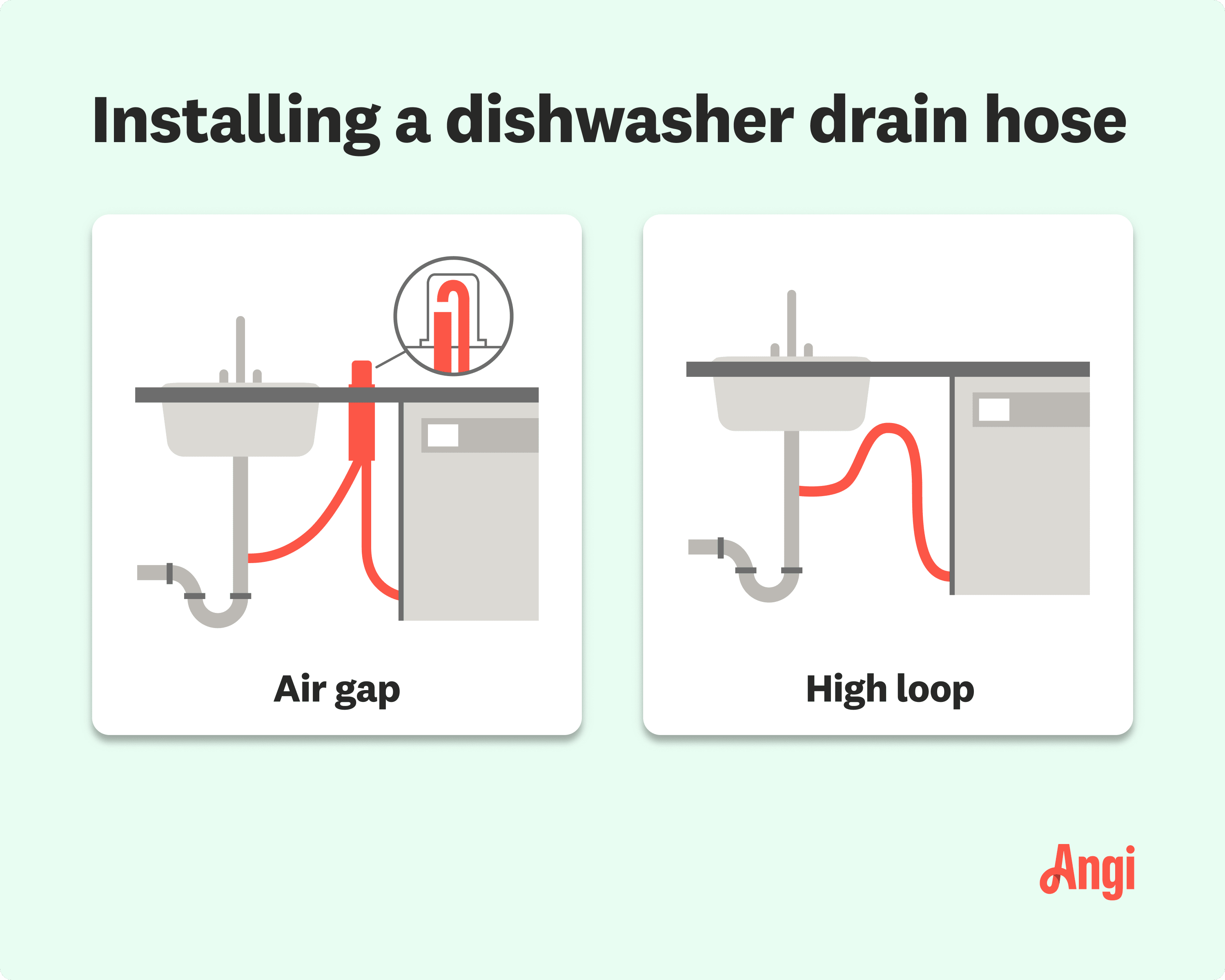
Your dishwasher drain hose must be installed at the correct height to prevent siphoning. If the hose sits too low, kinks, or routes improperly, water flows backward into the sink instead of out to the drain.
Check These Hose Requirements
- The drain hose should rise to at least 20 inches above the floor before connecting to the sink drain or disposal.
- The hose must form a high loop under the countertop to prevent backflow.
- Secure the hose with a clip or wire so it never hangs low inside the cabinet.
Inspect for Kinks and Clogs
- Pull the dishwasher out slightly and check the hose for bends, crushing, or damage.
- Disconnect both ends and blow through the hose to check for blockages.
- Flush the hose with hot water if you suspect a clog.
Quick Fix: Re-secure the hose to the underside of the counter to maintain proper height and prevent siphoning.
Clean the Air Gap to Restore Proper Drainage
An air gap is a small chrome cylinder mounted near your sink faucet. It prevents wastewater from siphoning back into the dishwasher by creating a physical break in the drain line. When clogged, it blocks drainage and causes sink backups.
How to Clean the Air Gap in 5 Steps
- Twist or pry off the chrome cover on top of the air gap.
- Lift out the plastic inner tube where gunk typically builds up.
- Wash both parts under hot water and use a pipe cleaner to clear the tube.
- Check the connected hose running to the disposal for kinks or blockages.
- Reassemble the air gap and run a dishwasher cycle to test.
Note: Homes without an air gap are more prone to backups. Consider installing one if yours is missing.
Replace a Faulty Check Valve Inside the Dishwasher

A check valve (or drain valve) inside your dishwasher stops water from flowing back into the tub after pumping it out. If this valve breaks or sticks open, water drains into the sink instead of the main drain line.
Signs of a Bad Check Valve
- Water slowly returns to the dishwasher tub after a cycle completes
- You hear gurgling in the drain line when the dishwasher is off
- The backup persists even after cleaning the P trap and disposal
Replacement Procedure
- Turn off power and water supply to the dishwasher.
- Remove the lower access panel to reach internal components.
- Locate the check valve near the drain pump.
- Unclip or unscrew the old valve and install a new OEM replacement part.
- Reassemble the panel and run a test cycle.
Time Estimate: This repair takes 20–30 minutes for DIYers with basic tools.
Correct Sink Drain Setup to Prevent Siphoning
Improper plumbing installation can cause chronic siphoning that pulls dishwasher water back into the sink. If the P trap sits too low or the drainpipe lacks proper slope, water cannot flow freely to the sewer.
Verify Proper Trap Height and Drain Slope
- The bottom of the P trap should be no lower than 12 inches from the floor.
- The drainpipe must slope downward at ¼ inch per foot to allow gravity to move water efficiently.
- The dishwasher and sink should not share a narrow or undersized drain that cannot handle combined flow.
When to Call a Pro: If pipes are glued or the configuration looks wrong, a licensed plumber may need to rework the drain layout.
Rule Out Deep Plumbing Problems
If all other fixes fail, the problem may lie deeper in your plumbing system. These issues are less common but require more advanced tools or professional help.
Check for Main Drain Line Blockage
Watch for these warning signs:
- Multiple fixtures (toilet, shower, sink) drain slowly at the same time
- Gurgling sounds occur in drains when appliances run
- Water backs up in multiple locations around your home
Solution: Use a plumber’s snake (¼” to ¾” diameter) to clear the main line, or call a professional for hydro-jetting service.
Test for a Blocked Plumbing Vent
Your plumbing vent allows air into the drain system to prevent suction that disrupts flow. When blocked, drains gurgle and flow slowly. Access the vent on your roof and clear debris like leaves or bird nests. This job often requires safety gear and experience.
DIY Caution: Roof work and main line snaking carry real risks. Know your limits before attempting either task.
Prevent Future Dishwasher Backups
A one-time fix solves the immediate problem, but regular habits keep your kitchen plumbing running smoothly for years.
Monthly Maintenance Routine
- Run hot water in the sink before starting the dishwasher to clear the line.
- Scrape dishes instead of rinsing them heavily. Modern detergents work best with some food particles present.
- Pour ½ cup baking soda and 1 cup vinegar down the disposal monthly, then flush with hot water.
- Clean the air gap every 3 months to prevent buildup.
Smart Upgrades for Long-Term Protection
- Install an air gap if your kitchen does not have one.
- Use a garbage disposal with a wide dishwasher inlet for better flow.
- Choose a dishwasher with a self-cleaning filter to reduce debris reaching the drain.
When to Call a Professional Plumber
DIY fixes resolve most dishwasher backup issues. But if you have cleaned the P trap, checked the disposal, inspected the drain hose, and replaced the check valve without success, it is time for expert help.
Clear Signs You Need a Plumber
- Sewage smell coming from the sink or dishwasher
- Water backing up into multiple fixtures simultaneously
- Suspected main line or vent blockage
- Old, corroded, or poorly installed pipes
How to Choose the Right Service
- Avoid plumbers who quote prices over the phone without an inspection.
- Always insist on a site visit before agreeing to any work.
- Get written estimates and ask whether camera inspection is included.
Smart Move: A $150 camera inspection can identify the exact problem and save hundreds in unnecessary repairs.
Frequently Asked Questions About Dishwasher Emptying Into Sink
Why is my dishwasher draining into my sink?
A dishwasher drains into the sink when wastewater cannot exit through the normal drainage path. The most common cause is a clogged P trap, but kinked drain hoses, blocked garbage disposals, and faulty air gaps can also force water backward.
How do I fix a dishwasher that empties into the sink?
Start by clearing the P trap under your sink, which solves most cases. If that does not work, inspect the garbage disposal for blockages, check the drain hose height and routing, clean the air gap, and test the check valve inside the dishwasher.
Can a clogged garbage disposal cause dishwasher backup?
Yes. If the disposal or its drain line is blocked, water from the dishwasher has nowhere to go and backs up into the sink. Always turn off power to the disposal before inspecting or clearing it.
How high should a dishwasher drain hose be?
The drain hose should rise to at least 20 inches above the floor before connecting to the sink drain or garbage disposal. This height prevents siphoning and ensures water flows in the correct direction.
What is an air gap, and do I need one?
An air gap is a small chrome device mounted near your sink faucet that prevents wastewater from flowing back into the dishwasher. Many plumbing codes require one, and installing one significantly reduces backup risk.
When should I call a plumber for a dishwasher backup?
Call a plumber if you have cleaned the P trap, checked the disposal, and inspected the drain hose without resolving the issue. Signs like sewage smell, water backing up in multiple fixtures, or suspected main line blockage also warrant professional help.
Key Takeaways for Fixing a Dishwasher That Empties Into the Sink
A dishwasher emptying into the sink is almost always caused by a blockage or installation issue you can fix yourself. Start with the P trap, which solves the majority of cases in under 10 minutes. From there, work through the garbage disposal, drain hose, air gap, and check valve until you find the culprit.
Regular monthly maintenance, including hot water flushes, baking soda and vinegar treatments, and air gap cleaning, prevents most future backups. If the problem persists after trying these fixes, do not hesitate to call a licensed plumber. A quick site visit and camera inspection can save you time, money, and frustration.
Take action today. Clear that P trap, run a test cycle, and enjoy a fully functional kitchen sink again.