A dripping faucet is not just annoying. It can waste over 1,000 gallons of water per year and drive up your utility bills. The good news? Most faucet repairs are simple DIY jobs that take less than an hour and cost under $30 in parts. This guide walks you through how to repair a faucet step by step, from identifying your faucet type to testing your work and preventing future leaks.
Identify Your Faucet Type First

Before you disassemble anything, you need to know what type of faucet you have. Using the wrong repair method can damage internal parts and make the problem worse.
Compression Faucets (Two-Handle)
These are common in older homes and have separate hot and cold handles. Inside, a rubber or nylon washer presses against a metal valve seat to stop water flow. When the washer wears out, the faucet drips.
How to identify it:
Two knobs turn clockwise to shut off water. You need some force to tighten them fully. They are often found in vintage bathrooms and utility sinks.
Repair focus: Replace washers and check valve seats.
Ball-Valve Faucets (Single Handle)
These use a rounded ball with internal channels under a dome-shaped cap. Moving the lever controls both water temperature and flow.
How to identify it:
A single handle sits over a rounded cap. The motion from cold to hot is smooth. Many carry brand names like Delta or Moen.
Repair focus: Replace springs, seats, cam, or the entire ball assembly.
Cartridge Faucets (Single or Double Handle)
A plastic or brass cartridge slides up and down and side to side to regulate water flow. Worn O-rings or degraded seals cause most leaks.
How to identify it:
One or two handles operate smoothly with no visible dome or cap. These are common in modern kitchens and bathrooms.
Repair focus: Replace O-rings or the full cartridge.
Ceramic Disc Faucets (Single Lever)
High-end models use two ceramic discs. One is fixed while the other moves to control water. They are extremely durable but expensive if cracked.
How to identify it:
A single lever offers precise temperature control. Look for labels like “DIAMOND Seal” (Delta) or “Einhebelmischer” (Grohe). Handle resistance is minimal.
Repair focus: Replace the entire disc module.
Pro Tip: Take a photo of your faucet and compare it to online diagrams before buying parts. Misidentification is the number one DIY repair mistake.
Diagnose the Problem by Symptom

Knowing exactly where and when the leak occurs tells you which part needs replacing.
Dripping Spout When Off
This usually means a worn washer in compression faucets or a failing cartridge in single-handle models. If left untreated, dripping can waste up to 3 gallons per day.
Quick test:
Turn off the water supply. Disassemble and inspect the washer or cartridge. Look for cracks, flattening, or mineral buildup.
Valve seat alert: If the washer wears unevenly, the metal seat beneath may be pitted. Use an emery cloth or seat wrench to smooth it, or replace it entirely.
Water Leaking at Handle Base
This points to a failed O-ring or loose packing nut. The leak often appears only when the faucet is running.
Visual clue: Moisture around the base of the handle, especially when the water is on.
Fix: Replace the O-ring and apply plumber’s grease. Wrap Teflon tape under the packing nut threads before re-tightening.
Low Water Pressure
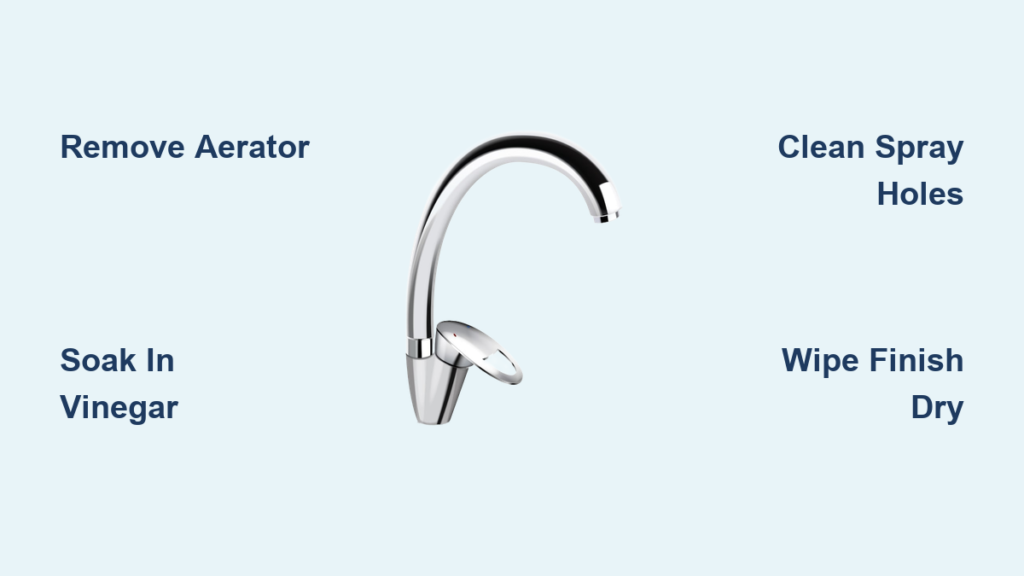
Start with the aerator, which is the screen at the spout tip. Mineral deposits clog it over time, especially in areas with hard water.
Fast fix:
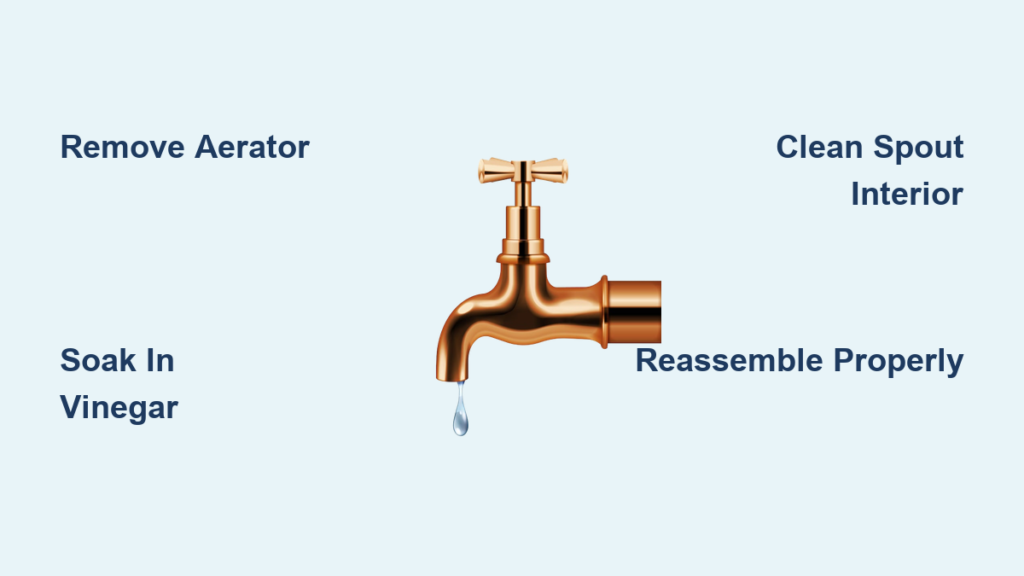
Unscrew the aerator using pliers with a cloth to avoid scratches. Soak it in white vinegar for 30 minutes. Clean with a toothbrush and reassemble.
If pressure does not improve, check the cartridge or inlet screens.
Handle Turns 360 Degrees Freely
This means the cam, stem, or cartridge has broken. The handle spins without controlling water at all.
Likely cause: Worn cam or stripped set screw.
Solution: Replace the cam/packing unit or the entire cartridge.
Spray Head Drips Continuously
Common in pull-down kitchen faucets, this is usually a failed diverter. This is a small valve that switches water from spout to spray.
Fix: Remove the diverter, often located behind the spray head, and replace it. Also check seals in the hose.
Gather the Right Tools and Supplies
You do not need a full toolbox. A few essential tools will get the job done.
Essential Repair Tools
| Tool | Purpose |
|---|---|
| Flathead screwdriver | Prying off decorative caps |
| Phillips #0 screwdriver | Removing small set screws |
| Adjustable wrench (8 inch) | Loosening packing nuts |
| Needle-nose pliers | Extracting O-rings and clips |
| Allen wrench (1/8 inch) | Removing seats in ball faucets |
| Tongue-and-groove pliers | Removing dome caps without damage |
| Metal spudger | Safe prying without scratching |
Protect your finish: Wrap tool jaws with tape and cover faucet surfaces with masking tape to avoid scratches.
Must-Have Supplies
- Teflon tape (PTFE): For threaded connections. Wrap 3 to 5 times clockwise.
- Plumber’s grease or petroleum jelly: Lubricates O-rings and moving parts.
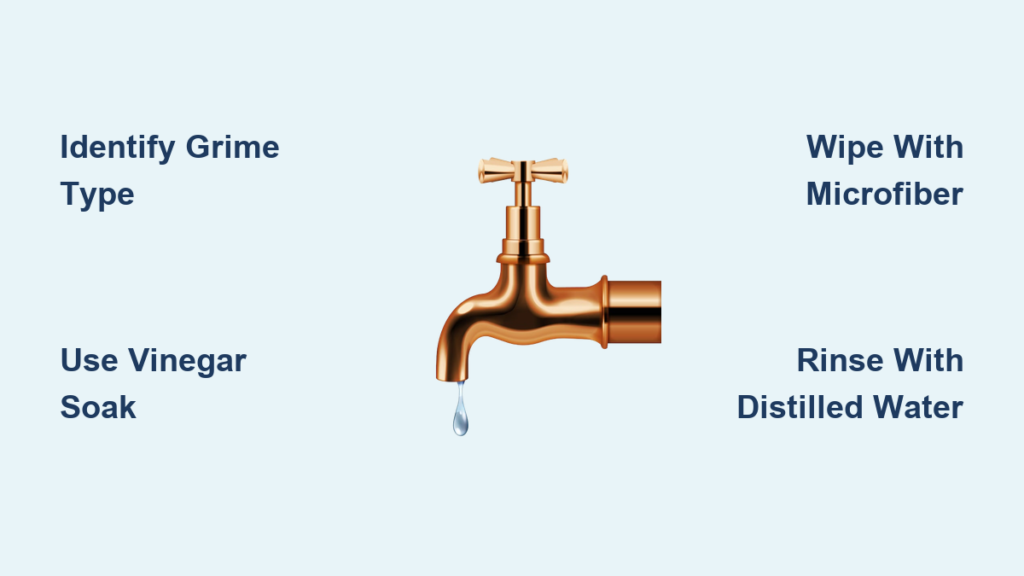
- White vinegar: Dissolves limescale in aerators and cartridges.
- Replacement parts: Washers, O-rings, cartridges. Match exact size.
Pro Tip: Bring old parts to the hardware store for exact matches. Brands like Delta and Moen have universal cartridge kits that save money.
Shut Off Water and Prepare the Area
Never skip this step. Unexpected water flow can flood your cabinets.
Step 1: Turn Off Under-Sink Valves
Locate the hot and cold shut-off valves under the sink. Turn them clockwise until tight.
If valves are stuck:
Try gently tightening with a wrench. If they leak or will not close, shut off the main water supply instead.
Step 2: Drain Residual Water
Open both faucet handles to release pressure and drain leftover water.
Step 3: Protect the Sink
Plug the drain to prevent losing small screws. Place a towel in the basin to catch parts. Wrap masking tape around chrome surfaces to avoid scratches.
Safety Note: Always confirm water is off before removing any parts. Test by briefly opening the faucet after shutting the valves.
Remove the Handle Safely
The handle hides the repair point. Remove it carefully to avoid damage.
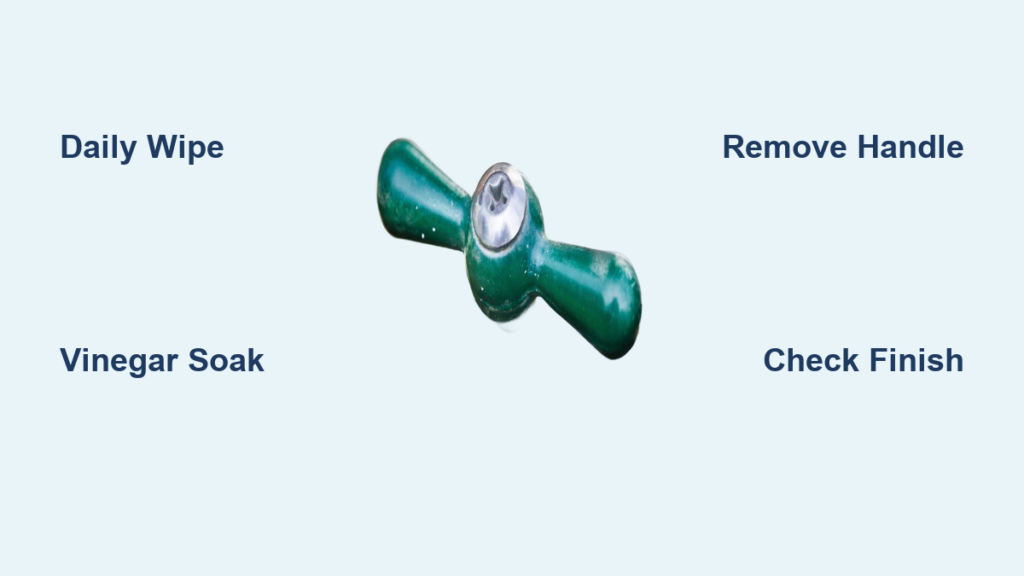
Step 1: Find the Set Screw
Look for a decorative cap on top of the handle. It may say “H” or “C” or be hidden under a logo.
Gently pry it up with a flathead screwdriver. Underneath, you will find a set screw, which may be Phillips or Allen-type.
Step 2: Remove the Set Screw
Use the correct screwdriver or hex key. If it is stuck, apply penetrating oil like WD-40. Wait 10 minutes, then try again. Do not force it. Stripped screws are hard to fix.
Step 3: Pull Off the Handle
Once the screw is out, pull the handle straight off.
If it is stuck:
Wiggle gently while pulling. Avoid hammering. Plastic handles can crack.
Photo Tip: Take pictures at each step. They will guide reassembly later.
Access and Replace Faulty Components
Now you can reach the core problem.
For Compression Faucets: Replace the Washer
- Use an adjustable wrench to loosen the packing nut, which is six-sided and around the stem.
- Pull out the stem.
- Remove the bottom screw holding the rubber or nylon washer.
- Replace with an identical washer. Match thickness and diameter exactly.
- Apply petroleum jelly before reinserting.
Check the valve seat: If the washer wore out quickly, the metal seat may be pitted. Use an emery cloth to smooth it, or replace it with a seat wrench.
For Ball-Valve Faucets: Replace Seats and Springs
- Remove the dome cap with tongue-and-groove pliers. Wrap the jaws with tape.
- Lift out the ball assembly.
- Locate the seats and springs at the bottom of the hot and cold inlets.
- Use an Allen wrench to remove old seats.
- Install new ones and reinsert the ball, aligning the pin with the slot.
Replace cam and packing if the handle leaks at the base.
For Cartridge Faucets: Swap the Cartridge
- Remove the retaining clip (C-clip) with needle-nose pliers.
- Pull out the old cartridge.
- Insert the new one, ensuring alignment tabs match.
- Reinstall the clip and handle.
Universal tip: Lubricate O-rings and cartridge seals with plumber’s grease for smooth operation.
For Ceramic Disc Faucets: Replace the Module
- Remove mounting screws or clips.
- Lift out the disc cartridge.
- Install the exact replacement, which is often branded.
- Reassemble carefully. Ceramic parts are fragile.
Clean or Replace the Aerator
Even after fixing internal parts, clogged aerators cause poor flow.
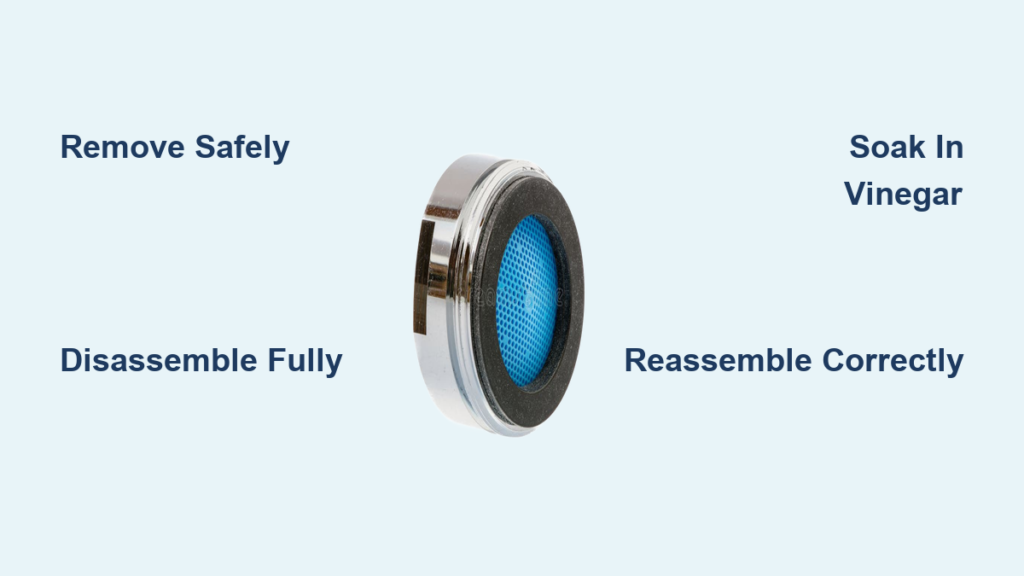
Step 1: Unscrew the Aerator
Grip the spout tip with pliers wrapped in cloth. Turn counterclockwise.
Step 2: Disassemble and Soak
Break it into parts: screen, flow restrictor, and washer.
Soak in white vinegar for 30 minutes to overnight to dissolve limescale.
Step 3: Clean and Reassemble
Use a toothbrush or pin to clear debris from the mesh. Rinse thoroughly and reassemble.
Replace if cracked or damaged.
Reassemble and Test the Faucet
Now put it all back together carefully.
Step 1: Reinsert the Stem or Cartridge
Apply plumber’s grease to O-rings and moving parts. Insert straight. Do not force it.
For compression faucets, hand-tighten the packing nut, then give a quarter turn with a wrench.
Warning: Overtightening damages threads and seals.
Step 2: Reattach the Handle
Slide it back on, insert the set screw, and tighten securely. Snap the decorative cap into place.
Step 3: Turn On Water and Test
- Slowly open shut-off valves.
- Turn on the faucet.
- Watch for drips at the spout, leaks at the handle base, smooth handle operation, and full water pressure.
If it still leaks:
Recheck washer alignment. Inspect the valve seat. Verify cartridge orientation. Consider replacing the entire cartridge.
Prevent Future Leaks with Maintenance
A little care extends faucet life by years.
Monthly
Clean the aerator, especially in hard water areas.
Every 6 Months
Tighten loose handles. Inspect for early drips.
Annually
Remove stems and flush valves briefly. Replace washers preemptively.
Long-Term Tips
Use non-abrasive cleaners to protect finishes. Avoid overtightening handles, which wears out washers faster. Install a water softener if you have hard water. Apply plumber’s grease during repairs.
Know When to Replace the Faucet
Sometimes repair is not worth it.
Replace If:
- Faucet body is cracked or corroded.
- Multiple leaks persist after part replacement.
- Parts are obsolete or unavailable.
- You have repaired it more than twice in a year.
- It is outdated or inefficient.
Cost comparison:
– DIY repair: $10 to $30
– Professional plumber: $150 to $300
– New faucet: $80 to $200 (lasts 10-plus years)
Fixing a drip saves up to 1,000 gallons per year and often pays for itself in water bill savings.
Key Takeaways for Repairing Your Faucet
Repairing a faucet is a manageable DIY task when you follow the right steps. First, identify your faucet type accurately. Using the wrong repair method leads to wasted time and damaged parts. Second, diagnose the problem by symptom. A dripping spout points to washers or cartridges, while handle leaks indicate O-ring failure. Third, always shut off the water supply before starting. This prevents flooding and makes the repair safer.
Most faucet problems come down to a $2 washer, a worn O-ring, or a clogged aerator. With basic tools and under an hour of work, you can stop leaks and save money on your water bill. Stay proactive with maintenance, and your faucet will run smoothly for years.
Frequently Asked Questions About Faucet Repair
How do I know if my faucet needs a washer or a cartridge replacement?
If your faucet drips from the spout when turned off, it is likely a washer (in compression faucets) or cartridge (in single-handle models). Remove the handle and inspect the part. If it looks worn, cracked, or flattened, replace it.
Can I repair a faucet without shutting off the water?
No. You must turn off the water supply before starting any repair. Unexpected water flow can cause flooding and make repairs dangerous. Locate the shut-off valves under the sink or use the main water supply if needed.
Why does my faucet still drip after replacing the washer?
The washer may not be aligned correctly, or the valve seat beneath it could be pitted. Inspect the valve seat for damage. If it is rough or pitted, smooth it with an emery cloth or replace it entirely.
How often should I replace faucet parts preventively?
Replace washers every 3 to 5 years even if they are not leaking. Clean aerators monthly in hard water areas. Inspect O-rings and seals during annual maintenance to catch wear before it causes leaks.
What should I do if I cannot remove the handle set screw?
Apply penetrating oil like WD-40 and wait 10 minutes. If it still will not budge, use a screw extractor tool. Avoid forcing it, as stripped screws are difficult to remove and may require professional help.