
Few things make a clean kitchen or bathroom look dirtier than orange-brown rust streaks across a porcelain sink. If you’ve been scrubbing with regular soap and getting nowhere, the problem isn’t your effort. It’s the method. Rust needs an acid or a targeted remover to break down, and most everyday cleaners simply can’t do the job.
Below, you’ll learn how to get rust stains out of sink surfaces using common household items, when to escalate to a stronger product, and how to keep stains from coming back. Every step is safe for porcelain and enamel when followed correctly.
Remove Light Rust Stains with Lemon and Salt
This is the gentlest place to start, and it works surprisingly well on fresh or surface-level stains.
Cut and Salt the Lemon
- Slice a lemon in half and press the cut side into coarse salt until it’s well coated.
- Kosher or sea salt works best because the larger grains provide gentle abrasion.
- Press the salted lemon firmly against the rust stain.
Scrub and Let It Sit
- Rub in circular motions for 30–60 seconds to work the acid into the stain.
- Leave the lemon in place for 10–15 minutes so the citric acid can dissolve the rust.
- Rinse with warm water and wipe with a soft sponge.
Pro Tip: If the stain has lightened but remains, repeat the process once before moving to stronger methods.
Use CLR When Stains Won’t Budge

Some rust has been there for months and has bonded to the porcelain. That’s when you need a dedicated rust remover like CLR.
Apply CLR Safely
- Slip on rubber gloves before opening the bottle.
- Pour a small amount onto the scrubbing side of a coarse sponge.
- Work the product into the rust spot using firm, circular pressure.
- For deep stains, let it sit for 2–3 minutes, then scrub again.
Rinse and Check the Surface
- Wash the area thoroughly with warm water.
- Inspect the porcelain for any dulling or color change.
- Repeat the treatment if any discoloration remains.
Warning: Never combine CLR with bleach or ammonia-based cleaners. Mixing chemicals can create dangerous fumes.
Scrub Tight Spots Around the Drain and Faucet
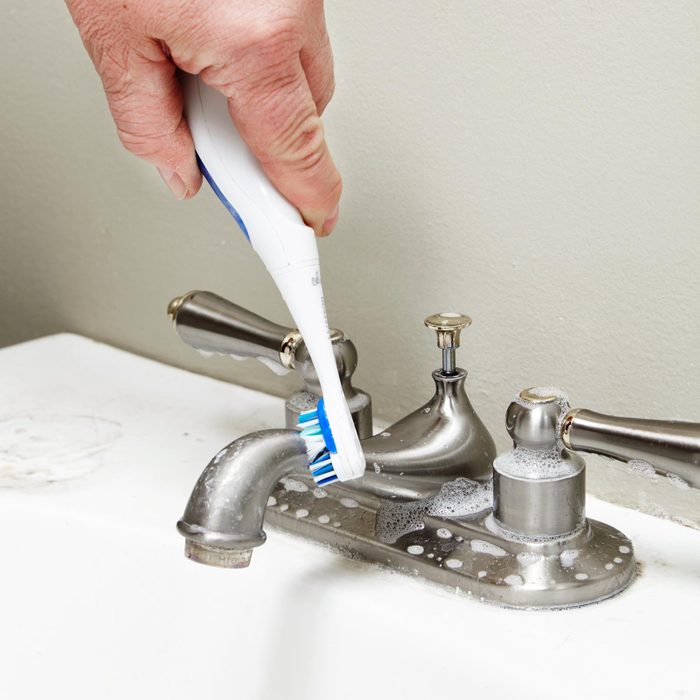
Rust loves to hide in places where water collects. The drain rim, faucet base, and back corners are common trouble spots.
Target the Drain Area
- Dip an old toothbrush into your lemon-salt mix or CLR.
- Scrub the grooves around the drain where moisture lingers.
- Rinse well and dry the area completely with a cloth.
Clean the Faucet Base and Sink Edges
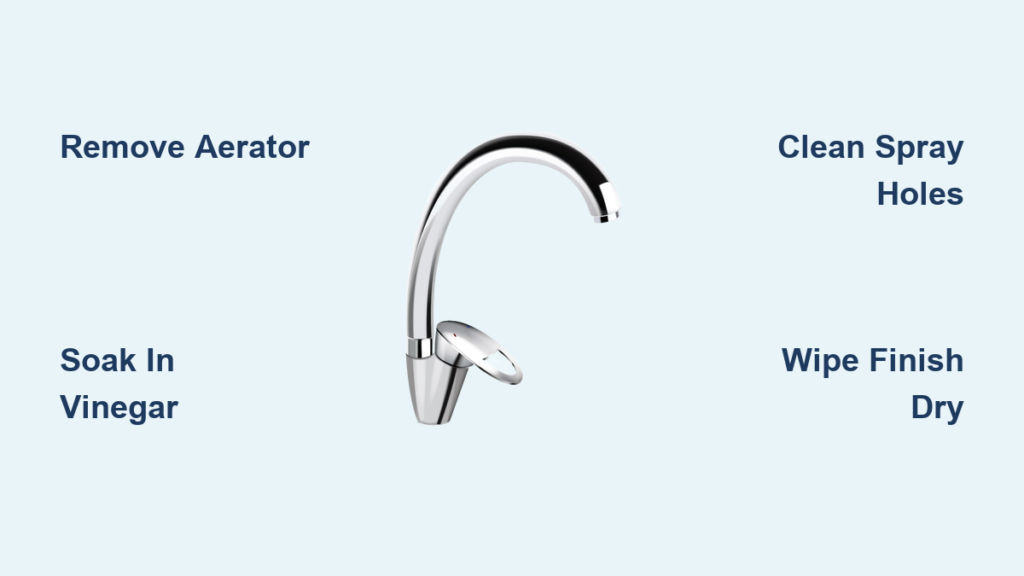
- Wrap a paper towel soaked in white vinegar around the faucet base for 10 minutes.
- Follow up with a quick scrub using a soft brush.
- Dry everything to prevent new rust from forming overnight.
Repeat Treatments for Set-In Stains
Old rust rarely disappears after a single cleaning. Patience is part of the process.
Treat Daily for Several Days
- Repeat your chosen method once per day for 2–3 days.
- Most stubborn stains fade significantly after the second or third session.
- Avoid the temptation to scrub harder, since aggressive pressure can scratch porcelain.
Alternate Methods if Needed
- Use lemon and salt on day one, then switch to CLR on day two.
- Rotating methods prevents overexposure to any single acid or chemical.
Prevent Future Rust Stains in Your Sink

Once your sink is clean, a few simple habits will keep it that way.
Dry the Sink After Every Use
- Grab a microfiber towel and wipe the basin dry after each use.
- This removes the moisture that allows rust to form in the first place.
Keep Metal Objects Out of the Sink
- Store razors, cans, and metal utensils elsewhere.
- Even stainless steel can leave marks when left sitting in water.
Fix Leaky Faucets Right Away
- A slow drip keeps one area constantly wet, which speeds up rust formation.
- Replace worn washers or call a plumber if the leak persists.
Maintain the Porcelain Finish Long-Term
A protected surface resists stains far better than an unprotected one.
Use a Porcelain Protectant
- After deep cleaning, apply a porcelain-safe sealant to create a moisture barrier.
- Reapply every few months for ongoing protection.
Stick to Gentle Weekly Cleaners
- Use mild dish soap and a soft sponge for routine cleaning.
- Avoid steel wool, scouring powders, and abrasive pads that wear down enamel.
Expert Note: Once a week, wipe the sink with a 1:1 vinegar and water solution to prevent mineral buildup that can lead to rust.
Try These Alternative Rust Removers
If you don’t have lemons or CLR on hand, a few other options can help.
Baking Soda Paste
- Mix baking soda with a few drops of water to make a thick paste.
- Spread it over the stain and scrub gently with a sponge.
- Rinse well and repeat as needed.
White Vinegar Soak
- Soak a paper towel in white vinegar and lay it directly on the stain.
- Leave it for 15 minutes, then scrub lightly.
- Rinse the sink thoroughly afterward.
Note: Vinegar is acidic, so don’t use it daily on porcelain. Overuse can dull the finish over time.
Know When to Call a Professional
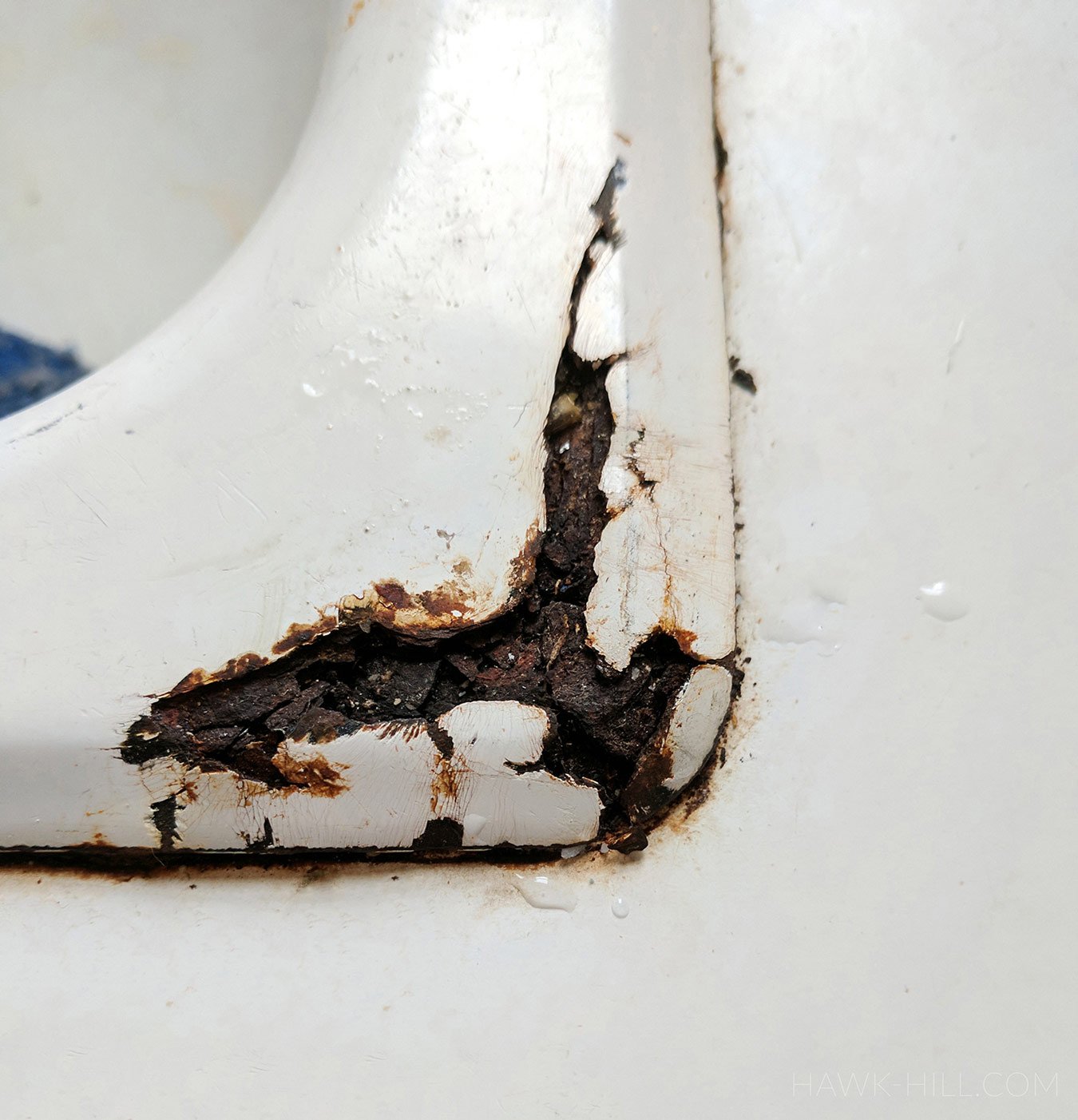
Sometimes the damage goes beyond what cleaning can fix.
Consider Reglazing for Etched or Chipped Sinks
- If rust has eaten into the porcelain or the enamel is flaking, cleaning won’t solve the problem.
- A porcelain reglazing service can restore the surface and seal in deep stains.
Replace Severely Damaged Sinks
- Cracks, deep pits, or widespread rust may mean it’s time for a new sink.
- Modern composite and stainless steel options resist rust far better than older porcelain models.
Frequently Asked Questions About Rust Stains in Sinks
What causes rust stains in a porcelain sink?
Rust stains usually come from dripping faucets, metal cans left in the basin, or hard water with high iron content. The iron oxidizes on contact with porcelain and leaves reddish-brown marks.
Can baking soda remove rust from a sink?
Baking soda can help with light surface rust thanks to its mild abrasiveness. For deeper or older stains, an acid-based method like lemon and salt or a product like CLR will work faster.
Is CLR safe to use on porcelain sinks?
Yes, CLR is safe on porcelain when used as directed. Always wear gloves, test a hidden area first, and don’t leave the product on the surface for more than a few minutes.
How long does it take to remove a stubborn rust stain?
Light stains often lift in one treatment of 15–20 minutes. Set-in stains may require 2–3 daily sessions before they fully disappear.
Will vinegar damage a porcelain sink?
Vinegar is safe for occasional use, but daily exposure can erode the porcelain finish over time. Limit vinegar treatments to once a week and always rinse thoroughly.
How can I prevent rust stains from coming back?
Dry the sink after each use, fix leaky faucets promptly, and avoid leaving wet metal items in the basin. A porcelain protectant applied every few months adds extra defense.
Final Thoughts on Removing Rust Stains from Your Sink
You don’t need harsh chemicals or expensive products to get rust stains out of sink surfaces. Lemon and salt handle most light stains safely and affordably. CLR steps in for the tough jobs that won’t budge otherwise. The real secret is consistency: repeat the treatment over a few days, then protect your work by drying the sink and avoiding metal contact.
Your next step: Pick the gentlest method that matches your stain’s severity, gather your supplies, and start with a small test area today. A rust-free sink is just a few minutes of work away.