Fruit flies in your sink are more than just a nuisance. They signal hidden breeding grounds in your kitchen drains, garbage disposals, and nearby produce. These tiny pests, often confused with drain flies, thrive in moist, organic buildup and fermenting food scraps. The moment you spot them near the faucet or hovering over dishes, it’s time to act. A single female can lay hundreds of eggs in just days, turning a small problem into a full infestation.
The good news is you don’t need harsh chemicals or an exterminator to eliminate them. With targeted drain cleaning, simple DIY traps, and smart prevention habits, you can wipe out fruit flies at the source. This guide walks you through exactly how to get rid of fruit flies in sink drains, where they often breed unnoticed. You’ll learn how to identify the real culprit, break down pipe buildup, trap adults, and stop future outbreaks using affordable, proven methods.
Identify the Real Pest in Your Sink

Before you start treatment, confirm what you’re dealing with. The right approach depends on accurate identification, because fruit flies and drain flies require slightly different strategies.
Fruit Flies: Red-Eyed and Attracted to Fermentation
Fruit flies are small, tan or yellowish insects with distinctive red eyes. They’re commonly found near overripe bananas, tomatoes, and open wine glasses. These pests are drawn to fermentation, not just decay. Even a forgotten peach pit or a damp sponge near the sink can invite them in.
Drain Flies: Fuzzy Wings and Pipe Dwellers
Drain flies are darker, usually black or brown, with fuzzy, moth-like wings. They crawl up drain walls and fly in short, weak bursts. These insects breed in the slimy biofilm that forms inside sink, shower, and floor drains. If you see flies emerge when you run water, you’re likely dealing with drain flies.
Pro Tip: Place a piece of clear tape over the drain overnight. If flies are still present in the morning, they’re coming from elsewhere, like trash bins or ripening produce.
Clean Drains to Kill Fruit Fly Larvae
Your sink drain is a prime breeding zone for both species. Organic gunk, including food scraps, grease, and soap scum, forms a gelatinous layer where flies lay eggs. Thoroughly cleaning your drain breaks the life cycle at the larval stage.
Use an Enzyme-Based Drain Cleaner
Chemical drain cleaners may clear clogs, but they don’t fully eliminate biofilm. For lasting results, use a powdered enzyme or bacteria-based cleaner like Drain Defense.
Application Steps:
1. Mix one scoop per pint of water.
2. Pour directly into the drain at night to avoid flushing it down too soon.
3. Follow with a small amount of hot water (not boiling) to help it penetrate pipe walls.
4. Repeat once daily for 7 days, then weekly for a month.
This treatment eats away at organic buildup, killing larvae and preventing reinfestation.
Why it works: Unlike liquid cleaners that pass through quickly, powdered enzyme formulas cling to pipe walls and work overnight for deeper cleaning.
Establish a Weekly Maintenance Routine
After the initial intensive week, switch to a sustainable maintenance schedule:
– Apply cleaner once a month.
– Flush drains with hot water weekly.
– Run the garbage disposal with ice and salt to clear debris.
This keeps drains clear and uninviting to breeding flies.
Make a DIY Vinegar Trap to Catch Adults

Trapping adult flies reduces the population quickly. A homemade vinegar trap is affordable, effective, and safe to use around food preparation areas.
Build the Trap in 3 Simple Steps
- Fill a jar with ½ cup apple cider vinegar (white vinegar works in a pinch).
- Add 2–3 drops of dish soap to break the surface tension so flies drown.
- Cover with plastic wrap, secure with a rubber band, and poke 5–6 small holes with a toothpick.
Place the trap next to the sink or near fruit bowls. Check it daily. Most flies are caught within 24 to 48 hours.
Expert Note: Apple cider vinegar outperforms white vinegar because it mimics the scent of fermenting fruit more closely.
Boost Your Trap’s Effectiveness
- Add a splash of red wine or a piece of overripe fruit to increase attraction.
- Replace the liquid every 2–3 days, as it loses potency.
- Use multiple traps if the infestation is widespread.
Try Citronella Drain Gel for Fast Action

For immediate, targeted treatment, use a citronella-based gel designed for drains. These products offer a different approach to fruit fly removal.
How Citronella Gel Works
These thick treatments:
– Sink into pipe crevices where larvae hide.
– Coat drain walls with insect-repelling ingredients.
– Stay active overnight, killing larvae and deterring adults.
Application Steps:
1. Pour 8 oz per drain directly into the sink.
2. Let sit overnight. Do not run water.
3. Flush with warm water in the morning.
Use this treatment once a week for two weeks, then monthly as needed.
Warning: Never mix citronella gel with bleach or strong chemicals. This can create dangerous toxic fumes.
Remove Nearby Food Sources
Even with spotless drains, fruit flies return if food is accessible. Eliminating attractants is a critical step in how to get rid of fruit flies in sink areas for good.
Store or Refrigerate Ripe Produce
- Keep bananas, tomatoes, onions, and stone fruit in the fridge once ripe.
- Use sealed containers for any fruit left on the counter.
- Discard overripe or damaged produce immediately. Don’t leave it sitting out.
Clean Sink and Countertop Zones Daily
- Wipe down counters after meals, especially near the sink.
- Rinse dishes promptly. Leftover crumbs or wine residue attract flies.
- Empty the kitchen trash daily, especially if it contains food scraps.
Common Mistake: Ignoring the dish sponge or drain rack, which can harbor food particles. Wash sponges daily and let them dry completely between uses.
Prevent Future Fruit Fly Infestations
Stopping fruit flies before they start is far easier than eliminating an established population. Build these habits into your routine.
Keep Drains Active and Clean
- Run water daily in guest bathroom or basement sinks, because stagnant drains attract flies.
- Use sink strainers to catch food particles before they enter pipes.
- Clean strainers weekly under running water with soap.
Seal Garbage and Compost Bins
- Use tightly sealed bins for all food waste.
- Line compost containers with newspaper or biodegradable bags.
- Avoid leaving compost indoors overnight.
Monitor for Early Warning Signs
- Watch for a single fly hovering near the sink. This is your early warning signal.
- Set up a preventive vinegar trap during summer or harvest season.
- Inspect drains monthly with a flashlight to check for slime buildup.
Pro Tip: Tape a clear plastic bag over the drain overnight. If flies are trapped inside by morning, your drain is confirmed as the source.
When to Call a Professional for Help
Most fruit fly problems can be solved with home methods. But if you’ve followed all the steps and still see flies after 3–4 weeks, consider these hidden possibilities:
- Hidden drain sources: Under appliances, in floor drains, or near basement sump pumps.
- Septic or sewer line issues: Cracks or leaks can harbor biofilm deep in your plumbing.
- Infested houseplants: Moist potting soil can contain fruit fly eggs.
In these cases, a pest control specialist or licensed plumber may be needed to inspect and treat hard-to-reach areas.
Frequently Asked Questions About Fruit Flies in Sinks
Why are fruit flies suddenly in my sink?
Fruit flies are drawn to moist, organic matter. Your sink drain likely has biofilm buildup, or nearby overripe produce is attracting them. They can also enter through windows, doors, or even grocery bags.
Are fruit flies and drain flies the same thing?
No. Fruit flies have red eyes and are attracted to fermenting food. Drain flies have fuzzy wings and breed in the slimy buildup inside pipes. Identifying which you have ensures you use the right treatment.
How long does it take to get rid of fruit flies in a sink?
With consistent drain cleaning and trapping, you can see major improvement within 7 to 14 days. Full elimination typically takes 3 to 4 weeks of dedicated effort.
Can I use bleach to kill fruit flies in my drain?
Bleach may kill some adults on contact, but it doesn’t eliminate biofilm where larvae live. Enzyme-based cleaners are more effective for long-term control. Never mix bleach with other drain products.
Where do fruit flies come from when there’s no fruit?
They can breed in drains, garbage disposals, trash cans, damp mops, sponges, or even houseplant soil. A single overlooked source can sustain an infestation.
Will fruit flies go away on their own?
Unlikely. Fruit flies reproduce rapidly, with a single female laying hundreds of eggs in days. Without addressing breeding grounds, the problem will only worsen.
Key Takeaways for Eliminating Fruit Flies in Your Sink
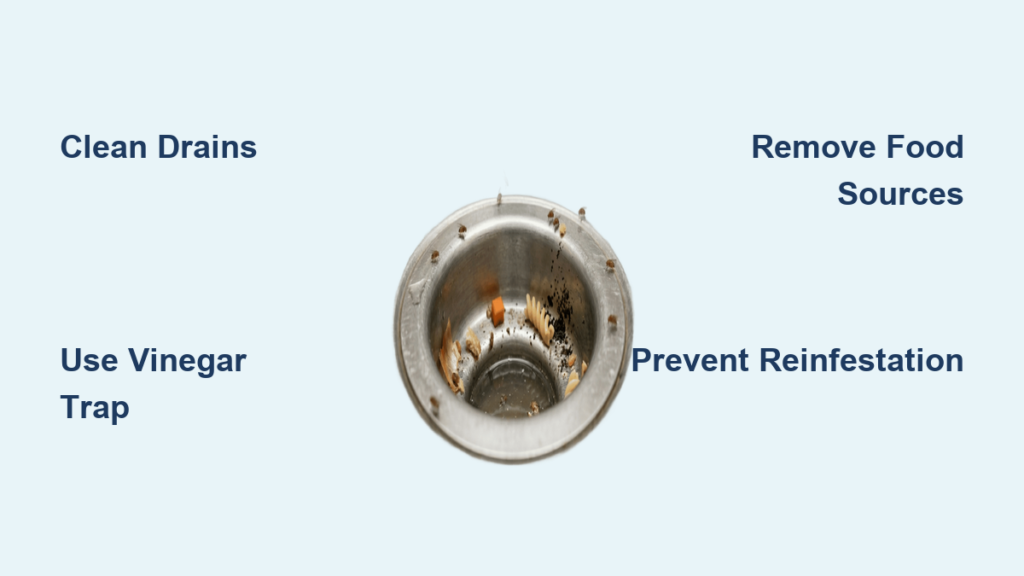
Getting rid of fruit flies in your sink comes down to targeting their breeding ground. Start with enzyme-based drain cleaning to destroy larvae in pipes. Set up DIY vinegar traps to capture adults and break the reproduction cycle. Remove food sources by refrigerating ripe produce and cleaning counters daily. Finally, maintain your drains monthly to prevent reinfestation.
The key is speed and consistency. Act at the first sign of a fly, clean thoroughly, and stick with the routine. With these steps, you can eliminate fruit flies for good and enjoy a clean, fresh, fly-free kitchen year-round. Start tonight with a drain treatment and a vinegar trap, and you’ll see noticeable results within days.