
Rust on your faucet isn’t just unsightly. It’s a warning sign that moisture is winning the battle against metal. That reddish-brown stain creeping under the handle or around the base can turn into pitting, leaks, and even complete faucet failure if left unchecked. The good news? Most early-stage rust can be reversed with simple DIY methods. Whether you’re dealing with a minor stain or a seized handle, this guide delivers actionable steps to fix rust on faucet effectively and prevent it from coming back.
Diagnose the Rust Source First
Before grabbing a scrub pad, you need to pinpoint where the rust is coming from. Treating the symptom without fixing the cause leads to recurring stains that keep coming back.
Check Rust Location and Pattern
Where rust appears tells you what is failing beneath the surface. Rust under handles typically indicates internal steel fasteners or cartridge leaks. Rust at the spout base suggests poor sealing or standing water. Rust on the chrome surface means plating damage or hard water exposure. Rust inside the aerator points to iron in your water supply or pipe corrosion.
Identify the Faucet Material
Not all “rust” is actually rust. Chrome-plated brass is the most common faucet material, and rust here indicates plating failure or internal steel parts. Stainless steel rarely rusts unless it is contaminated or low grade. Plastic and composite faucets cannot rust, so discoloration in these cases is likely mineral buildup instead.
Test for Hidden Leaks and Moisture
Even without visible dripping, moisture can wick into handle cavities and cause rust. Turn off the water supply and remove handles using an Allen wrench. Inspect the cartridge, O-rings, and valve stem for dampness, mineral deposits, or corrosion. If parts are wet or corroded, a small internal leak is feeding the rust.
Rule Out Iron Bacteria or Hard Water
Pinkish-orange slime is not rust. It is likely iron-oxidizing bacteria, which is common in wells or stagnant systems. Rust-colored water may mean your supply has iron levels above 0.3 ppm. Test your water quality if you notice these signs. Persistent issues will need filtration or disinfection.
Remove Surface Rust Safely
For light stains with no pitting, chemical and mechanical methods work fast without damaging your faucet finish.
Use Baking Soda and Vinegar Paste
This natural combo lifts early rust without scratching your fixture. Mix baking soda with white vinegar into a thick paste. Apply to the rusted area and let it fizz for 5 to 10 minutes. Scrub in circles with a microfiber cloth or soft brush. Rinse and dry completely. This method works best on chrome, brass, and stainless steel. Add lemon juice for extra citric acid power.
Try Lemon Juice and Salt Scrub
Another non-toxic option works well for light staining. Mix lemon juice and table salt into a wet paste. Apply to the area and let sit for 2 to 4 hours. Scrub with a non-abrasive pad and rinse well. The citric acid dissolves iron oxide while salt provides gentle abrasion.
Soak with White Vinegar
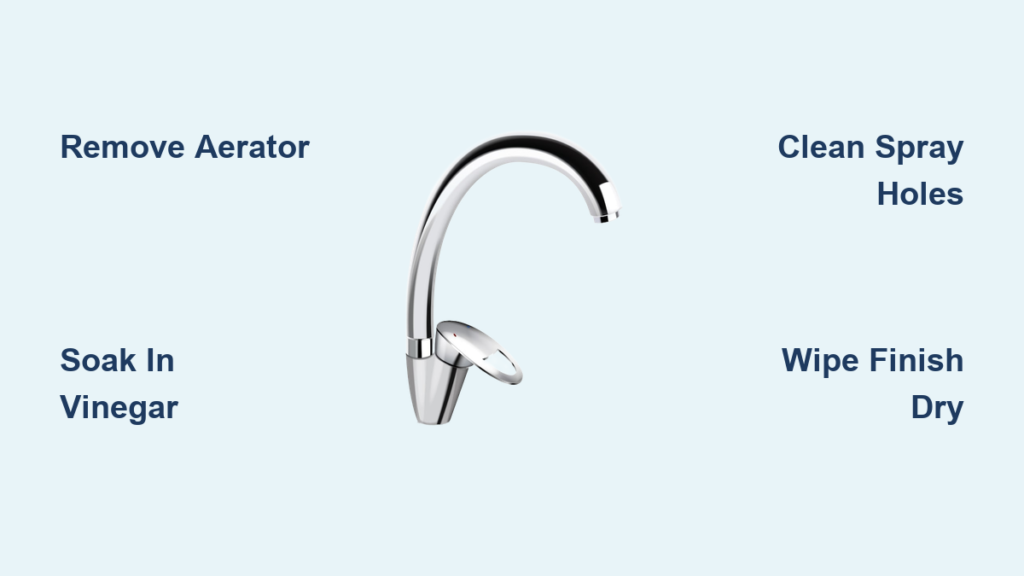
For rust at the base of the spout or around handles, vinegar soaks work effectively. Soak a cloth in white vinegar and wrap it around the rusted area. Leave it for 30 minutes to 3 hours depending on severity. Wipe and scrub lightly, then rinse and dry. Vinegar also clears mineral buildup that traps moisture against the metal.
Apply Oxalic Acid Cleaners
For set-in stains, commercial rust removers are stronger and more effective. Recommended products include Bar Keepers Friend, Whink, CLR, and Zud. Apply the product directly or with a soft brush. Wait 1 to 5 minutes but never exceed that time. Gently scrub with a non-abrasive sponge and rinse thoroughly. Dry immediately. Wear gloves, eye protection, and ventilate the room when using these products. Never mix oxalic acid cleaners with bleach because this creates toxic fumes.
Use a Pumice Stone for Stubborn Stains
Pumice is abrasive but safe on most finishes when used correctly. Wet the stone and the rusted area. Rub gently in a circular motion. Rinse and dry. This costs under $2 at any hardware store. Test on a hidden area first and avoid using on delicate porcelain or fiberglass.
Avoid Steel Wool and Harsh Scourers
Steel wool scratches chrome and exposes the base metal to faster rust. Never use steel wool on faucet finishes. Use only non-metallic pads or soft cloths to protect the protective coating.
Fix Internal Rust and Seized Parts
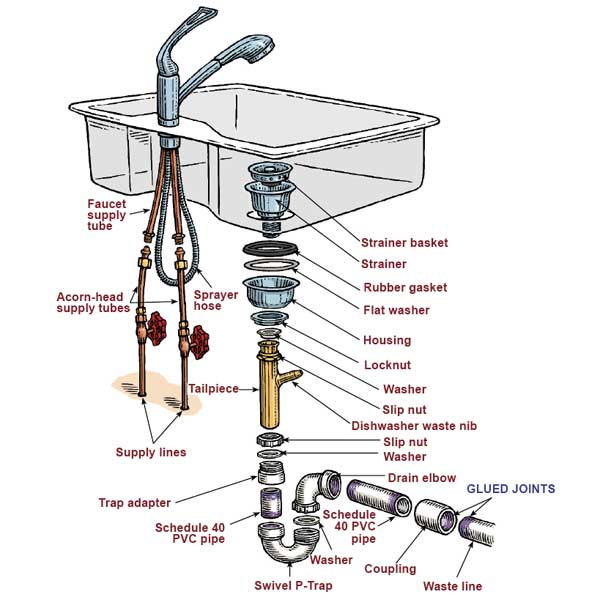
When rust affects screws, nuts, or cartridges, disassembly is required to address the problem properly.
Turn Off Water and Disassemble
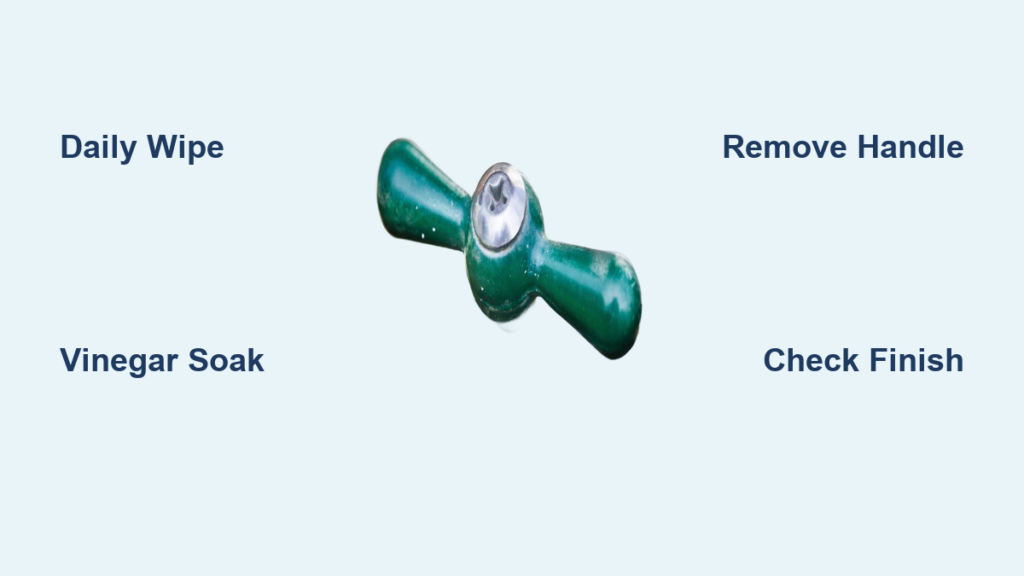
Shut off the under-sink valves before starting any repair. Open the faucet to drain remaining pressure. Remove the handles using an Allen wrench or screwdriver. This exposes the mounting hardware where rust commonly hides.
Replace Steel Fasteners with Stainless Steel
Many faucets use carbon steel screws and nuts beneath chrome-plated handles. These rust easily when exposed to moisture. Replace them with 304 or 316 stainless steel equivalents, which are available at hardware stores or online. This single step prevents rust from returning.
Loosen Rusted Mounting Nuts
If the nut will not budge, spray penetrating oil such as WD-40 liberally. Wait 15 to 30 minutes for it to work. Use a hammer and punch to tap counterclockwise on the nut wings to break the rust bond before turning. A basin wrench works in tight spaces. Channel locks provide better grip. A pipe wrench works for extreme cases but requires a helper above the sink.
Free a Seized Handle or Cartridge
Soak the stem with penetrating oil and let it sit for 30 minutes. Gently twist the handle back and forth to break the seal. Replace the cartridge if it is cracked or leaking. Heating the handle with a hairdryer causes expansion that can break the rust bond.
Cut or Replace a Rusted Faucet
If rust is deep, pitted, or the faucet will not come apart, replacement is the safer option.
When to Replace, Not Repair
Replace the faucet if the metal is pitted or flaking. Replace if rust returns within days after cleaning. Replace if internal hardware is corroded. Replace if the finish is permanently damaged.
Cut the Faucet as Last Resort
If mounting nuts are fused and will not release, use a Dremel with a metal-cutting wheel, a hacksaw, or a reciprocating saw. Cut through the faucet body or stem while avoiding damage to the sink, supply lines, or drain. Wear eye protection because sparks and metal fragments fly during cutting.
Install a Rust-Resistant Replacement
Choose faucets made of stainless steel for the best resistance in humid or coastal areas. Solid brass with thick chrome plating is also durable, but verify that internal parts are stainless. Avoid cheap models that use steel fasteners.
Seal the Base to Prevent Recurrence
After installation, clean and dry the mounting area thoroughly. Apply silicone-based sealant around the base and let it cure before use. Never use plumber’s putty under handles because it can stain porcelain and does not seal against moisture ingress.
Prevent Rust from Coming Back
Cleaning is not enough. You must stop rust at the source to keep your faucet looking new.
Wipe and Dry After Every Use
Moisture left on metal causes oxidation. Make it a habit to dry the faucet with a towel after washing hands or brushing teeth. High-end hotels use weekly vinegar wipes for this exact reason.
Clean Weekly with Safe Products
Use mild soap, a soft cloth, and pH-neutral cleaners. Avoid bleach and ammonia, which react with iron and worsen stains. Abrasive powders also damage protective finishes.
Install a Water Softener
Hard water high in calcium, magnesium, and iron traps moisture and stains. A whole-house softener or under-sink filter protects all plumbing fixtures, not just the faucet.
Flush Aerators Monthly
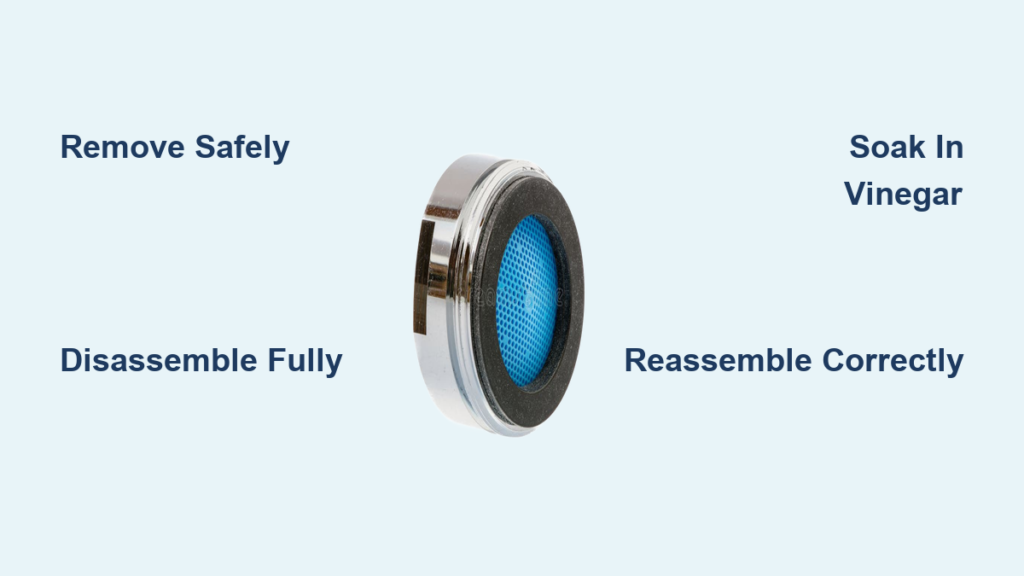
Mineral buildup inside aerators promotes rust. Unscrew the aerator and soak it in vinegar for 30 minutes. Rinse and reinstall to maintain clean water flow.
Improve Bathroom Ventilation
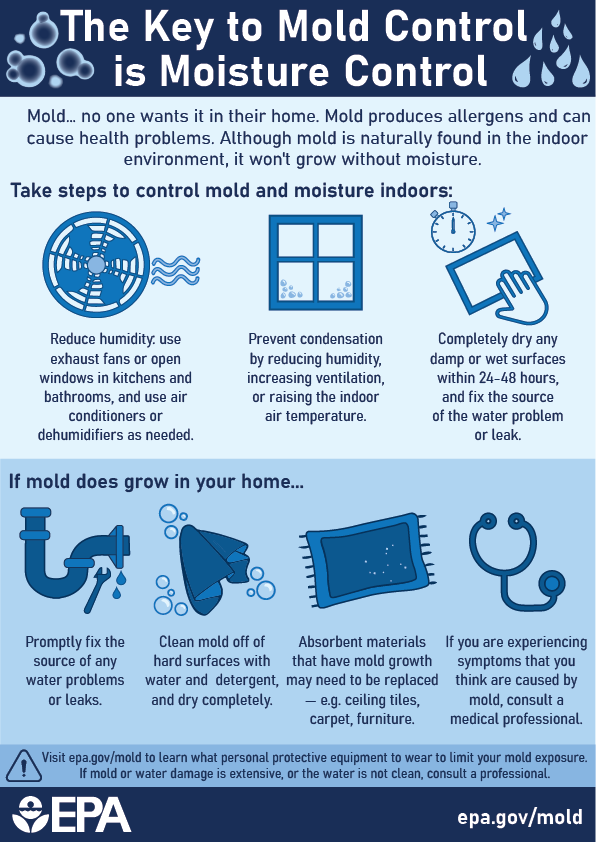
Steam from showers condenses on cool faucets. Run the exhaust fan during and after showers. Open windows or use a dehumidifier to reduce moisture in the air.
Apply Protective Sealants
After deep cleaning, use chrome-safe wax or metal sealant. This creates a moisture barrier that protects against oxidation. Reapply every 3 to 6 months for continued protection.
Safety Tips You Cannot Ignore
Wear protective gear when using acids or penetrating oils. Gloves and goggles are essential. Long sleeves prevent splashes on your skin.
Never mix cleaners. Vinegar plus bleach creates toxic chlorine gas. Ammonia plus bleach creates chloramine vapors that irritate lungs.
Test any cleaner on a hidden spot first. Apply the product to the underside of the base or an inconspicuous area to check for finish damage before using it on visible rust.
Key Takeaways for Fixing Your Faucet Rust

Fixing rust on faucet starts with diagnosis. Cleaning alone will not stop recurrence if you do not address the underlying cause. Replace steel hardware with stainless steel fasteners to eliminate the most common source of internal rust. Eliminate moisture by drying the faucet after use, fixing leaks promptly, and improving bathroom ventilation.
Upgrade to rust-resistant materials if your faucet shows persistent problems. With the right diagnosis, proper cleaning methods, and preventive maintenance, you can restore shine and extend your faucet is life for years to come.
Frequently Asked Questions About Fixing Rust on Faucets
Can I use vinegar and baking soda to remove rust from a faucet?
Yes. The acetic acid in vinegar reacts with baking soda to create a fizzy, mildly abrasive paste that lifts light rust effectively from chrome, brass, and stainless steel surfaces.
Will bleach remove rust from a faucet?
No. Bleach worsens rust stains by reacting with iron and can deepen discoloration. Avoid bleach entirely when treating faucet rust.
How do I prevent rust under faucet handles?
Ensure no leaks exist from the cartridge. Replace steel fasteners with stainless steel. Dry the area after each use and consider applying silicone sealant at the base to block moisture.
Are there rust-proof faucet materials?
No metal is completely rust-proof, but stainless steel and high-quality brass are highly resistant. Plastic faucets do not rust but are less durable.
Can I fix a rusty faucet, or should I replace it?
Minor surface rust can be cleaned successfully. If rust is pitted, keeps recurring, or stems from internal corrosion, replacement is recommended.
How often should I clean my faucet to prevent rust?
Wipe weekly with a soft cloth and mild soap. Perform deep cleaning every 1 to 3 months depending on your water hardness.