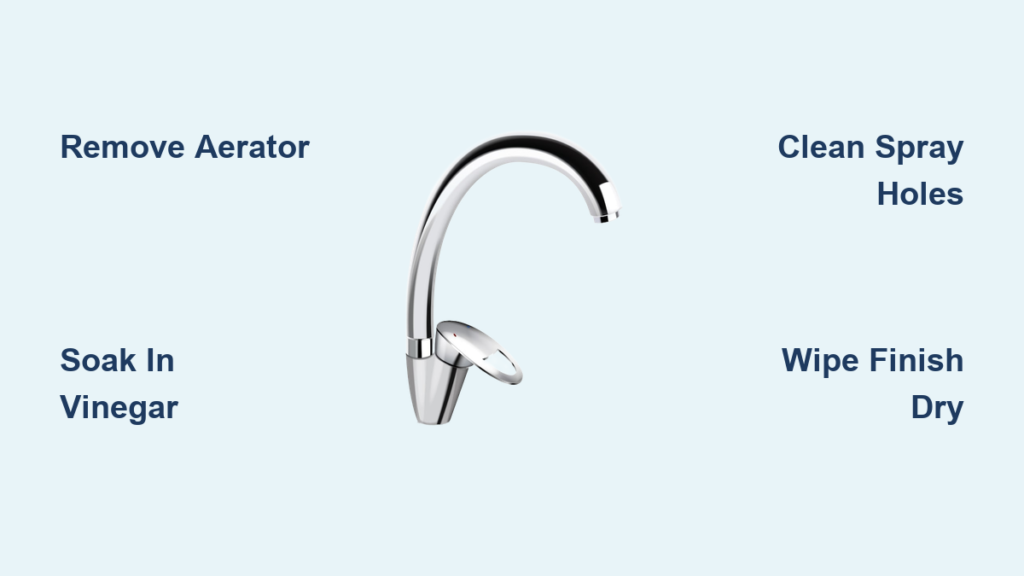
Hard water deposits on faucets are more than just an eyesore. They are a persistent problem in homes with high-mineral water, leaving chalky white stains that dull chrome, clog aerators, and stick to crevices. If your faucet has lost its shine or water flow has slowed, mineral buildup is likely the culprit. The good news? You can remove these deposits safely using common household items like white vinegar, baking soda, or targeted commercial cleaners. This guide walks you through proven methods, material-specific tips, and prevention strategies so you can restore your faucet is look and function without calling a plumber.
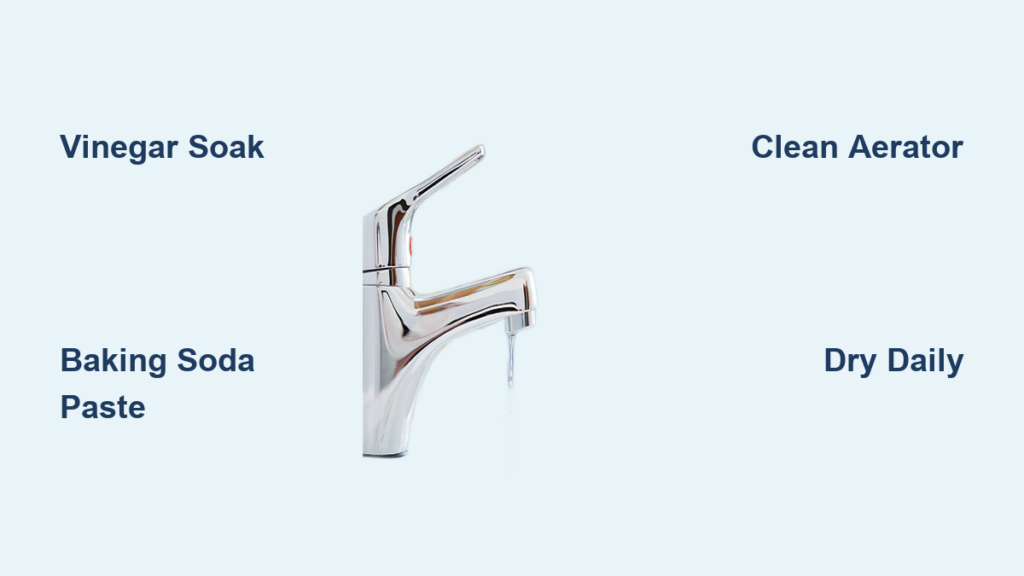
Use White Vinegar Soak Safely
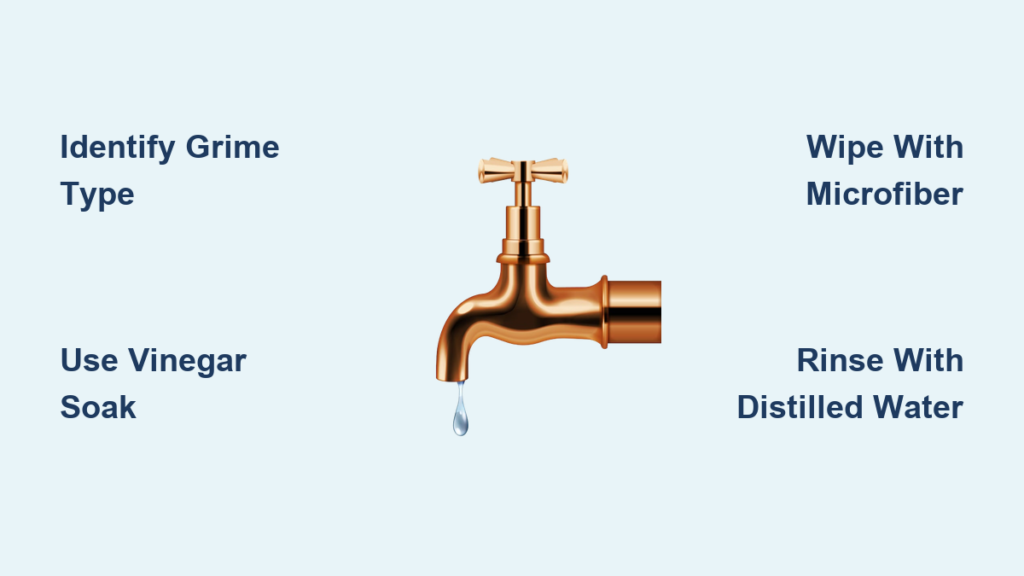
White vinegar is the go-to solution for dissolving hard water stains thanks to its mild acetic acid, which breaks down limescale without damaging most finishes when used correctly.
Spot Test First
Always test vinegar on a hidden area of the faucet before full application. Apply a drop with a Q-tip, wait 5 minutes, and check for discoloration or etching. This step is crucial for brushed nickel, oil-rubbed bronze, or unlacquered brass, which can be sensitive to acid.
Apply Vinegar with Cloth
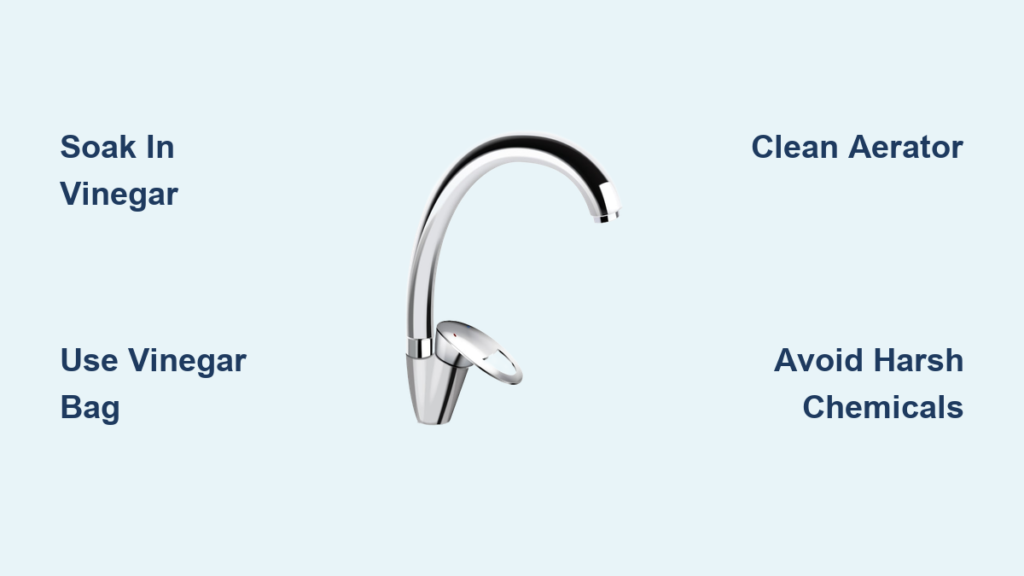
Soak a paper towel or clean cloth in white vinegar until fully saturated. Wrap it around the spout, handle, or stained areas, ensuring full contact. Tuck the edges to keep it in place. For upright faucets, you can also pour vinegar into a plastic bag and secure it with a rubber band.
Soak for 15 to 30 Minutes
Let the vinegar sit for 15 minutes for light buildup or up to 30 minutes for heavier deposits. Do not exceed this time frame. Prolonged exposure can damage protective coatings on some finishes. Avoid using undiluted vinegar on delicate surfaces.
Wipe and Scrub Gently
Remove the cloth and wipe away loosened residue with a damp sponge. Use an old toothbrush or Q-tip to clean grooves, set screw holes, and textured surfaces. Rinse thoroughly with warm water and dry completely with a microfiber towel to prevent new spots from forming.
Tackle Tough Buildup with Pastes

When vinegar alone does not cut through thick or old limescale, a paste adds mechanical action to chemical cleaning for better results.
Mix Baking Soda and Vinegar
Combine 2 parts baking soda with 1 part vinegar to form a thick paste. The fizzing reaction helps lift stubborn deposits. Apply directly to stained areas, let sit for 10 to 15 minutes, then gently scrub with a soft sponge or toothbrush. Rinse well and dry thoroughly.
Try Borax and Vinegar for Heavy Scale
For caked-on buildup on durable finishes like chrome or stainless steel, mix borax with vinegar into a paste. Apply, wait 15 to 20 minutes, scrub lightly, and rinse. Borax enhances vinegar is cleaning power but should be handled with gloves and kept away from children.
Use Hydrogen Peroxide for Stained Areas
If deposits have yellowed or discolored the surface, mix equal parts 3% hydrogen peroxide and baking soda. Apply the paste, wait 15 minutes, scrub gently, and rinse. This method works well for white fixtures or faucets with minor discoloration from iron or manganese.
Never mix vinegar and hydrogen peroxide in the same container. They form peracetic acid, which is corrosive and hazardous. Use them in separate cleaning sessions with thorough rinsing in between.
Choose the Right Method by Faucet Finish
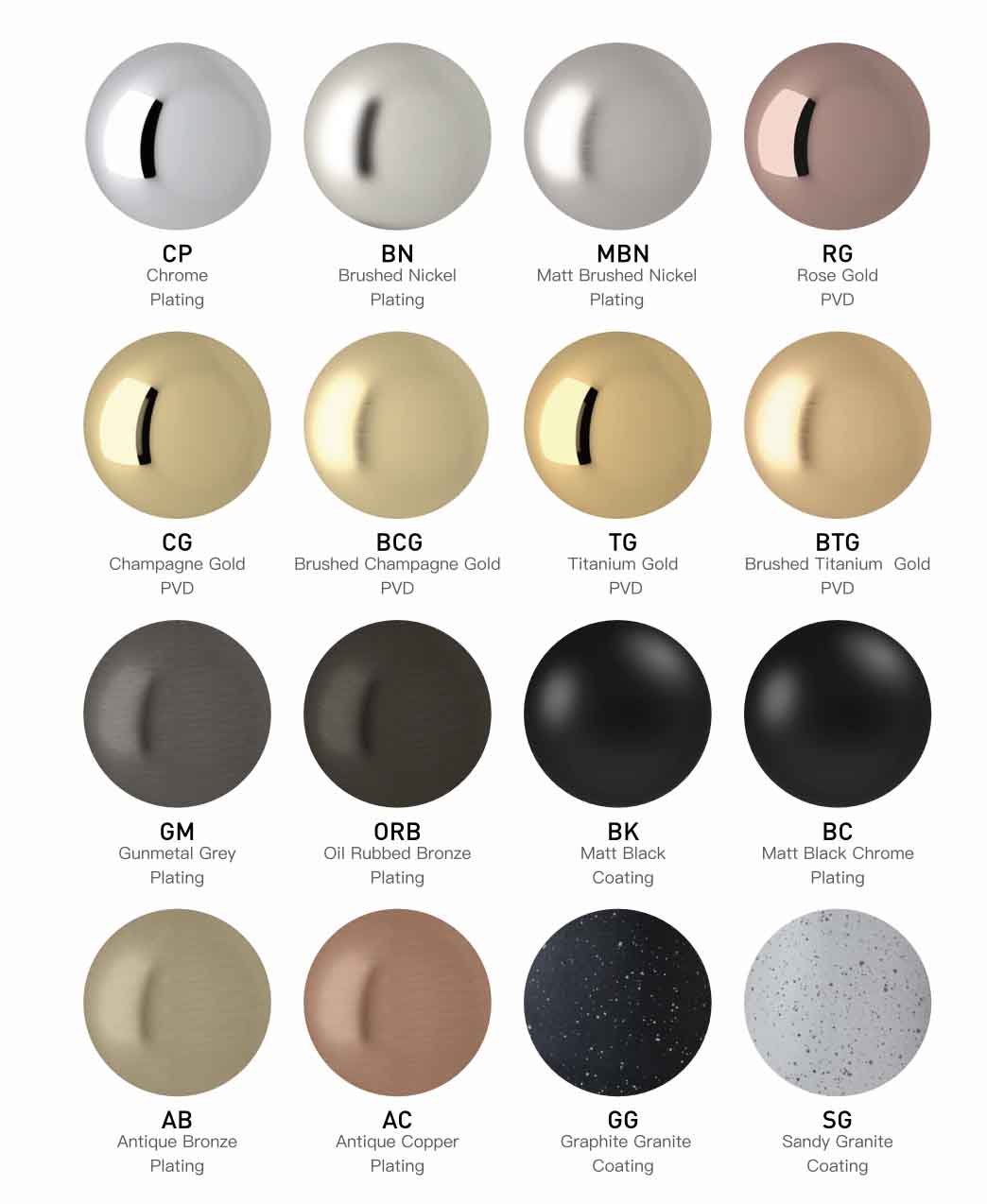
Not all faucets can handle the same cleaning approach. Using the wrong method can strip coatings or tarnish metal permanently.
Chrome and Stainless Steel
These finishes are highly durable and respond well to full-strength vinegar soaks. Baking soda pastes are safe for scrubbing. Avoid steel wool or abrasive pads because they scratch the surface and make future buildup worse.
Brushed Nickel and Oil-Rubbed Bronze
Use diluted vinegar (1 to 1 with water) and limit contact to 10 minutes maximum. Rinse immediately and dry. Harsh acids can strip the protective layer, leading to premature wear and discoloration. For light cleaning, stick to mild dish soap and water.
Brass and Copper
For lacquered brass, short vinegar exposure is generally safe. For unlacquered brass, avoid vinegar altogether because it can accelerate tarnishing. Instead, use a specialized brass cleaner or mild soap. Never use abrasive tools on brass surfaces.
Plastic and Composite Parts
Vinegar and baking soda are safe for plastic components like handles or aerator housings. Avoid commercial removers with strong solvents, which may degrade or warp plastic over time.
Clean the Aerator to Restore Flow
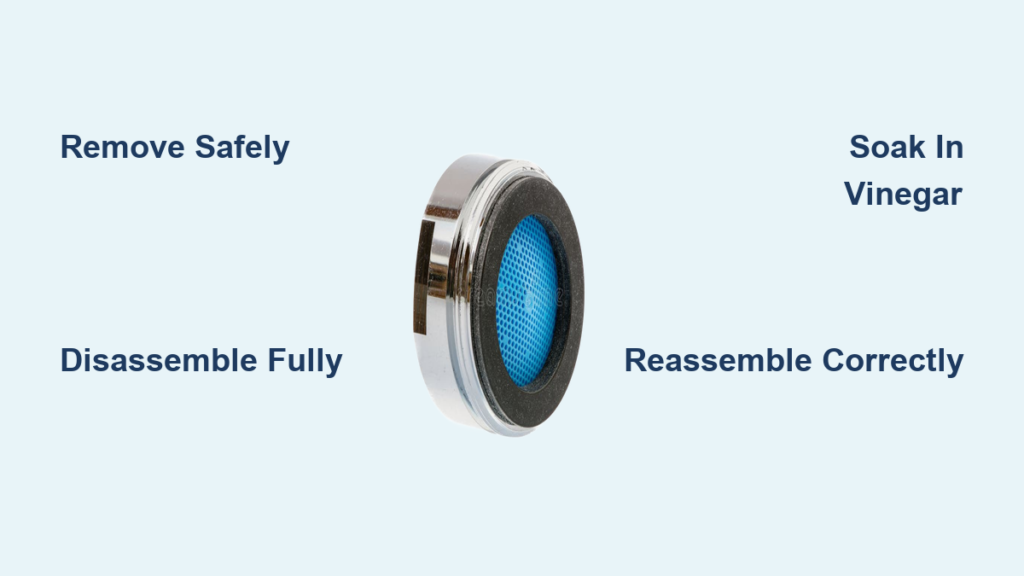
Mineral buildup often clogs the aerator, which is the small screen at the faucet is tip. This reduces water pressure and causes annoying splashing.
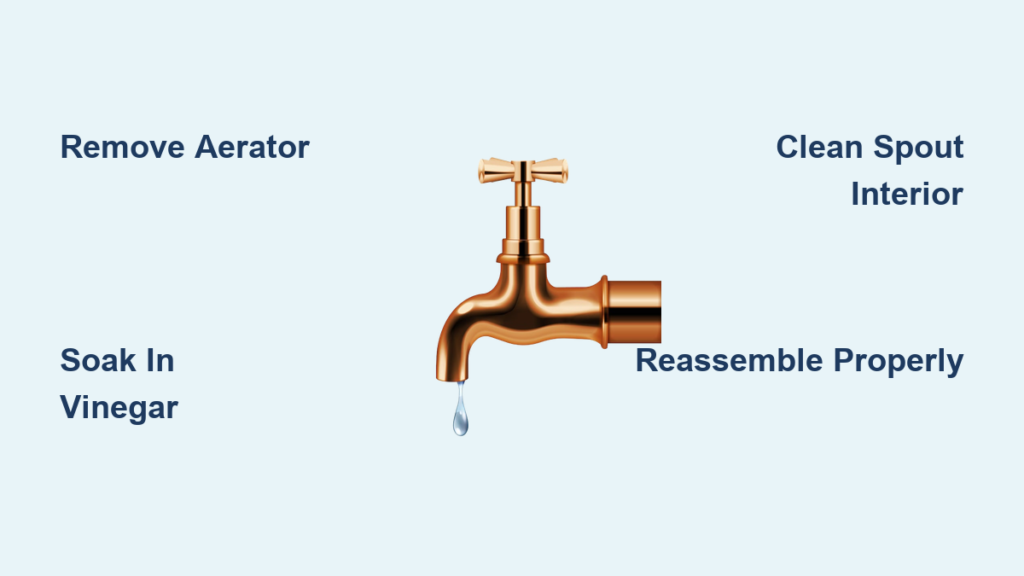
Remove the Aerator Carefully
Unscrew the aerator by hand. If it is stuck, wrap pliers in a cloth to avoid scratching the finish. Disassemble if possible, separating the mesh screen and internal parts.
Soak in Vinegar
Place all metal and plastic pieces in a bowl of white vinegar for 30 minutes. Use an old toothbrush to scrub the mesh and remove trapped debris that has accumulated in the tiny openings.
Reinstall After Rinsing
Rinse all parts under running water, reassemble carefully, and screw back onto the faucet. Test water flow. Cleaning the aerator often restores full pressure that was lost to mineral blockage.
Target Hidden Buildup Areas
Stains are not always visible. Mineral deposits can hide in small crevices and affect how your faucet functions.
Clean Set Screw Holes
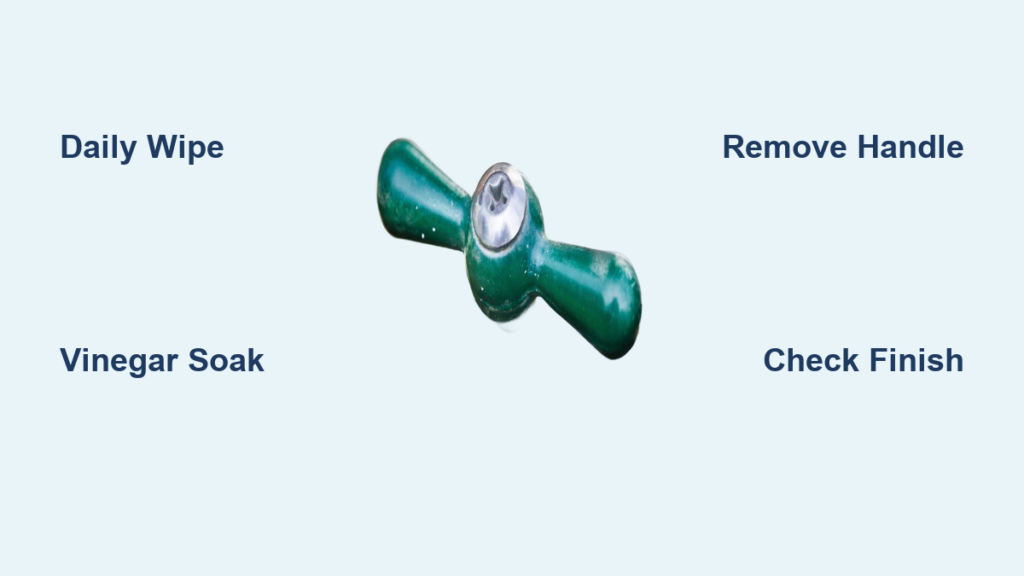
Use a Q-tip dipped in vinegar to reach into the tiny hole where the handle attaches. Let it sit for 5 to 10 minutes to dissolve hidden buildup, then wipe clean. This helps handles turn smoothly and prevents sticking.
Wipe Grooves and Joints
Focus on textured areas, base rings, and pivot points where water collects and evaporates. A vinegar-soaked toothbrush works well for scrubbing these areas without scratching the finish.
Use Commercial Cleaners as Last Resort
When home remedies fail, commercial products like CLR or Lime-A-Way can dissolve severe limescale quickly.
Follow Label Instructions
Apply as directed, usually by spraying or dabbing on. Let it sit for 1 to 5 minutes (never longer), then wipe or rinse. These formulas contain stronger acids like lactic or gluconic acid and work faster than vinegar.
Test Before Full Use
Always test on a small, hidden area first. Avoid using on brushed nickel, antique brass, or unlacquered finishes. Use in a well-ventilated area and wear gloves to protect your skin.
Rinse Thoroughly
Residue from commercial cleaners can corrode metal over time if not removed completely. Rinse completely and dry with a soft cloth after every use.
Prevent Future Deposits Daily
The best way to avoid repeated cleaning is to stop deposits before they form and harden on the surface.
Dry Faucet After Each Use
Wipe the faucet with a microfiber cloth after washing hands or dishes. This simple 10-second habit prevents water from evaporating and leaving minerals behind on the surface.
Spray Weekly with Vinegar Mix
Fill a spray bottle with equal parts water and vinegar. Spray the faucet once a week, let sit for 5 minutes, then wipe dry. This dissolves early-stage buildup before it has a chance to harden.
Apply Water-Repellent Coating
Use a hydrophobic spray like Rain-X (designed for glass) on metal surfaces. It causes water to bead and roll off, minimizing contact and reducing mineral deposit formation. Reapply monthly for best results.
Install a Water Softener for Long-Term Fix
The most effective way to stop hard water stains is to treat the water itself at the source.
Choose an Ion-Exchange Softener
Water softeners remove calcium and magnesium ions through salt-based ion exchange. Systems like Aquasana SimplySoft are certified to NSF/ANSI Standard 44 and use less salt and water than older models.
Benefits Beyond Faucets
Softened water reduces scale in pipes, water heaters, and appliances. It also improves soap lathering and extends the life of all your fixtures.
Consider Maintenance Needs
Softeners require periodic salt refills and occasional cleaning. Ensure proper installation and drainage setup before purchasing a system.
Avoid Common Cleaning Mistakes
Even effective methods can backfire if used incorrectly. Knowing what to avoid saves your faucet from damage.
Do Not Use Abrasives
Steel wool, scouring pads, or powdered cleaners scratch surfaces permanently. Scratches trap minerals and make future cleaning much harder.
Do Not Leave Acid Too Long
Vinegar, CLR, or any acidic cleaner left on too long can etch metal or degrade finishes. Stick to recommended soak times listed in each method above.
Do Not Skip Rinsing and Drying
Always rinse after cleaning to remove chemical residue. Dry completely to prevent immediate re-staining from remaining water.
Key Takeaways for Cleaning Water Deposits from Your Faucet
Cleaning water deposits from your faucet does not require harsh chemicals or expensive tools. White vinegar is your best ally for most finishes, while pastes and commercial removers handle tougher jobs. The key is matching the method to your faucet is material and being consistent with prevention. By drying the faucet daily and doing a quick vinegar wipe weekly, you can keep it spotless and functioning smoothly for years. For homes with persistent hard water, investing in a water softener delivers lasting results across every fixture in the house.
Frequently Asked Questions About Cleaning Water Deposits from Faucet
Does white vinegar damage faucet finishes?
White vinegar is safe for chrome, stainless steel, and plastic finishes. However, it can damage brushed nickel, oil-rubbed bronze, and unlacquered brass if used undiluted or left too long. Always spot test first and use diluted vinegar for sensitive finishes.
How long does it take to remove hard water deposits?
Light buildup dissolves in 15 minutes with a vinegar soak. Moderate to heavy deposits may require 15 to 30 minutes or a second application. Thick, caked-on scale may need a paste treatment for 10 to 20 minutes.
Can I use vinegar on my kitchen faucet every day?
Daily wiping with a dry cloth is better than daily vinegar application. Weekly vinegar spray is sufficient for maintenance. Daily acid exposure can wear down protective coatings over time.
Why is my faucet still stained after using vinegar?
Old, baked-on deposits may need a paste (baking soda and vinegar) or borax treatment. If the finish is discolored rather than just stained, hydrogen peroxide mixed with baking soda may help. Severe buildup might require commercial removers.
How do I prevent hard water stains from coming back?
Dry the faucet after each use, spray weekly with a vinegar and water mix, and consider applying a water-repellent coating monthly. For permanent protection, install a water softener to eliminate minerals at the source.
Should I clean my faucet aerator regularly?
Yes. Remove and soak the aerator in vinegar for 30 minutes every few months or whenever water flow seems reduced. This simple step restores proper pressure and prevents splashing.