
A stone sink brings natural beauty and rugged durability to any kitchen, but it demands more thoughtful care than stainless steel. Whether you own a veined granite basin or a sleek black composite Silgranit model, using the wrong products or skipping simple habits can leave behind cloudiness, mineral deposits, and stubborn stains. Learning how to clean a stone sink properly—based on its specific material—protects your investment and keeps the surface looking showroom-new for decades.
This guide walks you through everything you need to know, from daily wipe-downs to deep cleaning, oiling composite surfaces, sealing granite, and maintaining drains and faucets. You’ll discover exactly which products work, which ones to avoid, and how often to perform each task. By the end, you’ll have a simple, repeatable routine that prevents most problems before they ever appear.
Identify Your Stone Sink Type
Granite vs. Composite Differences
Natural granite and engineered composite (like Silgranit) look similar but respond very differently to cleaners. Granite is a porous natural stone that requires sealing every 6–12 months to resist stains from oil, wine, and coffee. It handles heat and scratches well but etches easily when exposed to acids such as vinegar or lemon juice.
Black composite sinks are non-porous, highly durable, and resistant to stains, yet they tend to develop mineral buildup and surface haziness if cleaners are left sitting too long. They also need periodic oiling to preserve their deep, glossy finish and repel hard water deposits. Using the wrong product on either type can cause permanent dullness, so always confirm your material first.
Confirm With a Quick Water Test
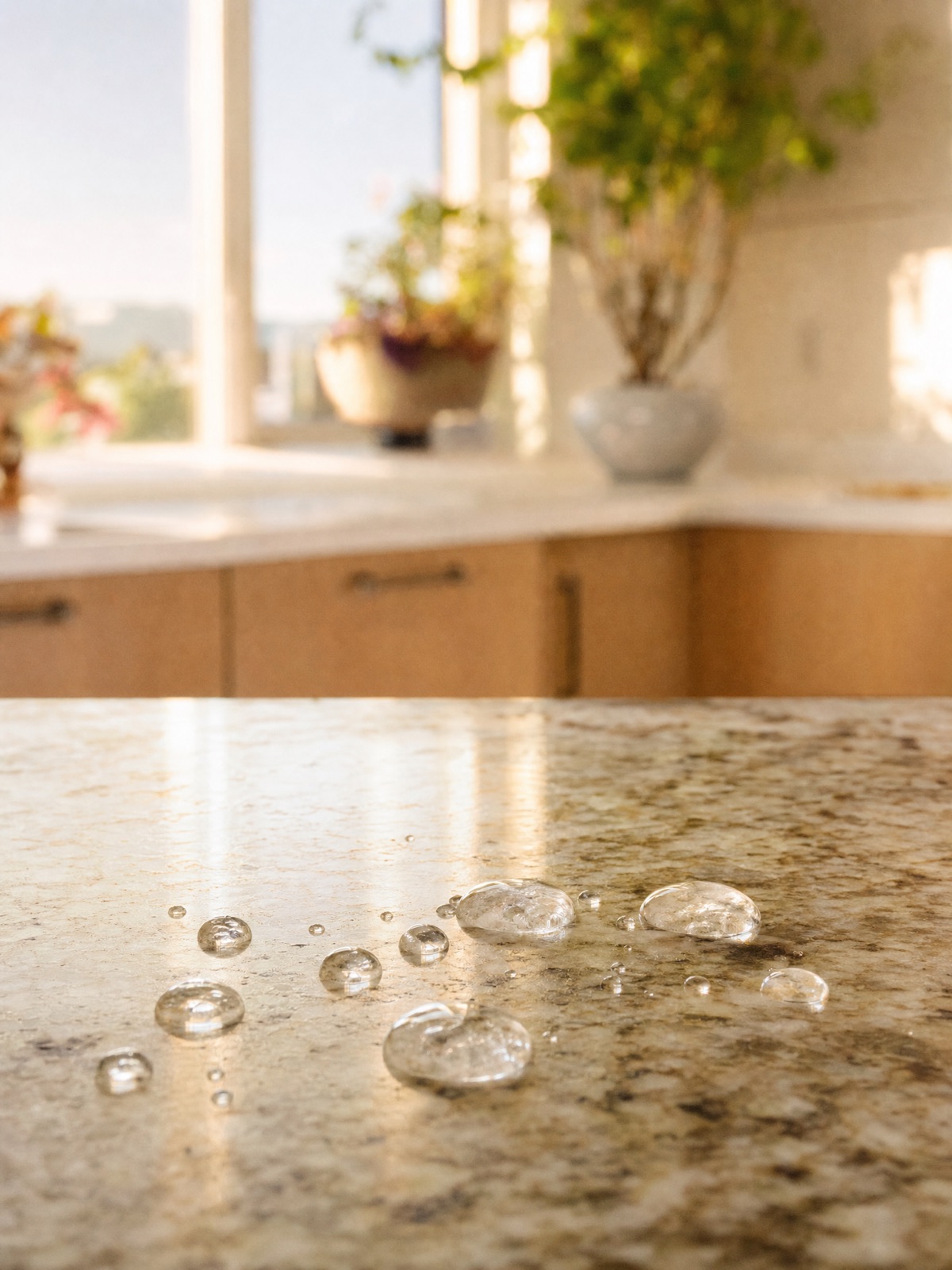
If you’re unsure of your sink’s makeup, sprinkle a few drops of water on the surface. If droplets bead up, the sink is sealed or non-porous (likely composite). If the water darkens the stone slightly, you’re dealing with natural granite that needs sealing. You can also check for brand labels, model numbers, or user manuals that often list the exact material.
Daily Cleaning Routine for Stone Sinks
Wash With Mild Soap and Warm Water
For both granite and composite sinks, start with a soft cloth or non-abrasive sponge dampened in warm water and a few drops of mild dish soap. Gently wipe the entire basin, including corners, edges, and the area around the drain. This clears away food residue, light oils, and daily grime without stressing the surface.
For composite sinks, you can also use a DIY spray made from 1 cup white vinegar, 1 cup water, and 1 teaspoon of Dawn dish soap. Spray generously, then scrub with a non-abrasive sponge like Scrub Daddy. Avoid steel wool, scouring pads, or gritty cleansers—these micro-scratch glossy finishes over time.
Rinse and Dry the Sink Completely
After washing, rinse thoroughly with clean water to remove all soap residue. Then grab a microfiber towel and dry the sink completely. This single habit prevents most water spots, mineral deposits, and cloudy patches, especially in hard water areas. Drying also enhances shine, particularly on oiled composite surfaces. Make it a post-dishwashing habit to protect your sink long-term.
Deep Clean Hard Water Stains and Buildup
Use Bar Keepers Friend Soft Cleanser
When white, chalky deposits or dull patches appear, hard water is usually the culprit. Bar Keepers Friend Soft Cleanser dissolves mineral buildup without scratching granite or composite surfaces when used correctly.
Apply a small amount to a damp, non-scratch sponge and scrub the entire surface in gentle circular motions for 3–5 minutes, focusing on stained zones. Do not let the product sit—especially on black composite, where residue causes cloudiness. The rule is simple: scrub, then rinse right away.
Rinse Twice for a Streak-Free Finish
After scrubbing, rinse the sink thoroughly with water. Then rinse a second time to ensure no cleanser remains. Leftover residue can dull the finish or create a hazy film. For extra safety, wipe down with a 1:1 vinegar-water solution to neutralize any alkaline traces. Repeat this deep clean every 4–6 weeks, or more often if you have hard water.
Treat Stains Immediately on Granite
Act Fast on Oil, Wine, and Coffee Spills
Granite’s porosity means liquids can seep in quickly if the seal has weakened. At the first sign of a spill, wipe it immediately with a soapy cloth. The faster you act, the less chance the stain has to set.
For stubborn marks that won’t lift, make a paste of baking soda and water, apply it to the stain, and cover with plastic wrap. Let it sit for 12–24 hours to draw out the discoloration. Rinse thoroughly, then reseal the area to restore the protective barrier.
Never Use Acidic Cleaners on Granite
Avoid vinegar, lemon juice, and bleach on granite sinks. These acids break down the sealant and etch the stone, leaving permanent dull spots. Stick to pH-neutral dish soap or specialty granite cleaners for routine care.
Oil Black Composite Sinks for Lasting Shine
Apply Food-Grade Mineral Oil
Composite sinks lose their rich luster without conditioning. To restore the deep, glossy finish, apply food-grade mineral oil every 3–6 months.
- Rinse and dry the sink completely with a microfiber towel
- Let it sit for 5 minutes to ensure no moisture remains
- Pour a small amount of oil onto a paper towel (not directly on the sink)
- Wipe evenly across the entire surface
- Buff with a clean microfiber towel until shiny
- Allow the sink to dry undisturbed for at least 1 hour before use
A little oil goes a long way—using too much leaves a sticky residue.
Buff to Restore the Glossy Look
Buffing removes excess oil and leaves an even, streak-free finish. Oiling creates a protective barrier that repels water, minimizes mineral buildup, and extends time between deep cleanings. If your black sink ever looks cloudy, try re-oiling—it often restores clarity by filling in microscopic dull spots.
Seal Granite Sinks Every 6–12 Months
Test the Seal With the Water Method
Granite needs regular sealing to resist moisture and stains. To check, sprinkle water on the surface. If the droplets bead up, the seal is still active. If the stone darkens, it’s time to reseal.
Apply a high-quality granite sealer with a soft cloth, following the manufacturer’s directions. Let it penetrate for the recommended time, then wipe off excess. Avoid oversaturating—too much sealer can leave a sticky film.
Always Reseal After Deep Cleaning
Any heavy cleaning or stain removal can strip existing protection. Reseal afterward to restore the barrier and keep the stone safe from future spills.
Clean the Drain and Disposal Areas
Scrub Tight Spaces With a Toothbrush
Grease, food particles, and bacteria collect around the drain opening and disposal flange, causing odors and discoloration. Dip an old toothbrush in soapy water and scrub these crevices daily.
For a weekly deep clean, pour ½ cup baking soda down the drain, followed by 1 cup vinegar. Let it fizz for 10 minutes, then flush with hot water. This disinfects, deodorizes, and clears minor buildup.
Refresh the Disposal With CLR Tablets
For a deeper disposal clean, drop in a CLR Garbage Disposal Cleaner Tablet with a small amount of water and run the disposal for 30 seconds. This dissolves residue, eliminates odors, and keeps blades moving freely. Use monthly or whenever you notice slow drainage or unpleasant smells.
Maintain the Faucet and Spray Head
Soak the Aerator in White Vinegar
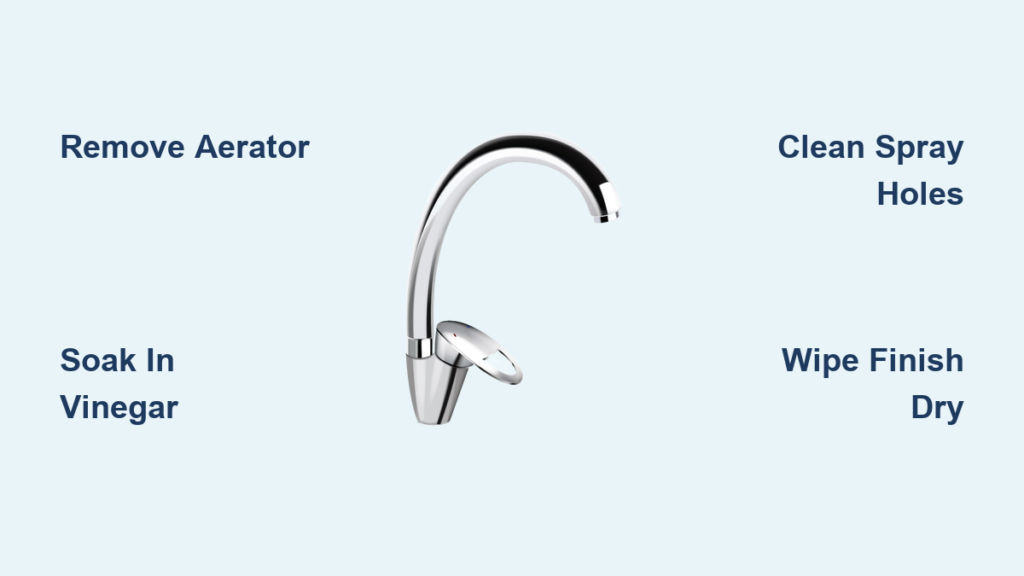
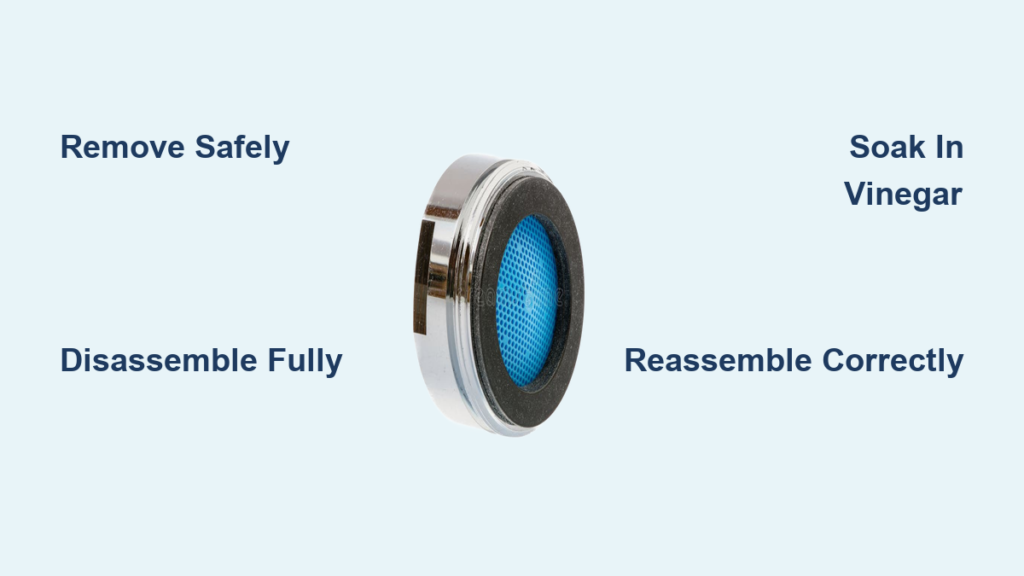
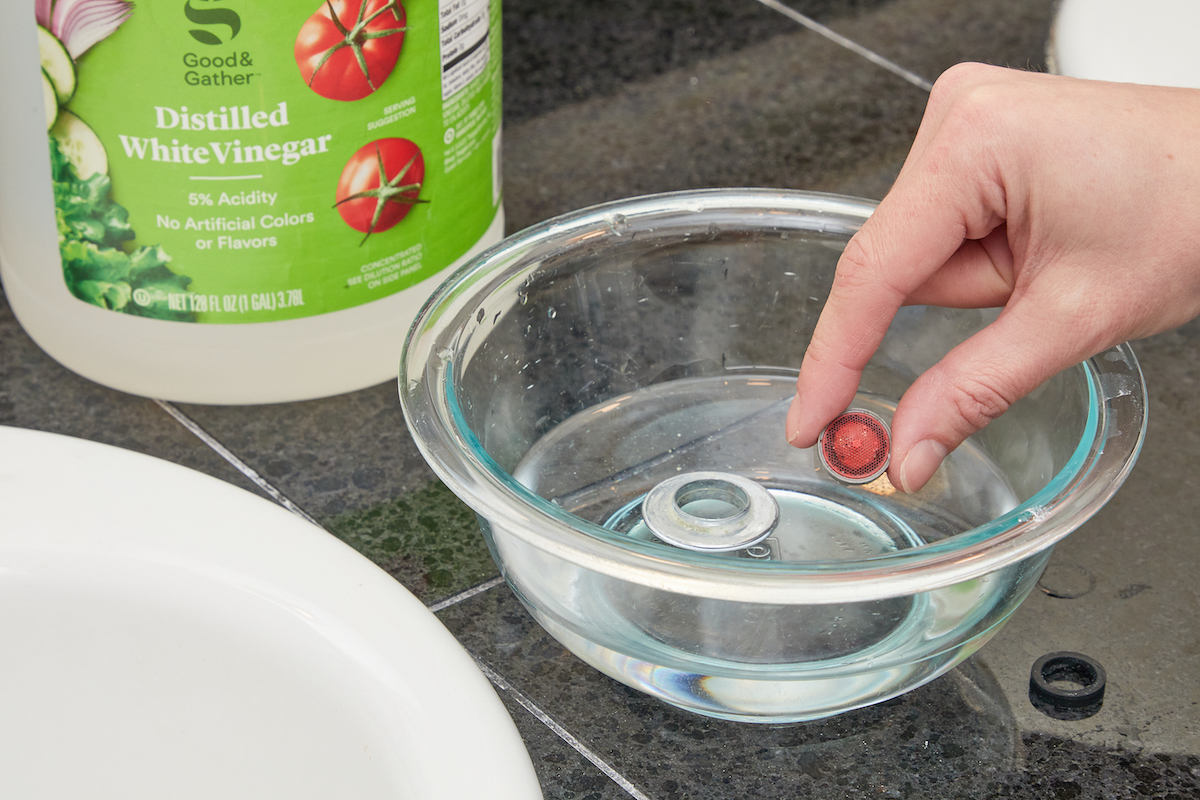
Mineral deposits clog faucet aerators and spray heads, reducing water pressure and causing uneven flow. Unscrew the aerator or detach the retractable hose, then soak it in white vinegar for 30–60 minutes.
Use a toothbrush to scrub away loosened deposits, then rinse thoroughly before reattaching. This simple step restores full pressure and prevents long-term corrosion.
Keep Retractable Hoses Fully Submerged
If you’re cleaning a pull-down spray head, secure the hose with a chip clip so it stays submerged in the vinegar. This ensures even contact and prevents air pockets from leaving deposits behind.
Prevent Water Spots and Cloudiness
Dry the Sink After Every Use
The leading cause of water spots and cloudy buildup is leaving the sink wet. Hard water leaves calcium and magnesium behind, which form visible rings and haze. The fix is simple: wipe the sink dry with a microfiber towel after each use.
This one habit prevents most buildup, cuts down on deep cleaning, and keeps the finish polished and bright.
Never Let Cleaners Sit on Composite Surfaces
Cloudiness on black composite sinks usually results from leaving Bar Keepers Friend or other cleansers on too long. Always follow the scrub-and-rinse immediately rule. Double-rinse every time to ensure no residue lingers.
Follow a Simple Maintenance Schedule
Daily Tasks
- Clean with mild soap (granite) or vinegar-Dawn spray (composite)
- Rinse thoroughly
- Dry completely with microfiber
- Wipe down faucet and handles
Weekly Tasks
- Scrub the drain area with a toothbrush
- Inspect for stains or new buildup
Monthly Tasks
- Check the aerator for clogs
- Deep clean drains with baking soda and vinegar
- Treat the disposal with a CLR tablet
Quarterly to Annual Tasks
- Re-oil composite sinks every 3–6 months
- Reseal granite sinks every 6–12 months
- Polish scratches or repair chips with a granite repair kit as needed
Sticking to this schedule keeps your sink in like-new condition year after year.
Stock the Right Cleaning Supplies
| Item | Purpose |
|---|---|
| Mild dish soap (Dawn) | Daily cleaning for granite and composite |
| White vinegar | DIY cleaner and aerator soak |
| Bar Keepers Friend Soft Cleanser | Hard water stain removal |
| Non-abrasive sponge (Scrub Daddy) | Gentle scrubbing without scratches |
| Toothbrush | Drain area and tight spaces |
| Food-grade mineral oil | Composite shine and protection |
| Granite sealer | Stain resistance for natural stone |
| Microfiber towels | Drying and buffing |
| CLR disposal tablet | Odor and clog prevention |
| Chip clip | Holding retractable hoses during soak |
Keep these items on hand for quick, effective cleaning without risking surface damage.
Troubleshoot Common Stone Sink Problems
Sink Looks Dull or Hazy
- Cause: Mineral buildup or leftover cleaner residue
- Fix: Deep clean with Bar Keepers Friend, double-rinse, then re-oil or reseal
Persistent Water Spots
- Cause: Hard water minerals
- Fix: Clean with vinegar solution, dry after every use, oil composite regularly
Stains Won’t Lift
- Cause: Liquid absorbed into unsealed granite
- Fix: Apply a baking soda paste, cover for 24 hours, rinse, then reseal
Cloudy Residue After Cleaning
- Cause: Cleaner left on too long
- Fix: Rinse thoroughly, re-oil, and never let cleansers sit
Drain Smells Bad
- Cause: Food buildup in the disposal
- Fix: Run a CLR tablet monthly, flush weekly with baking soda and vinegar
Pro Tips for Maximum Sink Longevity
Use Only Non-Abrasive Tools
Even “soft” scrubbers can wear down a glossy finish over time. Stick to sponges clearly labeled non-abrasive, and avoid anything with grit, mesh, or metal.
Never Mix Cleaners
Combining vinegar and bleach or other chemicals produces toxic fumes and can damage surfaces. Always use one product at a time and rinse completely between applications.
Protect Against Thermal Shock
Granite handles heat well, but sudden temperature changes—like placing a hot pot in a cold sink—can weaken the seal over time. Use trivets or let cookware cool slightly before setting it in the basin.
Repair Chips Right Away
Small chips in granite allow moisture to seep in, which can spread damage. A granite repair kit handles minor chips; for larger cracks, call a professional.
Final Thoughts on Caring for Your Stone Sink
A beautiful stone sink doesn’t demand expensive products or hours of scrubbing—just the right routine. Identify your sink’s material, use safe pH-neutral cleaners, dry after every use, and stick to a simple maintenance schedule. These small habits prevent nearly all common problems, from water spots to cloudiness and staining. With consistent care, whether your sink is veined granite or glossy black composite, it will stay polished, hygienic, and stunning for years to come. Start with today’s quick wipe-down and build the habit from there.
Frequently Asked Questions About Stone Sink Care
How Often Should I Clean My Stone Sink?
Wipe down your sink daily with mild soap and water, and dry it after every use. Deep clean with Bar Keepers Friend every 4–6 weeks to remove hard water buildup before it becomes stubborn.
Can I Use Vinegar on a Stone Sink?
Vinegar is safe for black composite Silgranit sinks when diluted with water and a small amount of dish soap. Never use vinegar, lemon juice, or other acidic cleaners on natural granite, as they break down the sealant and etch the stone.
How Do I Remove Hard Water Stains From a Black Composite Sink?
Apply Bar Keepers Friend Soft Cleanser with a non-scratch sponge, scrub gently for 3–5 minutes, and rinse twice immediately. Letting the cleanser sit causes cloudiness on composite surfaces, so always rinse right away.
Do Granite Sinks Need to Be Sealed?
Yes. Natural granite is porous and should be sealed every 6–12 months. To check, sprinkle water on the surface. If the stone darkens, it’s time to reseal with a quality granite sealer.
How Often Should I Oil a Black Composite Sink?
Apply food-grade mineral oil every 3–6 months to maintain the deep, glossy finish. Oiling creates a protective barrier that repels water and reduces mineral buildup between deep cleanings.
What’s the Best Way to Clean a Garbage Disposal?
Drop a CLR Garbage Disposal Cleaner Tablet into the disposal with a small amount of water and run for 30 seconds. For weekly maintenance, flush with ½ cup baking soda and 1 cup vinegar, then hot water.