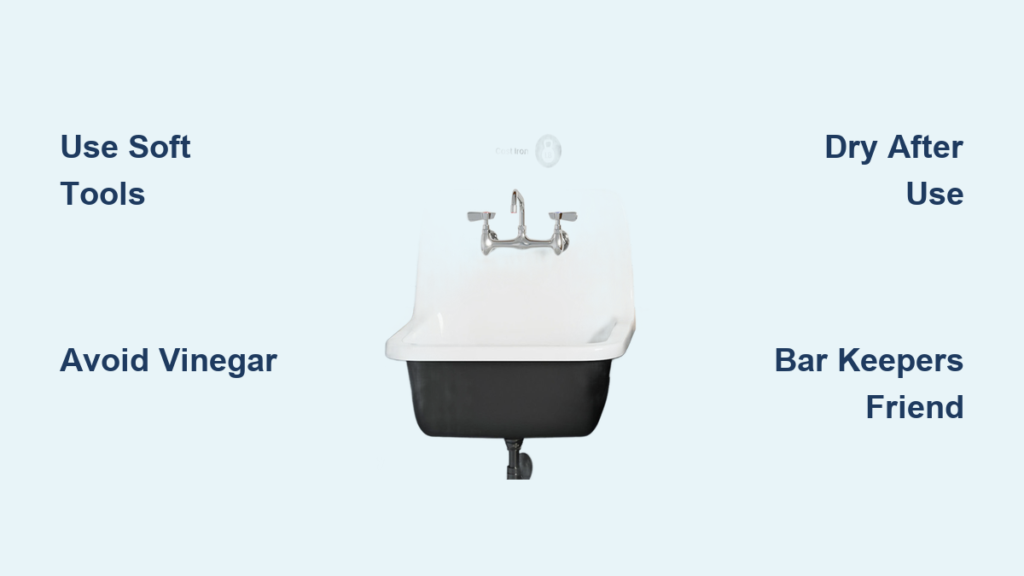
A cast iron sink brings timeless style and rugged durability to any kitchen, but without proper care, even the toughest sink can lose its luster. Daily use exposes the surface to grease, food acids, and hard water minerals that slowly dull the finish. Many homeowners accidentally damage their sinks with the wrong cleaners or tools, leading to scratches, chips, or rust.
This guide covers everything you need to know about how to clean a cast iron sink safely and effectively. You’ll learn daily routines, deep-cleaning techniques, stain-specific fixes, and what products to avoid. From using Bar Keepers Friend for tough discoloration to preventing water spots with proper drying, these proven methods will keep your cast iron sink looking brand new.
Daily Cleaning Routine for Cast Iron Sinks
Consistent daily care is the foundation of a spotless cast iron sink. Gentle, regular cleaning prevents buildup and protects the enamel from long-term damage.
Use Soft Cleaning Tools Only
Always reach for a soft cloth or sponge when cleaning your cast iron sink. These tools remove everyday grime without scratching the enamel finish. Pair them with warm water and a few drops of mild dish soap for the best results.
Stay away from steel wool, metal scrubbers, and harsh scouring pads. Even a standard green scrubber should be used with caution and only when paired with a safe cleaner like Bar Keepers Friend.
Follow These 5 Simple Steps
- Rinse the sink with warm water to wash away loose food particles.
- Apply mild dish soap to a soft sponge.
- Wipe the entire surface, including the basin, edges, and faucet base.
- Rinse thoroughly with clean water to remove all soap residue.
- Dry completely with a soft towel to prevent water spots.
Skipping the drying step is a common mistake. Hard water leaves cloudy mineral marks that become harder to remove over time.
Deep Cleaning Methods for Stubborn Stains
When daily cleaning falls short, a deep clean restores brightness and removes stubborn discoloration. This is especially important for white or light-colored enameled cast iron sinks.
Why Bar Keepers Friend Works Best
Bar Keepers Friend is the top-performing cleaner for cast iron sinks. In side-by-side tests, it removed nearly all black residue and discoloration with minimal scrubbing. Unlike Ajax, which left visible brown shadows and specks behind, Bar Keepers Friend left the surface smooth and bright.
Key benefits include:
– Contains mild abrasives and oxalic acid safe for enamel
– Cleans around drains and corners effectively
– Requires only about one teaspoon per sink side
– Works on cast iron cookware too
Apply the cleaner with a soft cloth, let it sit for 1–2 minutes, then gently scrub. Rinse thoroughly when finished.
Baking Soda Paste for Gentle Scrubbing
For a natural alternative, mix baking soda and water into a thick paste. This mild abrasive works well on grease and food residue without harming enamel.
- Apply the paste to stained areas
- Let it sit for 5–10 minutes
- Wipe gently with a soft sponge
- Rinse well with warm water
This method is perfect for weekly maintenance, though it won’t match Bar Keepers Friend for deep discoloration.
How to Remove Specific Stains from Cast Iron Sinks
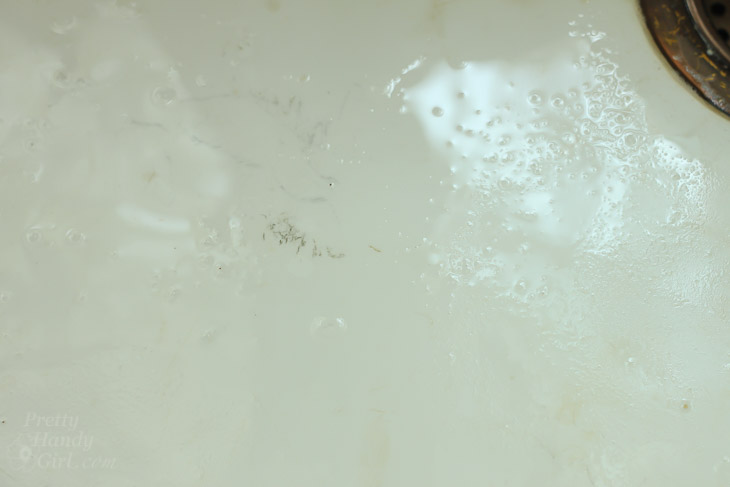
Different stains require different approaches. Targeting the right method saves time and protects your sink’s surface.
Black Marks from Cast Iron Cookware
Black streaks from cast iron pans are common but easy to fix. Bar Keepers Friend is the most effective solution.
- Apply directly to the black mark
- Use a green scrubber lightly if needed
- Scrub in small circular motions
- Rinse and dry thoroughly
Stubborn marks may need a second application. Never reach for steel wool; it will permanently scratch the enamel.
Grease and Food Buildup
Grease clings to sink walls and around drains. Start with a baking soda paste.
- Coat the greasy areas generously
- Wait 10 minutes
- Wipe with a damp sponge
- Rinse with hot water
For heavier buildup, follow up with Bar Keepers Friend, then rinse again.
Stubborn Discoloration and Hard Water Stains
Brown or yellow stains often come from hard water or prolonged food acid exposure. Use a non-abrasive cleaner designed for enameled surfaces.
- Apply the cleaner generously
- Let it dwell for 3–5 minutes
- Gently wipe with a soft cloth
- Rinse completely
Repeat if needed, but avoid leaving cleaners on longer than product instructions recommend.
What Never to Use on a Cast Iron Sink
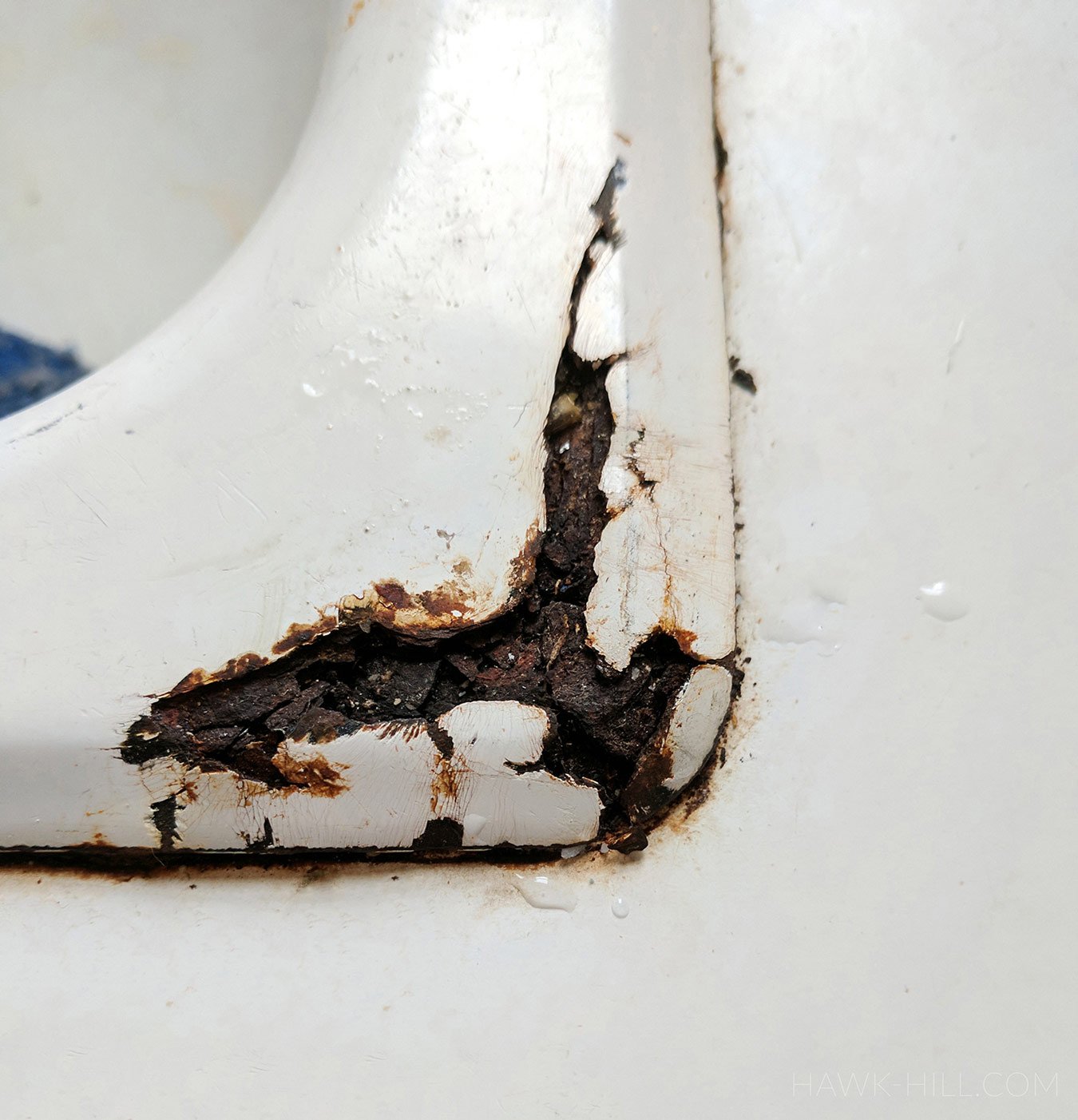
Knowing what to avoid is just as important as knowing what to use. Some common household products cause permanent damage to cast iron sinks.
Harsh Chemicals to Avoid
Never use these products:
– Bleach weakens enamel and causes discoloration
– Ammonia degrades the finish over time
– Vinegar, lemon juice, and citrus cleaners contain acids that eat away at enamel, leading to pitting and stains
Once the enamel is compromised, the cast iron underneath can rust quickly.
Abrasive Tools to Avoid
Never use these materials:
– Steel wool
– Metal scrubbers
– Harsh green scouring pads (unless paired with a safe cleaner and used very gently)
Even small scratches trap dirt and make future cleaning harder. Stick to soft sponges and cloths.
Dropping Heavy Objects
Chips and cracks often happen when pots, pans, or utensils are dropped. A chip exposes the cast iron core, which rusts quickly when wet. Always place heavy items gently and consider using sink grids or mats for protection.
Prevent Water Spots with Proper Drying

Water spots are the most common issue with white enameled cast iron sinks. They form when minerals in hard water are left behind after evaporation.
Dry After Every Use
The simplest solution is to dry your sink completely with a soft towel after each use.
- Use a microfiber or cotton towel
- Wipe the basin, sides, and faucet area
- Pay extra attention to corners and drain edges
This quick habit prevents mineral buildup and keeps your sink looking polished.
Rinse with Clean Water Before Drying
Before drying, rinse with fresh warm water to wash away any remaining soap or cleaner. This reduces streaks and ensures a spot-free finish.
Long-Term Protection for Cast Iron Sinks
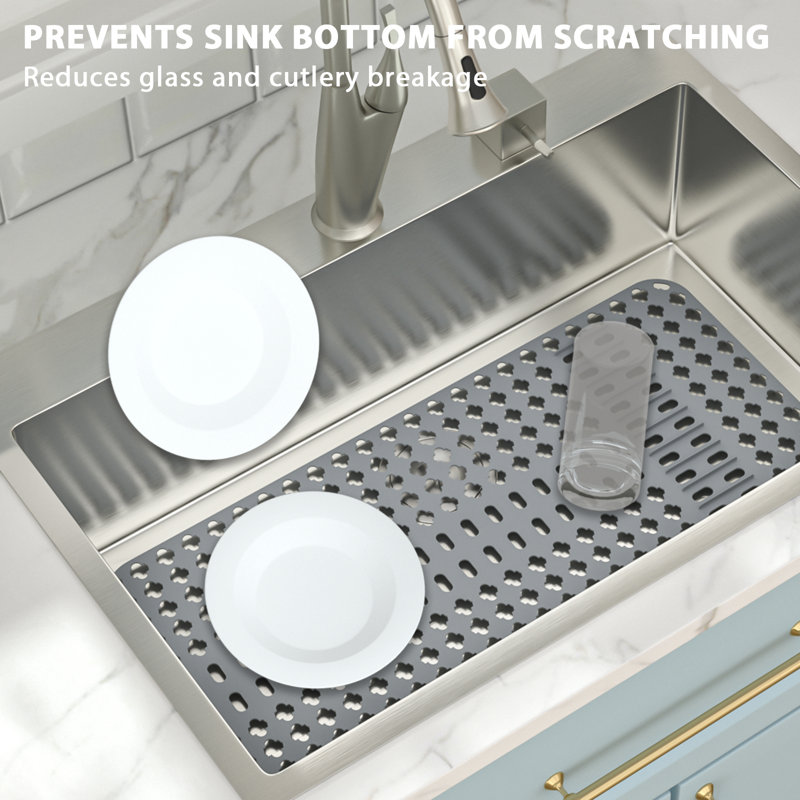
Preventive care extends your sink’s life and reduces how often you need to deep clean.
Use Sink Mats and Grids
Sink mats (rubber or silicone) and sink grids (metal with protective coating) act as shields between your sink and heavy items.
- Prevent scratches from dishes and pans
- Reduce noise when placing items
- Elevate items to allow proper water drainage
Choose mats that fit your sink shape and clean them regularly to prevent moisture buildup underneath.
Protect Against Heat Damage
Never place a hot pan directly into the sink. The sudden temperature change causes thermal shock, which can crack the enamel. Always use a trivet or heat pad to protect the surface.
Drain Care Tips for Cast Iron Sinks
A truly clean sink includes a clear, odor-free drain. Proper drain maintenance prevents clogs and protects your enamel finish.
Flush Weekly with Hot Water
Run hot water through the drain for 30–60 seconds each week. This melts minor grease buildup, prevents clogs, and keeps water flowing freely. The best time is after dinner cleanup when pipes are already warm.
Use Enamel-Safe Drain Treatments
Choose drain cleaners labeled safe for enameled surfaces. Harsh chemical drain openers corrode the finish over time. Look for enzyme-based or mild formula products that break down organic matter without damaging enamel.
Never Pour Grease Down the Drain
Grease, oil, and fat solidify inside pipes and cause stubborn blockages.
- Let grease cool in a container
- Throw it away in the trash
- Wipe greasy pans with a paper towel before washing
Use a strainer to catch large food scraps and prevent them from entering the drain.
Inspect and Repair Damage Early
Catching problems early prevents small issues from becoming expensive repairs.
Check Monthly for Chips and Cracks
Inspect your sink once a month for:
– Chips in the enamel
– Hairline cracks
– Rust spots (reddish-brown areas)
Even a tiny chip lets moisture reach the cast iron core, which leads to rust expansion.
Repair Chips Promptly
If you spot damage, act quickly:
- Clean the area thoroughly and dry it completely
- Use an enamel repair kit from a hardware store
- Follow the kit instructions to seal the chip
- Let it cure fully before using the sink
Prompt repair stops rust and prevents further cracking.
Quick Reference: Cast Iron Sink Care Schedule
Daily Tasks
- Rinse with warm water
- Wash with mild soap and a soft sponge
- Rinse thoroughly
- Dry completely with a soft towel
Weekly Tasks
- Apply Bar Keepers Friend or baking soda paste
- Let sit 1–5 minutes
- Gently scrub
- Rinse and dry
- Flush drain with hot water
Ongoing Habits
- Use sink grids and mats
- Avoid hot pans, harsh chemicals, and abrasive tools
- Inspect for damage monthly
- Repair chips as soon as possible
Frequently Asked Questions About Cast Iron Sink Care
What is the best cleaner for a cast iron sink?
Bar Keepers Friend is the top performer for cast iron sinks. It removes black marks, discoloration, and residue better than alternatives like Ajax. Apply about one teaspoon per sink side with a soft cloth, let it sit briefly, then rinse.
Can I use vinegar to clean a cast iron sink?
No. Vinegar is acidic and damages the enamel coating on cast iron sinks. It causes pitting and dull spots that cannot be repaired. Stick to mild dish soap, baking soda paste, or Bar Keepers Friend instead.
How do I remove black marks from cast iron pans on my sink?
Apply Bar Keepers Friend directly to the black mark and scrub gently with a soft sponge. For stubborn marks, use a green scrubber lightly along with the cleaner. Multiple applications may be needed for older stains.
Is it safe to use steel wool on a cast iron sink?
Never use steel wool on an enameled cast iron sink. It scratches the porcelain coating permanently and exposes the cast iron underneath to moisture, which causes rust. Use only soft cloths, sponges, or gentle scrub pads.
How often should I deep clean my cast iron sink?
Deep clean your cast iron sink once a week or whenever you notice stains building up. Bar Keepers Friend works well for weekly deep cleaning, while baking soda paste is a good option for lighter maintenance.
Can I pour bleach in my cast iron sink to disinfect it?
No. Bleach weakens and discolors enamel over time. For disinfection, use mild dish soap and warm water, or choose an enamel-safe cleaning product. Proper daily cleaning keeps your sink hygienic without harsh chemicals.
Final Thoughts on Cleaning Cast Iron Sinks
Cleaning a cast iron sink is simple when you follow the right routine. Stick to gentle cleaners like Bar Keepers Friend, avoid abrasives and acids, and always dry the surface thoroughly after each use. These small habits prevent stains, rust, and damage that shorten your sink’s lifespan.
Start with the daily routine today: rinse, wash with mild soap, rinse again, and dry completely. Add a weekly deep clean with Bar Keepers Friend, and your cast iron sink will stay bright, stain-free, and durable for decades. Treat it right, and it will handle everything from cast iron skillets to everyday dishes with ease.