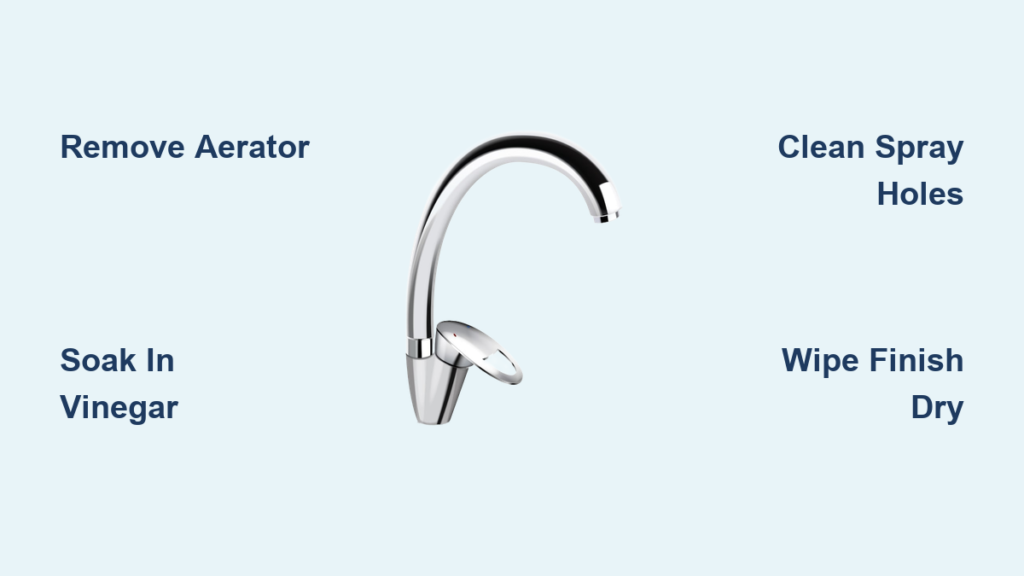
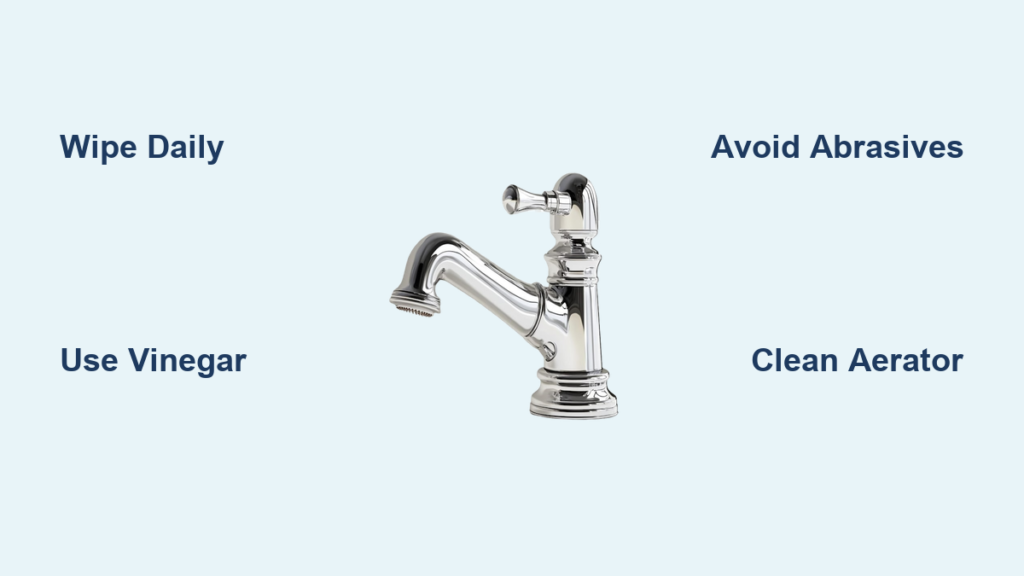
Nothing ruins a sleek bathroom or kitchen look faster than a dull, spotty chrome faucet. Over time, hard water deposits, soap scum, fingerprints, and mineral buildup leave your once-gleaming fixture looking cloudy and unattractive. But the good news is that cleaning a chrome faucet doesn’t require harsh chemicals or professional help. In this guide, you’ll learn how to clean chrome faucet surfaces safely and effectively using household items and proven techniques. From daily wipe-downs to deep cleaning stubborn lime scale, we’ll walk you through every step to restore and maintain that showroom shine.
Whether you’re dealing with white crusty buildup around the spout, rust spots in a humid bathroom, or everyday smudges, this guide covers targeted solutions. You’ll discover what to avoid (like steel wool and bleach), which products work best (including vinegar, baking soda, and Flitz), and how to protect your faucet long-term with simple preventative habits.
Daily Wipe-Down: The Simple Habit That Prevents Water Spots
The single most effective way to prevent water spots and mineral buildup is drying your chrome faucet after each use. Residual water evaporates and leaves behind calcium and magnesium deposits, especially in hard water areas. Keep a lint-free microfiber cloth near the sink and make it a habit to wipe down the spout, handles, and base every time you use the faucet.
This quick 10-second habit drastically reduces the need for deep cleaning and helps maintain a streak-free shine. Encourage all household members to participate, especially in high-traffic bathrooms and kitchens.
Use a Soft Cloth Only
Never use paper towels, sponges with abrasive pads, or old rags that may carry grit. These can create micro-scratches that dull the chrome over time. Stick to a dedicated microfiber towel. It’s gentle, lint-free, and traps oils and moisture without scratching.
Pro Tip: Assign one color towel for faucet drying and another for general cleaning to avoid cross-contamination.
Weekly Chrome Faucet Cleaning with Soap and Water
For regular maintenance, a mild dish soap and warm water solution is all you need. This method removes fingerprints, light grime, and soap scum without risking damage.
Steps:
- Mix a few drops of non-abrasive, fragrance-free dish soap into warm water.
- Dip a soft cloth or non-abrasive sponge into the solution.
- Wipe the entire faucet, including crevices around the base and handle joints.
- Rinse thoroughly with clean water.
- Dry completely with a microfiber cloth.
This routine should be done weekly to prevent buildup and keep your faucet looking fresh.
Focus on Hard-to-Reach Areas
Use a toothbrush wrapped in a soft cloth to clean around the base, handle joints, and spout collar. The cloth prevents bristles from scratching while allowing the brush to dislodge trapped debris. Avoid hard-bristled brushes or metal tools, which can etch the surface.
Dissolving Hard Water Stains on Chrome Faucets
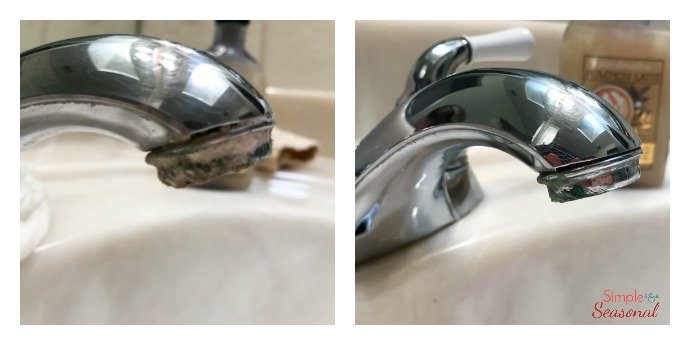
White vinegar is a natural, low-cost solution for dissolving lime and calcium deposits caused by hard water. Its acetic acid safely breaks down mineral buildup without damaging chrome when used correctly.
For light to moderate stains:
- Mix equal parts white vinegar and water in a spray bottle.
- Spray directly onto the faucet.
- Let sit for 5 to 15 minutes.
- Wipe clean with a soft cloth.
- Rinse and dry thoroughly.
For heavy buildup:
- Use undiluted white vinegar.
- Soak a paper towel or microfiber cloth in vinegar.
- Wrap it around the affected area, especially the aerator and spout tip.
- Leave for 30 to 60 minutes (do not exceed 60 minutes).
- Remove and scrub gently with a cloth or soft brush.
- Rinse and dry completely.
Clean the Aerator
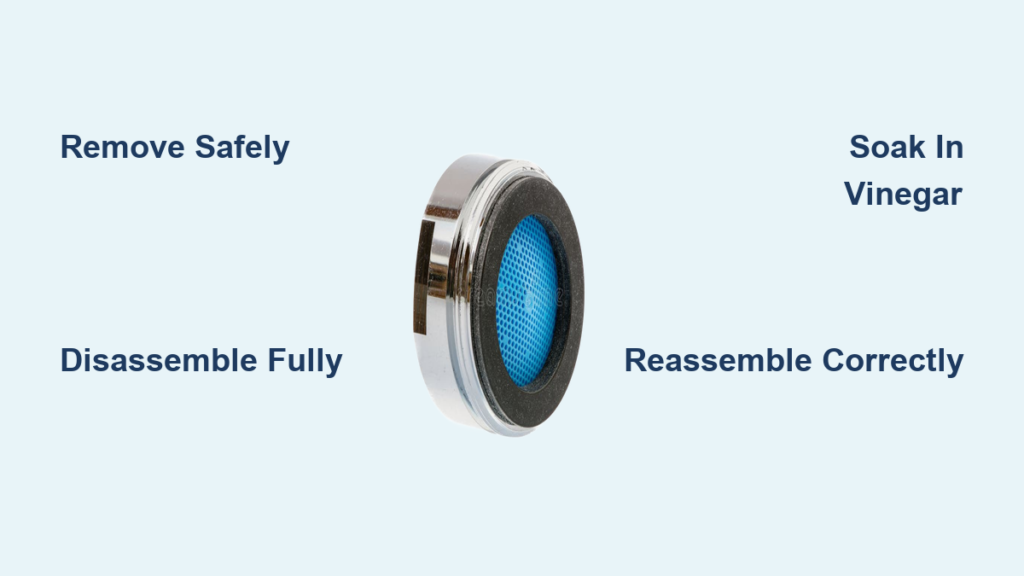
Mineral deposits often clog the aerator, reducing water flow and creating uneven spray. To clean it, unscrew the aerator from the spout (use pliers wrapped in cloth if needed). Soak it in white vinegar for 30 or more minutes. Rinse under running water and reattach. This simple step restores water pressure and prevents future buildup.
Removing Stubborn Stains from Chrome Faucets
When vinegar is not enough, baking soda paste is ideal for removing tough stains, rust spots, and soap scum. Baking soda is mildly abrasive but safe when used gently.
Basic paste:
- Mix 2 parts baking soda with 1 part water to form a thick paste.
For rust stains:
- Use baking soda plus hydrogen peroxide for better oxidation control.
For extra lift:
- Combine baking soda and vinegar (the fizz helps loosen grime, but apply immediately after mixing).
Application:
- Apply paste directly to stained areas.
- Let sit for 5 to 15 minutes.
- Use a soft-bristled toothbrush or non-abrasive sponge to scrub in circular motions.
- Focus on discolored spots, joints, and the spout rim.
- Rinse thoroughly with water.
- Dry with a microfiber cloth.
Caution: Do not use on pitted or flaking chrome. Baking soda can worsen damage on compromised surfaces.
Natural Chrome Faucet Cleaning: Lemon Juice and Alcohol
Lemon Juice for Light Cleaning
Lemon juice contains citric acid, which works similarly to vinegar but leaves a fresh scent. It’s effective on mild mineral deposits and adds a quick shine.
Method:
- Dab fresh or bottled lemon juice onto a cloth.
- Rub onto stained areas.
- Let sit 5 to 10 minutes.
- Buff with circular motions.
- Wipe clean and dry.
Best for occasional use. Do not leave on too long, as prolonged acid exposure can degrade chrome over time.
Rubbing Alcohol for Shine and Disinfection
To remove oils, disinfect, and add a streak-free finish, use 70% isopropyl alcohol.
Steps:
- Apply alcohol to a microfiber cloth (not directly to the faucet).
- Wipe the entire surface using circular motions.
- Flip to a dry section of the cloth and buff for added shine.
Alcohol evaporates quickly, so there’s no risk of water spots. It’s especially effective for removing fingerprints and sanitizing high-touch areas.
Best Commercial Cleaners for Chrome Faucets
Simple Green Pro HD for Heavy Grime
For deep cleaning without harsh chemicals, Simple Green Pro HD is a water-based, non-corrosive option.
Dilution: ½ cup Simple Green plus 2½ cups water
Steps:
- Spray solution on the faucet.
- Let sit 2 to 3 minutes.
- Scrub crevices with a wrapped toothbrush.
- Wipe with a damp cloth.
- Dry completely.
For extreme buildup, make a paste with 3 parts baking soda plus 1 part Simple Green All-Purpose Cleaner. Apply for 10 to 15 minutes, then rinse and dry.
Flitz Faucet Wax Plus for Shine and Protection
Flitz isn’t just a cleaner. It cleans, polishes, and protects chrome with a water-repellent barrier.
Application:
- Apply a small amount to a Scott blue shop towel or soft cloth.
- Rub evenly over the entire faucet.
- Let dry for 5 to 10 minutes.
- Buff with a clean microfiber cloth until shiny.
Result: A deep, long-lasting luster that resists water spots and grime. Ideal for monthly polishing.
KOHLER Faucet Cleaner for Quick Results
Designed specifically for chrome finishes, KOHLER Faucet Cleaner offers fast, no-rinse cleaning.
How to use:
- Spray from 6 to 8 inches away.
- Wipe immediately with a dry towel.
- No rinsing required.
Always test first on a small, hidden area to check for adverse reactions.
Polishing Chrome Faucet for Maximum Shine
Restore Luster with Baby or Mineral Oil
For a quick depth boost, apply baby or mineral oil to fill micro-scratches and enhance reflectivity.
Method:
- Put a few drops on a soft cloth.
- Rub in tight circular motions over the chrome.
- Buff with a clean section of the cloth.
- Optional: Finish with non-ammonia glass cleaner for a streak-free result.
Use sparingly. Too much oil attracts dust and lint.
Use Chrome Wax for Long-Term Protection
Chrome wax (like Flitz) creates a hydrophobic layer that repels water and minerals. Apply monthly, especially in hard water or humid environments.
Benefits include reduced cleaning frequency, prevention of water spotting, and enhanced shine. Buff thoroughly after application to avoid hazing.
Try a Fabric Softener Sheet
For a no-liquid, instant shine boost, rub a dryer fabric softener sheet over the faucet.
Why it works:
- Leaves a light, anti-static coating
- Reduces fingerprint adherence
- Reusable. Save used sheets in a sealed bag.
Great for quick touch-ups between cleanings.
Preventing Hard Water Stains on Chrome Faucets
Install a Water Softener
If you live in a hard water area, a whole-house water softener is the best long-term solution. It removes calcium and magnesium from your water supply, preventing scale buildup in pipes, appliances, and fixtures.
Benefits include less frequent cleaning, extended faucet lifespan, and softer skin and cleaner dishes. Even a faucet-specific filter can help reduce sediment and minerals.
Use Faucet Filters
Attach inline or aerator filters to trap grit and abrasive particles that can scratch chrome. These are inexpensive, easy to install, and replace every few months.
Inspect for Damage Regularly
Check your faucet weekly for peeling or flaking chrome, persistent leaks, and rust at the base. If the plating is compromised, water can seep underneath and cause corrosion. Fix dripping faucets promptly. Constant moisture accelerates damage.
What NOT to Use on Chrome Faucets
Never Use Abrasives
Avoid these at all costs:
- Steel wool
- Scouring pads
- Abrasive powders (like Comet or Bar Keepers Friend on chrome)
- Hard-bristled brushes
They scratch the surface, creating grooves where grime and water collect.
Skip Harsh Chemicals
Never use bleach, chlorine-based cleaners, ammonia, or oven cleaners. These can etch, pit, or discolor chrome, especially with repeated use.
Do Not Soak Too Long
Even safe acids like vinegar and lemon juice should not stay on chrome longer than 60 minutes. Prolonged exposure may degrade the plating over time. Always rinse and dry after treatment.
Troubleshooting Common Chrome Faucet Problems
Fix Water Spots
Cause: Evaporated hard water leaves mineral residue.
Solution: Spray with vinegar solution, wipe, rinse, and dry. Prevent with daily wiping.
Remove Rust Stains
Cause: Damaged plating or iron in water.
Solution: Apply baking soda plus hydrogen peroxide paste, let sit 10 minutes, scrub gently, rinse, and dry. For severe rust, use a chrome-safe rust remover.
Eliminate Soap Scum
Cause: Accumulated body wash, shampoo, or hand soap.
Solution: Clean with mild soap and water. For heavy buildup, use vinegar or Simple Green.
Reduce Fingerprints
Cause: Oils from skin and lotions.
Solution: Wipe with rubbing alcohol or Flitz Wax Plus. Apply wax monthly to create a protective barrier.
Address Minor Scratches
Cause: Accidental abrasion.
Solution: Buff with chrome polish or baking soda paste using circular motions. Deep scratches may require professional refinishing.
Handle Cloudy Finish
Cause: Chemical damage or worn plating.
Test: Apply vinegar. If no improvement, the chrome layer may be compromised. Consider replacement if cleaning fails.
Frequently Asked Questions About Cleaning Chrome Faucets
Does vinegar damage chrome faucets?
No, vinegar is safe for chrome when used correctly. Its acetic acid breaks down hard water deposits effectively. However, do not leave vinegar on the surface longer than 60 minutes, and always rinse and dry thoroughly after use.
What is the best homemade cleaner for chrome faucets?
A mixture of equal parts white vinegar and water works well for hard water stains. For tougher buildup, a paste of baking soda and water or baking soda plus hydrogen peroxide for rust works effectively. Mild dish soap and warm water is best for routine cleaning.
How do I remove hard water stains from chrome fixtures?
Spray the affected area with diluted white vinegar (equal parts vinegar and water). Let it sit for 5 to 15 minutes, then wipe clean with a soft cloth. For heavy buildup, soak a cloth in undiluted vinegar and wrap it around the fixture for 30 to 60 minutes.
Can I use steel wool on a chrome faucet?
No. Steel wool and other abrasive tools will scratch the chrome surface, creating micro-scratches that trap grime and dull the finish. Always use soft cloths, microfiber towels, or non-abrasive sponges.
How often should I clean my chrome faucet?
Wipe the faucet dry after each use to prevent water spots. Perform a full cleaning with soap and water weekly. Deep clean with vinegar or baking soda monthly, or as needed for stubborn stains.
What causes chrome faucets to look cloudy?
Cloudiness is usually caused by chemical damage from harsh cleaners (like bleach or ammonia), worn plating, or mineral buildup. Test with vinegar. If no improvement, the chrome layer may be compromised and could require replacement.
Key Takeaways for Cleaning Your Chrome Faucet
Keeping your chrome faucet sparkling is simple with the right routine. Dry your faucet daily, clean it weekly with mild soap or vinegar, and polish monthly with oil, wax, or a commercial product. Use gentle, chrome-safe methods like vinegar, baking soda, and Flitz Wax Plus, and always avoid abrasives and harsh chemicals. With consistent care, your faucet will stay shiny, functional, and beautiful for years.
For homes with hard water, investing in a water softener is the ultimate preventive upgrade. It reduces mineral buildup, extends the life of your fixtures, and makes cleaning much easier. Now that you know how to clean chrome faucet surfaces the right way, make it a habit. Your kitchen and bathroom will thank you.