
If you’ve noticed white, chalky residue forming around your faucet spout or handles, you’re dealing with calcium buildup, also known as limescale. This stubborn deposit forms when hard water evaporates, leaving behind minerals like calcium carbonate and magnesium. Over time, it can clog your aerator, reduce water pressure, and dull your fixture’s finish. The good news: you can remove calcium buildup safely using household items or targeted cleaning products. This guide covers step-by-step solutions, safety tips, and prevention strategies to restore your faucet’s performance and shine.
Identify Calcium Buildup on Your Faucet
Recognizing calcium buildup early prevents major clogs and makes cleaning much easier. Knowing the signs helps you act before deposits become thick and crusty.
Signs of Limescale Accumulation
White or yellowish crust around the spout tip, base, or handles indicates calcium deposits. You may also notice reduced water flow or an uneven spray pattern. Stiff handle movement often results from mineral buildup in the joints. Surfaces that should feel smooth may feel rough or textured. Brown or orange tints signal mixed deposits containing iron or rust.
Where Buildup Forms Fastest
The faucet aerator is the most vulnerable spot because it traps minerals from every water flow. The spout tip and underside accumulate deposits as water drips and evaporates. Pull-down spray nozzles have small holes that easily trap minerals. Handle bases and trim rings collect moisture after each use.
Vinegar Soak Method for Calcium Removal
Vinegar is the most effective, affordable, and widely used method for dissolving calcium deposits. Its acetic acid breaks down limescale safely on most faucet finishes.
Apply the Bag Method Correctly
This technique ensures full contact between vinegar and the affected area.
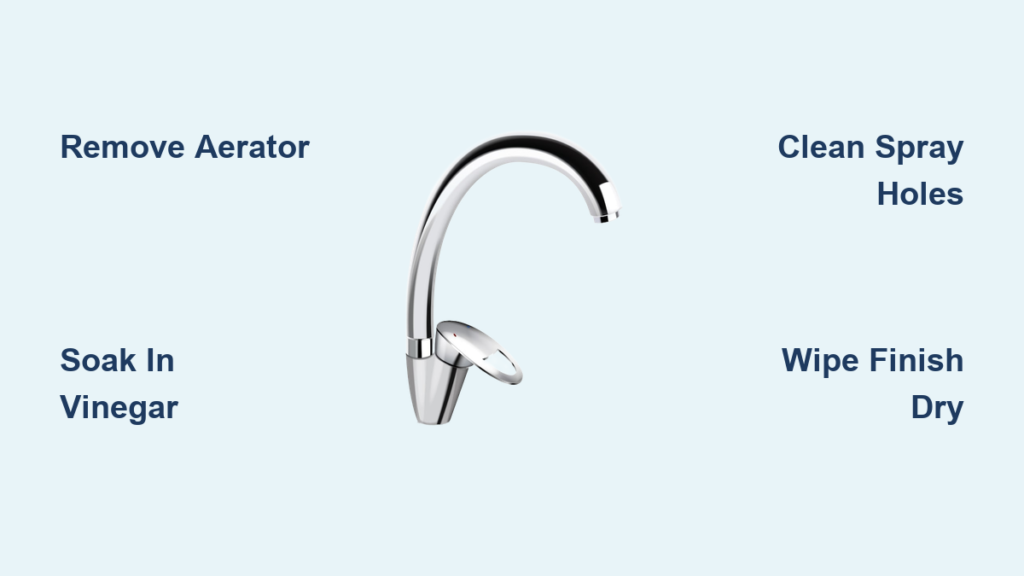
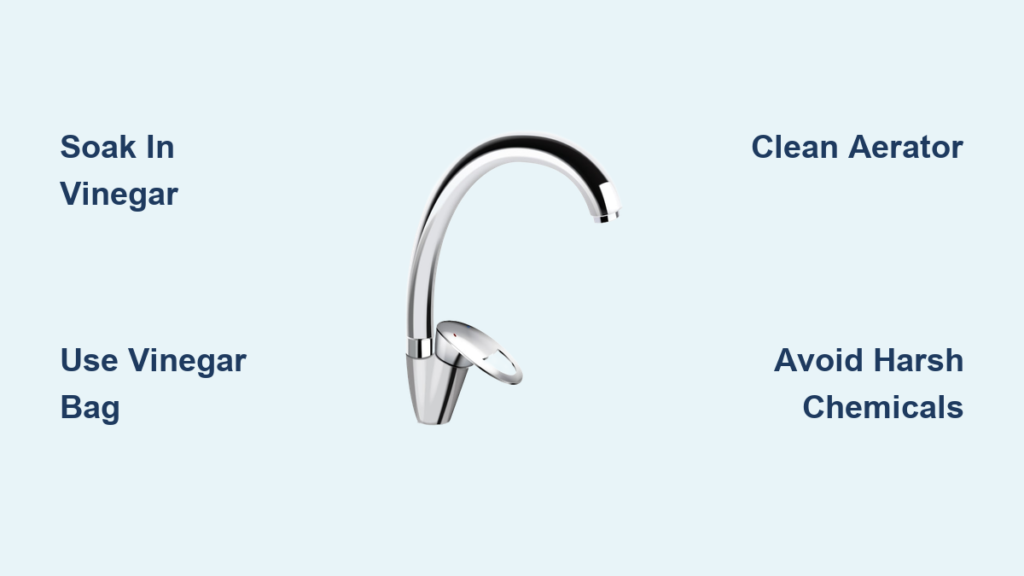
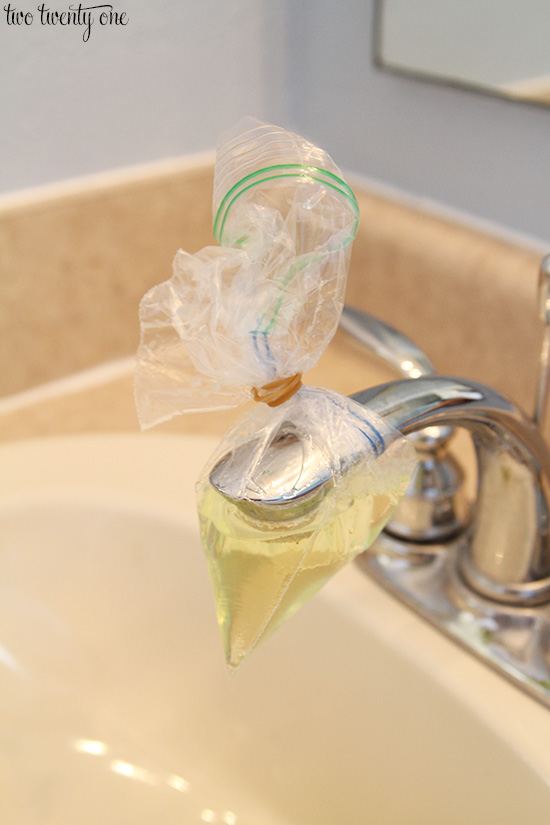
Fill a plastic bag with undiluted white vinegar. Use enough to fully submerge the spout or nozzle. Slide the bag over the faucet spout and secure it tightly with duct tape or a rubber band. Rest the bag on the sink to prevent it from tipping.
Soak for the right amount of time based on buildup severity. Light deposits need 30 minutes. Moderate buildup requires 2 to 4 hours. Heavy or old deposits may need 8 to 12 hours or overnight.
Remove the bag and discard the vinegar. Use an old toothbrush to wipe away loosened residue. Minimal scrubbing is needed because the vinegar does the work.
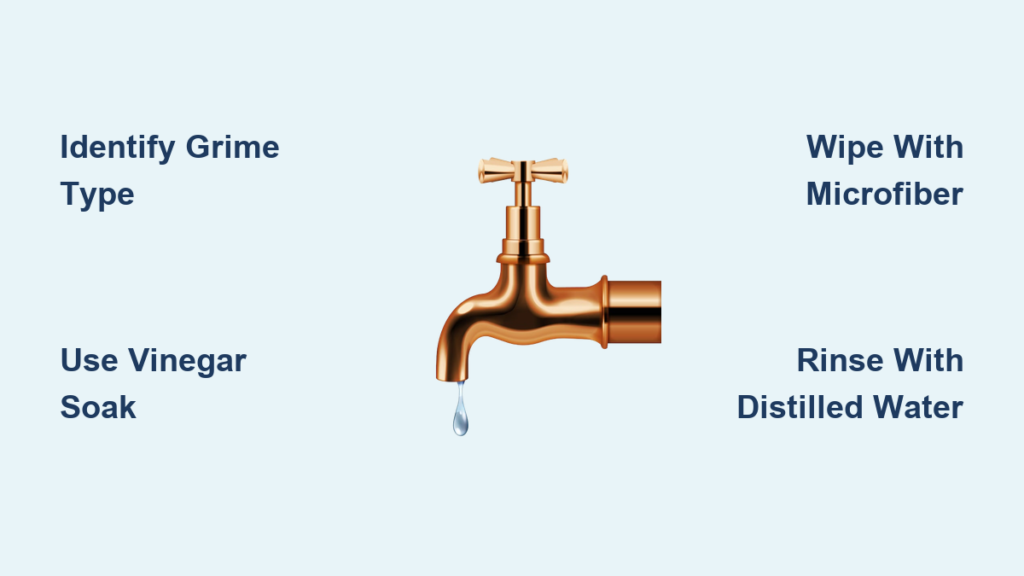
Rinse the faucet thoroughly by running water for 15 to 30 seconds. Wipe dry with a microfiber cloth to prevent new water spots from forming.
Vinegar and Baking Soda Paste for Tough Deposits
When vinegar alone doesn’t cut through thick or textured buildup, adding baking soda provides light abrasion and enhanced cleaning power.
Make and Apply the Paste
Combine equal parts white vinegar and baking soda in a small bowl. The mixture will fizz immediately as the acid and base react.
Apply the paste directly to stubborn areas, focusing on grooves, base rings, or decorative trim. Let it sit for 15 to 30 minutes.
Use a soft brush or non-scratch sponge to scrub the area. The baking soda lifts residue while the vinegar dissolves the minerals. Rinse completely and dry thoroughly.
Lemon or Lime for Quick Natural Cleaning
Citrus fruits offer a gentle, eco-friendly option for light calcium spots and regular touch-ups. The citric acid dissolves mild deposits without harsh chemicals.
Clean with Fresh Fruit
Cut a lemon or lime in half and rub the cut side directly on the buildup. Let the juice sit for 5 to 10 minutes.
Scrub lightly with a soft brush or cloth and rinse thoroughly. For extra cleaning power, sprinkle a pinch of salt on the fruit before rubbing. The salt adds mild abrasion without scratching the surface.
CLR for Severe Calcium Buildup

When vinegar fails to remove thick, stubborn deposits, CLR delivers faster, deeper cleaning with stronger active ingredients. This commercial descaler works more quickly than natural solutions.
Soak Safely with Diluted CLR
Mix 1 part CLR with 1 part water. Never use full-strength CLR unless the label specifies it’s safe for your fixture.
Apply the solution using the same bag method used for vinegar. Submerge the spout or place the bag over the affected area. Secure with tape or a rubber band.
Soak for 2 to 4 hours. Do not exceed the recommended time, as overexposure can damage finishes.
Remove the bag and wipe with a Magic Eraser to lift any residual film. Use gentle pressure, as melamine foam is slightly abrasive.
Rinse the faucet thoroughly for at least 30 seconds to remove all chemical traces. Dry with a clean cloth.
Clean the Aerator to Restore Water Flow
Low water pressure often stems from a clogged aerator, not the faucet body itself. Cleaning this small screen restores full flow.
Remove and Soak the Aerator
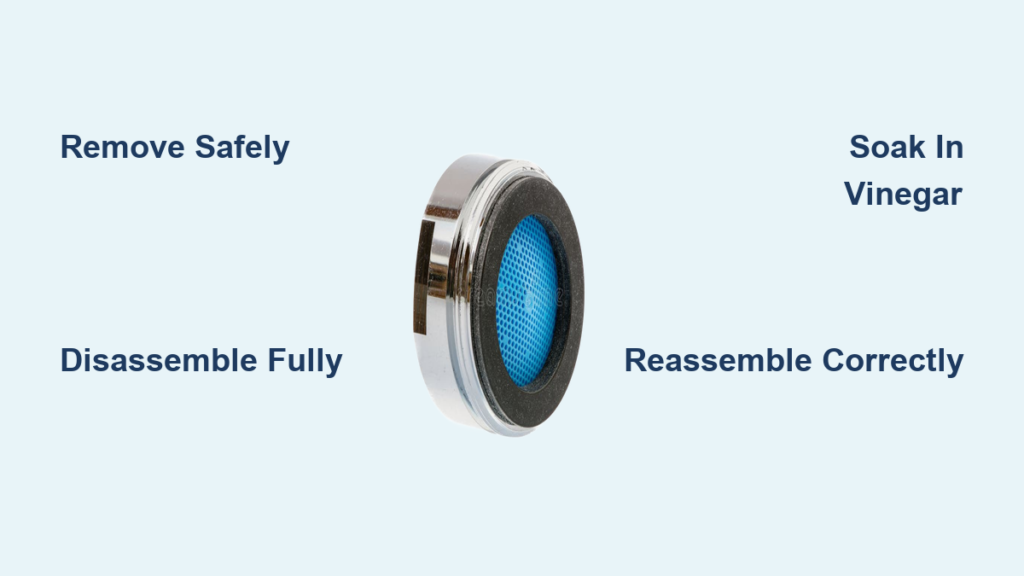
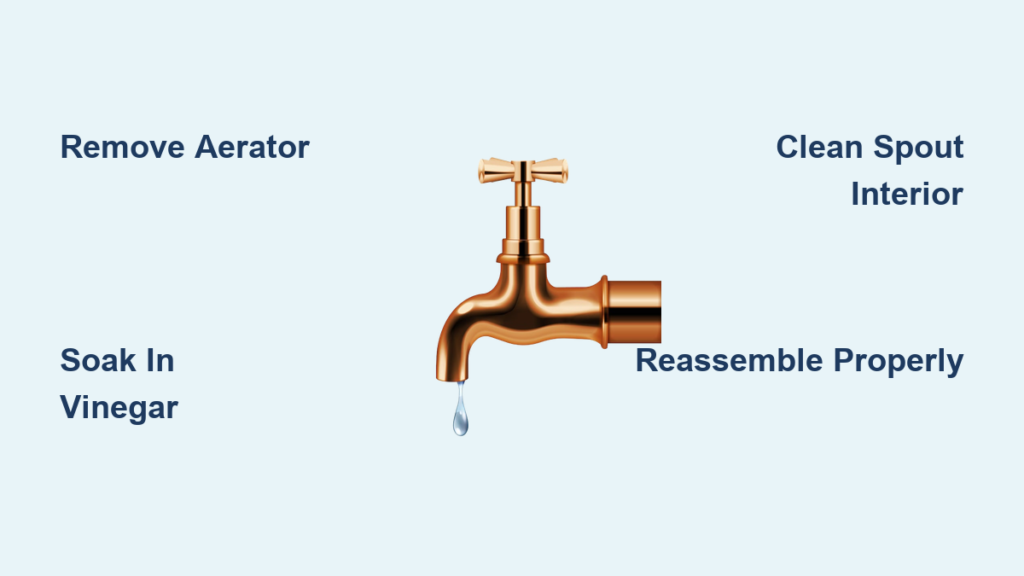
Unscrew the aerator from the faucet tip. Use your fingers first, then wrap pliers in cloth if it’s stuck. Direct metal contact can scratch the finish.
Disassemble the aerator if possible. Lay out the washers, screens, and spacers in order so you can reassemble them correctly.
Soak the parts in undiluted vinegar for 30 minutes or more. For heavy buildup, use diluted CLR for 1 to 2 hours.
Scrub each component with a toothbrush to clear every hole in the mesh screen. Rinse thoroughly under running water.
Reassemble the aerator and screw it back on by hand. Don’t overtighten. Turn on the water to test flow and check for leaks.
Safe Tools for Faucet Cleaning
Using proper tools prevents scratches and ensures thorough results.
A plastic bag holds the cleaning solution during soaking and prevents spills. A toothbrush with soft bristles scrubs crevices and aerator parts without scratching. A Magic Eraser removes film after chemical soaking. A microfiber cloth dries and polishes without leaving lint. Cloth-wrapped pliers remove tight aerators without damaging the finish.
Avoid steel wool, abrasive sponges, or harsh scrapers. These tools damage chrome and polished finishes.
Faucet Finishes That Need Caution
Not all faucets can handle acidic cleaners. Using the wrong product strips coatings or etches surfaces.
Chrome, stainless steel, and brass handles short vinegar exposure well when dried immediately. Polished nickel tolerates brief contact but degrades with prolonged exposure.
Avoid using acids on matte black finishes, as the coating will degrade. Oil-rubbed bronze loses its protective layer when exposed to acids. Aluminum can corrode. Lacquered or painted surfaces may peel. Natural stone sinks near the faucet can etch from vinegar.
Prevent Calcium Buildup Long-Term
The best cleaning strategy stops buildup before it starts. Consistent prevention reduces the need for deep cleaning.
Daily Wiping Habit
Wipe your faucet dry after every use using a microfiber cloth. This takes about 10 seconds but prevents water evaporation and mineral deposits. This single habit is the most effective daily practice.
Monthly Maintenance Soak
Perform a 1 to 2 hour vinegar soak every 4 to 6 weeks. This stops accumulation before it becomes visible. This works especially well for kitchens and frequently used bathrooms.
Install a Water Softener or Filter
Water softeners replace calcium and magnesium ions with sodium, dramatically reducing scale formation. Reverse osmosis systems remove minerals at the tap. Whole-house filters reduce hardness across all plumbing fixtures.
Even with a softener, occasional cleaning is still needed. Softeners reduce but don’t eliminate all mineral deposition on fixtures.
Comparison of Cleaning Methods

Different methods work better for different situations.
Vinegar soak works best for moderate to heavy buildup and takes 30 minutes to 12 hours. It’s highly safe for most finishes. Lemon or lime works for light spots and takes 10 to 15 minutes. It’s the safest option with a pleasant scent. Vinegar and baking soda paste targets textured or stubborn areas and takes 30 to 45 minutes. CLR works for severe, thick deposits and takes 2 to 4 hours but requires careful handling. Aerator cleaning restores water flow and takes about an hour. It’s highly safe and addresses the root cause of pressure loss.
Frequently Asked Questions About Cleaning Calcium Buildup on Faucets
Does vinegar damage chrome faucets?
No, white vinegar is safe for chrome finishes when used properly. Diluted vinegar or short soaks won’t damage chrome, but always rinse and dry thoroughly after cleaning to prevent water spots.
How often should I clean calcium buildup on my faucet?
Clean light spots as soon as you notice them. Perform a vinegar soak every 4 to 6 weeks for prevention. In hard water areas with more than 10 grains per gallon, clean the aerator monthly.
Can I use CLR on all faucet finishes?
No, CLR can damage matte black, oil-rubbed bronze, and lacquers. Always spot test on an inconspicuous area first. Check the product label for compatibility with your specific finish.
Why is my water pressure still low after cleaning the faucet?
The aerator is likely still clogged. Remove it completely and soak in vinegar or CLR for several hours. Scrub each hole with a toothbrush. If the aerator is damaged, replace it. They’re inexpensive and cost less than $10.
Does a water softener eliminate the need for cleaning faucets?
No, water softeners reduce but don’t eliminate calcium buildup. Some mineral deposits will still form on faucet surfaces, just more slowly. Regular maintenance is still necessary even with a softener.
Key Takeaways for Removing Calcium Buildup from Your Faucet
Removing calcium buildup from your faucet is straightforward when you use the right method for your situation. Vinegar soak works for most moderate deposits and is safe for all common finishes. Lemon or lime handles light spots quickly with a pleasant scent. CLR tackles severe buildup but requires careful handling and spot testing. Always clean the aerator when experiencing low water pressure, as this small component causes most flow issues.
Prevention matters more than cleaning. Wipe your faucet dry after each use and perform monthly vinegar soaks to stop buildup before it starts. Consider a water softener if you live in a hard water area. With consistent maintenance, calcium deposits don’t stand a chance, and your faucet stays clean, functional, and shiny.