If your Corian sink has lost its luster or shows a blotchy, uneven film, you’re dealing with a common issue. Corian® Solid Surface is a non-porous, durable material that resists stains and lasts for years, but it needs proper care to stay beautiful. Hard water, daily use, and the wrong cleaning products can quickly dull its finish. The good news is that restoring that smooth, like-new look takes just a few household supplies and the right techniques.
This guide covers daily maintenance, weekly deep cleaning, stain removal, and scratch repair based on official DuPont Corian care guidelines. You’ll learn exactly how to clean a Corian sink without damaging it, plus how to avoid the most common mistakes homeowners make.
Daily Cleaning Routine for a Corian Sink
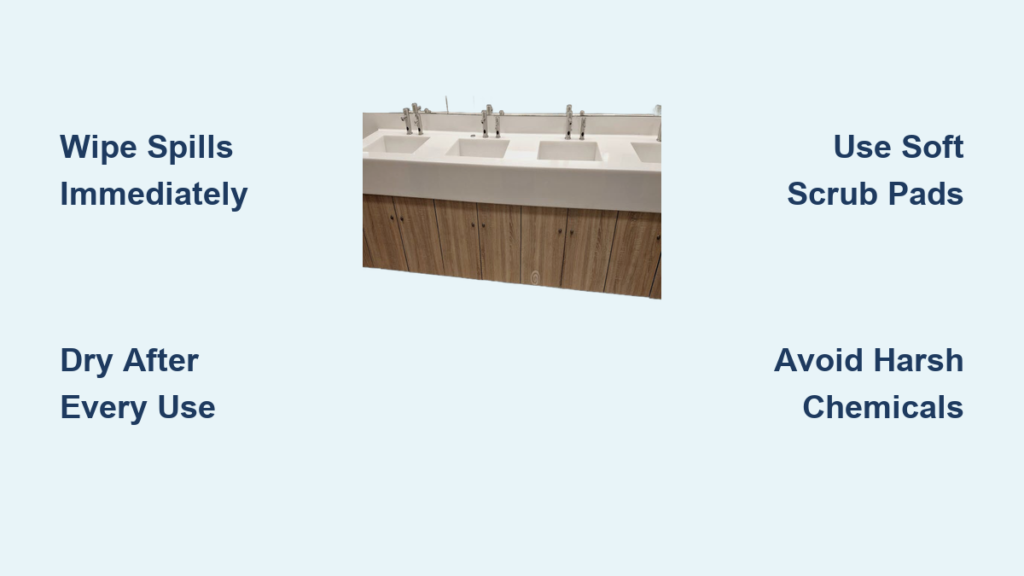
Wipe Spills Right Away
Even though Corian is non-porous and liquids cannot penetrate it, prompt cleanup prevents surface residue from building up. Coffee, ketchup, red wine, lemon juice, and vinegar can leave dulling films if left to sit. Grab a damp microfiber cloth and a standard kitchen spray to clean the area as soon as spills happen.
Stick to Safe Everyday Cleaners
Gentle, non-abrasive products work best for daily use:
– Warm soapy water
– Ammonia-based household cleaner
– Dedicated countertop cleaner
Apply your chosen cleaner with a soft cloth using circular motions. Rinse thoroughly with clean water afterward to remove any residue that might cause buildup.
Skip Window Cleaners Completely
Never reach for glass or window cleaners on Corian. They contain waxy additives that leave a hazy film on the surface, making your sink look streaky and dull. Over time, this film becomes harder to remove and ruins the sink’s appearance.
Dry the Sink After Every Use
This is the single most important habit for Corian sink care. Allowing water to air-dry leads to mineral deposits and that blotchy, uneven finish. Use a soft towel to wipe down the entire sink, including the rim, basin, and around the drain, after each rinse.
Weekly Deep Cleaning Options
Bleach Soak Method
For a powerful weekly sanitizing treatment, use a diluted bleach solution:
1. Mix 3 parts liquid household bleach with 1 part water
2. Pour or spray the solution generously into the sink
3. Let it sit for several hours or overnight
4. Do not exceed 16 hours of exposure
5. Rinse thoroughly with clean water
6. Wipe dry with a soft cloth
This approach kills bacteria, lifts stains, and brightens the surface with minimal scrubbing effort.
Non-Bleach Scrub Method
If you prefer to avoid bleach, an abrasive scrub works just as well:
1. Apply a non-scratch abrasive cleaner like Ajax or Comet across the sink
2. Scrub with a green Scotch-Brite® pad (abrasive side) using circular motions
3. Focus extra attention on stained or discolored spots
4. Use a small scrub brush to clean around the drain, edges, and overflow holes
5. Rinse thoroughly with warm water
6. Dry completely with a soft towel
For stubborn spots, let the cleaner sit for 2–3 minutes before scrubbing. Repeat this process every few weeks to keep buildup at bay.
Pro Tip: Avoid steel wool, coarse scrub pads, or harsh chemicals like straight bleach during this method. They can scratch or dull the surface permanently.
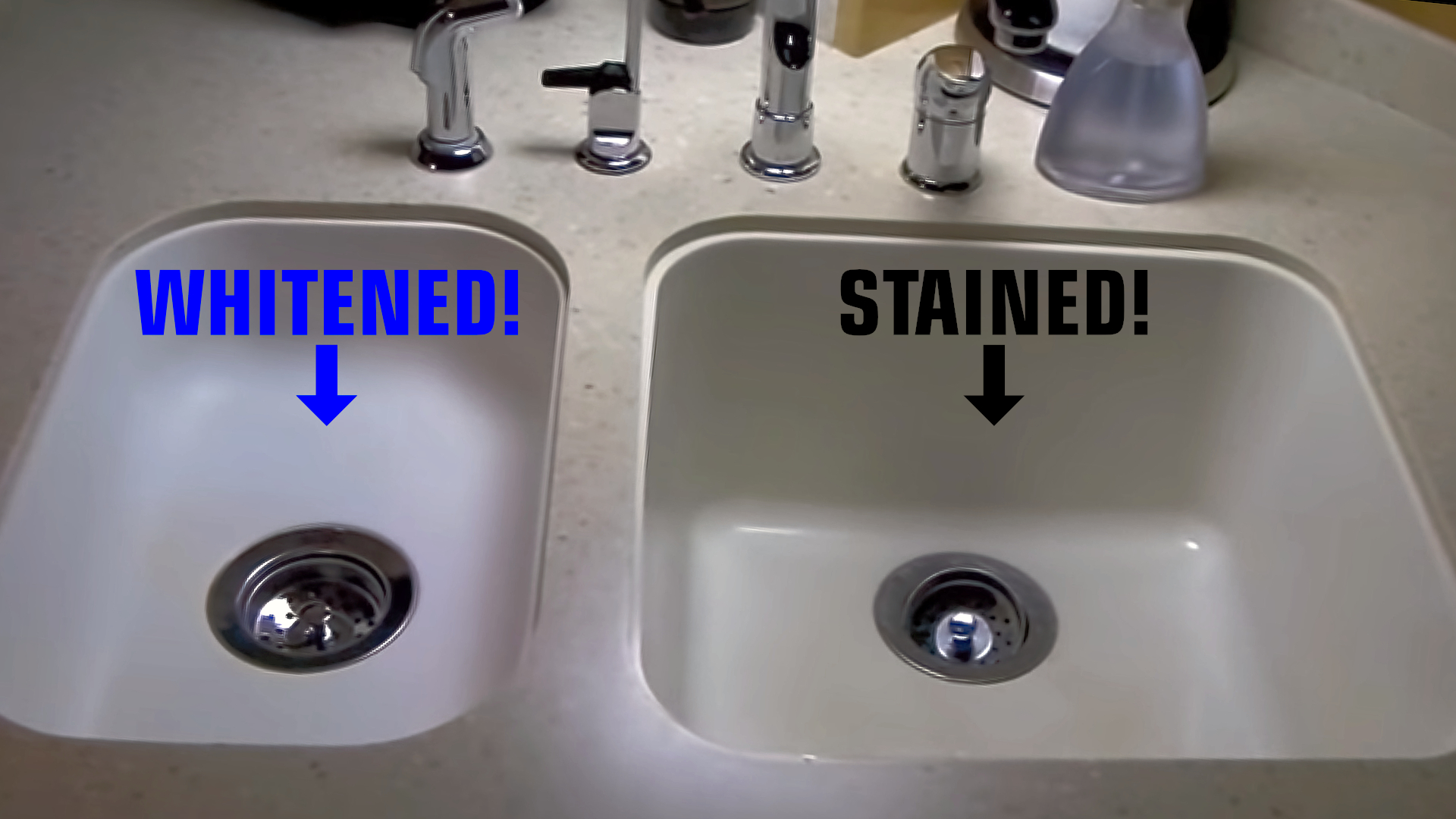
Remove Stubborn Stains From Your Corian Sink
Treat Hard Water Buildup
Hard water leaves white, chalky patches and is the top cause of blotchy sinks:
1. Apply Viakal gel directly to the affected area
2. Wait 2–4 minutes for the gel to work
3. Wipe off with a damp microfiber cloth
4. Rinse thoroughly with clean water
5. Follow up with a mild abrasive cleaner if residue remains
Always dry the sink afterward to prevent the deposits from returning.
Clean Food and Dye Stains
For coffee, tea, ketchup, or red wine stains:
1. Apply a mild abrasive liquid cleanser like Soft Scrub® to a damp sponge
2. Rub in small circular motions, working front to back, then side to side
3. Overlap strokes until the entire area looks even
4. Rinse thoroughly with clean water
5. Wipe completely dry
For extra-stubborn stains, let the cleanser sit for 2–3 minutes before scrubbing.
Stop Hazy Film Before It Starts
That cloudy film most homeowners complain about comes from water drying on the surface over and over. Prevent it by:
– Drying the sink after every use
– Using a squeegee after rinsing
– Avoiding soaps that leave residue
If film persists, repeat the abrasive scrub method to restore clarity.
Disinfect Your Corian Sink Safely
Use EPA-Approved Disinfectants
Corian is fully compatible with EPA-registered disinfectants proven effective against SARS-CoV-2. To sanitize:
– Select a product from the EPA’s List N
– Follow the manufacturer’s dilution and contact time instructions exactly
– Apply with a soft cloth
– Rinse with water if the label recommends it
– Dry thoroughly
Avoid leaving strong disinfectants on the surface for longer than directed to prevent degradation.
Stay Away From Harsh Chemicals
Some products will permanently damage Corian. Never use:
– Acetone-based nail polish remover
– Oven cleaners
– Paint strippers
– Acid drain cleaners
– Cleaners containing methylene chloride
If any of these spill on your sink accidentally, flush the area immediately with plenty of soapy water. Prolonged contact can cause permanent damage.
Prevent Common Corian Sink Damage

Protect Against Heat
Corian is heat-resistant but not heat-proof:
– Never place hot pots, pans, or cast iron cookware directly in the sink
– Always use trivets or cooling racks for heated items
– Run cold water from the faucet while pouring boiling water into the basin
Important: If you have an instant boiling water tap, always use a container to catch the water. Direct flow can scorch the surface, and this damage is not covered by the DuPont 10-Year Warranty.
Avoid Cutting on the Surface
Never use your Corian sink as a cutting board. Knives will leave scratches and cuts that compromise the finish. Stick to a wooden or plastic cutting board for all prep work.
Use the Right Scrubbing Tools
Stick with these safe options:
– Green Scotch-Brite® pads
– Soft cloths and microfiber towels
– Non-scratch abrasive cleaners
Avoid steel wool, coarse scrub pads, harsh powders, and wire brushes. They will scratch or dull the finish permanently.
Repair Scratches and Blotches
Fix Light Scratches at Home
Minor scratches, especially on dark colors, can be tackled with a DIY approach:
1. Wash the area with hot soapy water and dry it completely
2. Sand the scratch with P240 grit sandpaper (or 60μ paper)
3. Rinse to wash away residue
4. Buff with a maroon Scotch-Brite™ 7447 A VFN pad in circular motions for matte finishes
For semi-gloss finishes, follow up with finer grits:
– Light colors: P240 → P400 → P600, then buff with a gray pad
– Dark colors: P240 → P400 → P600, then buff with a gray pad
Always sand in circular motions and rinse between each step.
Expert Note: Do not mix P-grade and micron sandpaper in the same sequence. Their grit sizes are not equivalent and you’ll get uneven results.
Restore a Uniform Finish
Achieving a consistent semi-gloss or high-gloss finish by hand is tricky, especially over large areas. For best results:
– Hire a professional Corian installer
– Contact your original retailer or DuPont for refinishing services
– Use only authorized repair technicians
Professionals have the tools to sand, polish, and restore your sink to factory condition.
Handle Cracks and Deep Damage
Hairline cracks cannot be repaired reliably. Sanding may hide them temporarily, but leaks usually develop within a year. Replacement is the recommended fix. If durability is your priority, consider switching to a stainless steel sink. Installers can often resize the cutout using leftover Corian from your countertop or stove area.
Maintenance Schedule at a Glance
| Frequency | Task |
|---|---|
| As needed | Wipe up spills immediately |
| Daily | Clean with soapy water or household spray, then dry completely |
| Weekly | Bleach soak (max 16 hours) OR abrasive scrub with green Scotch-Brite® pad |
| Every few weeks | Deep clean to prevent buildup |
| When stained | Use Viakal for hard water; Soft Scrub® for food stains |
| When scratched | Sand with proper grit sequence, then buff with correct pad |
| Annually | Inspect for wear and consider professional refinishing if needed |
Frequently Asked Questions About Cleaning a Corian Sink
Can I use vinegar to clean my Corian sink?
Avoid vinegar and other acidic cleaners on Corian. Acids can dull the surface over time. Stick to the cleaners listed in the daily routine above, and use Viakal gel specifically for hard water spots.
Why does my Corian sink look blotchy?
Blotchiness is almost always caused by hard water drying on the surface and leaving a mineral film. Wiping the sink completely dry after every use prevents it. To remove existing blotches, use the abrasive scrub method with Soft Scrub® and a green Scotch-Brite® pad.
How often should I deep clean my Corian sink?
Run the bleach soak or abrasive scrub method once or twice a week. If your water is very hard, you may need to deep clean more often and stay on top of drying after each use.
Will bleach damage my Corian sink?
Diluted household bleach (3 parts bleach to 1 part water) is safe for weekly use, as long as you do not exceed 16 hours of contact time. Straight bleach should never sit on the surface, and prolonged exposure of any kind can cause damage.
Can I repair deep scratches myself?
Light scratches are DIY-friendly with sandpaper and buffing pads. Deep scratches, cracks, and large refinishing jobs should be handled by an authorized Corian professional to avoid making the damage worse.
Is Corian sink damage from boiling water taps covered under warranty?
No. Damage caused by instant boiling water taps is explicitly excluded from the DuPont 10-Year Warranty. Always use a container to catch boiling water from these taps to protect your sink.
Final Thoughts on Keeping Your Corian Sink Beautiful
A Corian sink can stay smooth, stain-free, and glossy for decades with the right habits. Wipe it dry after every use, run weekly bleach soaks or abrasive scrubs, and address stains immediately with Viakal or Soft Scrub®. Avoid window cleaners, steel wool, and harsh chemicals like acetone or oven cleaners, since these will permanently damage the surface.
Lighter colors tend to hide scratches and water spots better than darker shades, so if you’re shopping for a new sink, keep that in mind. Most importantly, never place hot pans directly in the basin or cut food on the surface. Start with the daily routine today, and your sink will continue looking fresh and new for years to come.