If your garden hose won’t deliver water or you’re dealing with a leaky spigot after winter, the problem often starts with how your outdoor faucet operates and whether it’s designed to handle freezing temperatures. An outdoor faucet, also called a hose bib, spigot, or sillcock, controls water flow from your home’s plumbing to the exterior. While it may seem like a simple tap, its internal mechanics and design are critical to preventing leaks, bursts, and contamination.
But not all outdoor faucets work the same. In cold climates, a standard spigot can freeze and crack, leading to costly water damage inside your walls. That’s why frost-proof models are now standard in many regions. These advanced faucets use smart engineering, like relocating the shut-off valve indoors and enabling automatic drainage, to survive freezing temperatures. Understanding how they function helps you avoid common mistakes that can defeat their protective design.
Core Components of a Standard Outdoor Faucet
Every outdoor faucet uses a basic compression valve system to start and stop water flow. Knowing its parts helps you diagnose leaks and performance issues when they arise.
Handle and Stem Mechanism
Turning the handle rotates a long threaded rod called the stem. As it lifts or lowers, it moves a rubber or neoprene stem washer at its tip. When the washer presses against the valve seat inside the faucet body, it seals the water passage and stops flow. This is a compression valve design. It is simple but prone to wear over time.
Key Internal Parts
The valve seat is a brass or metal surface that the washer seals against. The packing nut tightens around the stem to prevent leaks where it exits the faucet body. A small rubber or nylon packing washer sits under the packing nut to keep water from dripping around the stem. The inlet connects to your home’s indoor water line, and the spout is where water flows out when the valve is open.
When you turn the handle counterclockwise, the stem rises and lifts the washer off the seat. This allows water to flow through an L-shaped passage to the spout. Turning the handle clockwise reseals the washer against the seat, shutting off the water completely.
Why Standard Faucets Fail in Winter
In traditional spigots, the valve is located just behind the handle, outside the home. When water is shut off, it remains trapped in the pipe between the valve and the spout. If temperatures drop below freezing, this water expands and often splits the pipe. The result is a burst line and hidden water damage inside your wall.
How Frost-Proof Faucets Prevent Freezing
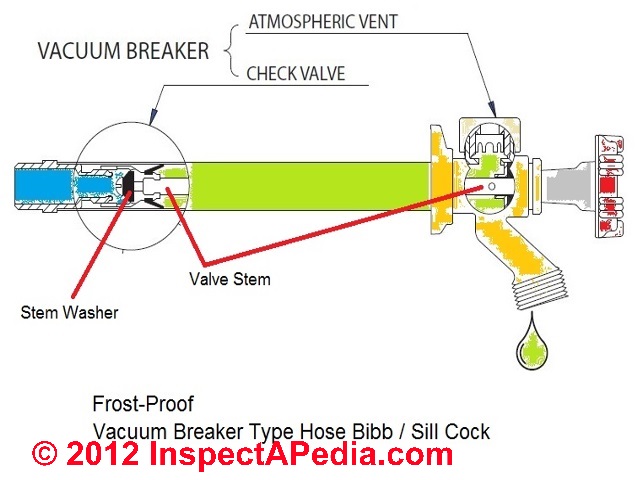
Frost-proof outdoor faucets solve the freezing problem with three smart design features that work together to keep water from expanding inside the wall.
Interior Valve Location
The most important difference is that the shut-off valve is located deep inside the heated part of your home, not near the outside wall. A long supply stem, ranging from 4 to 12 inches or more, extends from the exterior spout back through the wall to this interior valve point.
When you turn off the faucet, the compression washer seals the valve seat inside the warm interior, cutting off water before it reaches the cold zone. No water stays behind the valve outdoors, eliminating the risk of freezing at the source.
Downward Pitch for Drainage
Frost-proof faucets must be installed with a slight downward angle, about one-quarter inch per foot, from the interior to the exterior. This allows any water left in the outer pipe to drain out by gravity when the faucet is closed.
If the faucet is level or sloped inward, water pools in the stem and can freeze, even in a frost-proof model. The pitch is essential for proper drainage.
Self-Draining Design
Every time you turn off a frost-proof spigot, the exposed portion drains automatically. This eliminates the need to manually shut off an indoor supply valve and blow out the line each fall. As long as no hose is attached, the system winterizes itself with no extra effort from you.
Frost-Proof vs. Traditional: What Is the Difference?

Choosing the right faucet matters, especially if you live where winter temperatures dip below freezing.
Traditional spigots have the valve behind the handle, just inside the wall, exposed to cold air. They have high freeze risk because water stays in the pipe and freezes. You must winterize them by shutting off the indoor valve and draining the line annually. They do not self-drain, and anti-siphon protection is often missing or added later. They are not recommended for cold climates.
Frost-proof faucets have the valve 4 to 12 inches inside the home, in conditioned space. They have low freeze risk because water is either drained or kept warm. They only require hose disconnection for winterization, not manual draining. They are self-draining, with automatic drainage on every shutoff. Anti-siphon protection is built-in. They are required by code in many cold regions.
Why Anti-Siphon Protection Matters
Even if your faucet does not freeze, it could be putting your drinking water at risk without a built-in anti-siphon valve.
How Back-Siphonage Happens
Imagine a garden hose sitting in a bucket of fertilizer. If water pressure drops suddenly, due to a main break or fire hydrant use, negative pressure can pull contaminated water back into your home’s plumbing. This is called back-siphonage. Historical cases of illness led to plumbing codes requiring protection on all outdoor faucets.
How the Anti-Siphon Valve Works
Located just behind the spout, the anti-siphon device contains a poppet or flapper that opens during normal flow. When pressure drops, it closes instantly and blocks reverse flow. It also includes an air gap or vent that breaks the siphon effect for added protection.
Signs It Is Working
A brief spurt of water when you first open the faucet after inactivity is normal. It means the vacuum breaker is working. You should not see continuous dripping unless the internal washer is worn.
These valves are often permanently installed with fine threads or set screws to prevent tampering and ensure code compliance.
Common Reasons Frost-Proof Faucets Fail
Even the best-designed spigot can fail, usually due to misuse or poor installation.
Hose Left Attached in Winter
This is the number one cause of failure. When a hose, nozzle, or timer stays connected, it traps water in the outer pipe. That water cannot drain, so it freezes and expands with up to 4,000 psi of force, enough to crack copper or brass.
The pipe often splits inside the wall, leading to leaks that go unnoticed until mold or damage appears. Always disconnect hoses before the first freeze, every year.
Incorrect Installation Angle
If the faucet is not pitched downward, water pools in the stem and freezes. Reinstall with a one-quarter inch drop per foot toward the outside to fix this.
Cold Interior Valve Chamber
The valve shuts off inside the home, but if that space drops below 50 degrees Fahrenheit, like in a vacation cabin or uninsulated garage, freezing can still occur. Insulate the area or add a heat source to prevent this.
Fixing Common Outdoor Faucet Problems
Most faucet issues are repairable. You do not need to replace the entire unit.
Spout Leaks When Closed
A worn stem washer is the cause. To fix it, shut off the water supply, remove the handle and stem, replace the washer, and reassemble and test. This is normal wear after 15 to 20 years.
Handle Leaks
Water seeping around the handle means the packing washer is failing. First, tighten the packing nut slightly. If that does not stop the leak, replace the packing washer with a nylon or Teflon version. Avoid over-tightening, as it can damage the stem.
Anti-Siphon Valve Dripping
If water leaks from the vent cap or spout after shutoff, the anti-siphon valve may be clogged or worn. To repair it, shut off the water, unscrew the cap, clean debris from the washer and seat, replace the washer if cracked, and reassemble with Teflon tape on threads. Some models are non-serviceable by design to maintain code compliance.
Faucet Will Not Shut Off Completely
Possible causes include mineral buildup on the stem or seat, a worn valve seat from high-speed water erosion, or damaged stem threads. Remove the stem and backflush the line by briefly opening the supply. Replace the washer or seat. If the seat is deeply eroded, replace the entire faucet.
Replacing an Outdoor Faucet: What You Need to Know
Replacing a frost-proof valve is not just about matching size. It requires correct fit and function.
Measure the Stem Length
Remove the old stem and measure tip-to-tip. Common lengths are 6, 8, 10, and 12 inches. Choose based on wall thickness so the valve shuts off inside the heated space.
Match the Connection Type
Outdoor faucets connect in several ways. Sweat or soldered connections work for copper pipes. Threaded connections screw into existing pipe, either male or female. PEX or hybrid connections work for modern plumbing systems. Always check the manufacturer specs and match the inlet and outlet sizes, such as three-quarter inch MPT.
Install with Correct Pitch
Even a new frost-proof faucet will fail if installed level. Use a level to ensure a one-quarter inch downward slope from interior to exterior.
Test Before Closing Up
After installation, turn water on slowly and check for leaks at the packing nut and wall penetration. Open and close the faucet to verify full shut-off and drainage.
Plumbing Codes and Safety Standards
Outdoor faucets must meet strict codes to protect water quality and prevent damage.
Required Standards
ANSI/NSF 1011 covers performance of vacuum breakers or anti-siphon devices. ANSI/NSF 105 regulates lead content in plumbing fittings, critical for drinking water safety. Local building codes in many cold regions require frost-proof faucets in new construction. Anti-siphon protection is mandatory in most U.S. jurisdictions.
Best Practices for Long-Lasting Performance
Avoid costly repairs with simple seasonal habits and maintenance.
Disconnect hoses before winter. This single step prevents 90% of frost-proof faucet failures. Do it before the first hard freeze, not after. Inspect annually in spring for drips, leaks, slow drainage, reduced pressure, or signs of corrosion. Replace washers or seals as needed.
Test anti-siphon function by opening the faucet after inactivity. A small spurt of water from the vent cap is normal and means the vacuum breaker is working. Continuous dripping indicates a problem with the internal washer.
Insulate unconditioned areas where your faucet connects to a line in a garage or crawlspace. Wrap it with foam insulation during extreme cold. Hire a professional for installation, as improper pitch or depth leads to failure. A licensed plumber ensures code compliance and long-term reliability.
Frequently Asked Questions About Outdoor Faucets
How long do frost-proof faucets last?
With proper care, they last 15 to 20 years or more. The stem washer and anti-siphon valve are the only parts that typically need replacement.
Do I need to winterize frost-proof faucets?
Only disconnect the hose. The self-draining design handles the rest. There is no need to shut off an indoor valve.
How can I tell if my faucet is frost-proof?
Look at the stem. If it extends several inches into the wall before the valve, it is frost-proof. On standard models, the valve is right behind the handle.
Can I install one myself?
Experienced DIYers can handle it, but the job requires cutting siding, working with water lines, and ensuring correct pitch. Many choose a professional to avoid costly mistakes.
Why is my faucet dripping after I turn it off?
Almost always a worn stem washer. Replace it. It is a 10-minute fix.
Why is water pressure low after winter?
This is likely due to partial freezing from a hose left attached. Ice may have damaged internal parts. Have the faucet inspected.
Are frost-proof faucets required by code?
Yes, in many cold-climate areas for new construction. Anti-siphon devices are also commonly mandated.
Key Takeaways for Understanding Outdoor Faucets
A well-designed outdoor faucet does more than deliver water. It protects your home from freeze damage and your family from contaminated water. By understanding how frost-proof models work, you can avoid common pitfalls and ensure reliable performance for years.
The key differences come down to valve location. Traditional spigots have the valve near the outside wall, where water can freeze and burst the pipe. Frost-proof faucets place the valve inside the heated home, where it stays warm. They also self-drain every time you shut them off, as long as no hose is attached.
Most failures happen because hoses are left connected in winter. This traps water in the outer pipe and defeats the drainage design. Always disconnect hoses before freezing weather arrives. Inspect your faucets annually, test the anti-siphon function, and replace worn washers before they cause leaks.
With these habits, your outdoor faucet will keep working without surprises for decades.