If you’re planning a kitchen remodel and want a sink that combines style with serious functionality, the farmhouse sink deserves a spot on your shortlist. With its signature apron front and oversized basin, this design has surged in popularity among homeowners chasing both charm and practicality. Before committing, you need a clear breakdown of the farmhouse sink pros and cons so you can decide if the investment matches your goals and budget.
This guide walks you through everything that matters, from deep-basin convenience and material choices to installation headaches and resale implications. By the end, you’ll know exactly what to expect, what to budget for, and whether a farmhouse sink is the right centerpiece for your kitchen.
Deep Basin Capacity and Everyday Functionality
One of the biggest draws of a farmhouse sink is how much easier it makes daily kitchen tasks, especially in homes where cooking is a central activity.
Roomy Basin for Oversized Cookware
Farmhouse sinks typically run 9 to 10 inches deep, compared to about 7 inches in standard models. That extra depth lets you fully submerge large roasting pans, stock pots, and baking sheets without a waterfall of suds pouring over the counter.
Wide Single-Bowl Design
The single-basin layout eliminates the divider found in double sinks, giving you one continuous washing zone. This setup works well for soaking multiple dishes at once or rinsing produce without bumping into a center wall.
Ergonomic Comfort While You Work
Because the sink front sits flush with the cabinet edge, you stand closer to the basin. This reduces leaning and helps your posture during long cleanup sessions, a subtle but real benefit for anyone who hand-washes often.
Visual Impact and Design Versatility
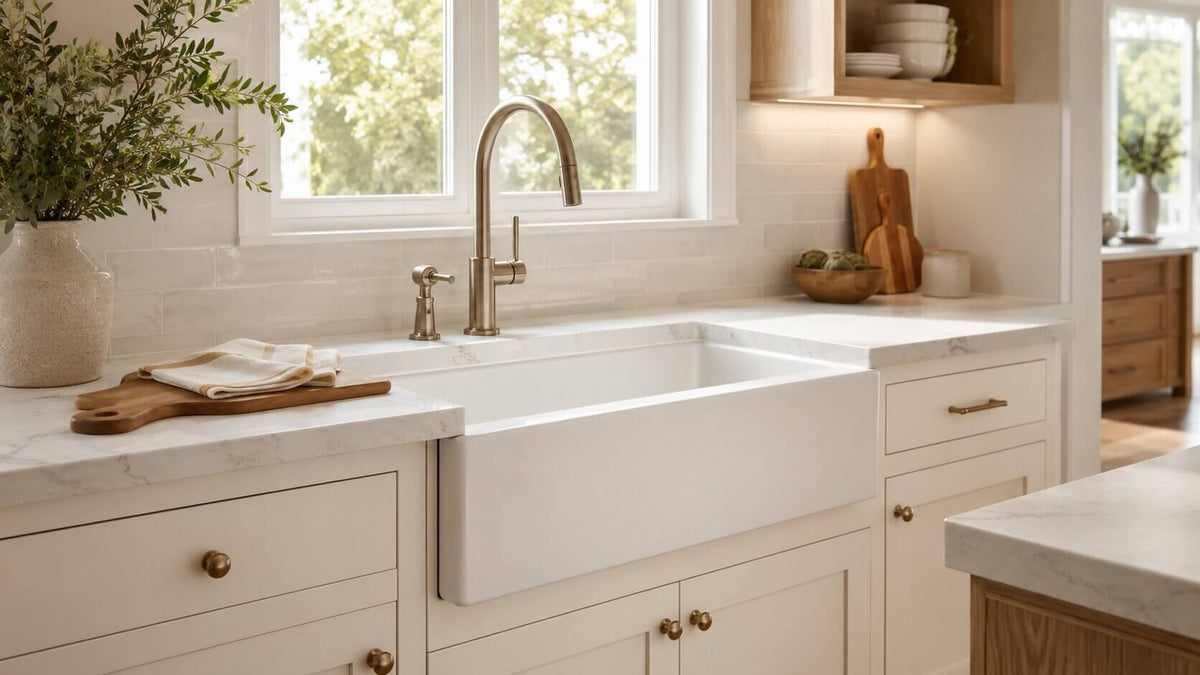
A farmhouse sink doesn’t just perform well. It also acts as a focal point that anchors the entire kitchen aesthetic.
Signature Apron Front
The exposed front panel is the defining feature, delivering an unmistakable look that pairs naturally with shaker cabinets, rustic wood tones, and modern farmhouse palettes. Few fixtures change the feel of a kitchen as quickly.
Material Choices to Match Any Style
You have several material options, each with distinct personality:
– Fireclay: Crisp white, scratch-resistant, and timeless
– Stainless Steel: Sleek, industrial, and budget-friendly
– Cast Iron: Heavy-duty with a glossy porcelain coating in many colors
– Copper: Hand-hammered, living finish that develops a unique patina
Works With Premium Countertops
Farmhouse sinks pair beautifully with quartz, granite, and marble. The seamless transition from counter to basin creates a clean, high-end look that drop-in sinks can’t match.
Installation Challenges You Should Plan For

Here’s where the farmhouse sink stops being a simple swap and becomes a construction project. Knowing these hurdles upfront saves time and money.
Cabinet Modifications Are Usually Required
Because the apron extends past the cabinet face, your existing cabinet front must be cut down or fully rebuilt. In many remodels, this means replacing the sink base cabinet altogether.
Heavy Weight Demands Extra Support
Fireclay and cast iron models can easily exceed 100 pounds. Standard cabinets often need plywood reinforcement, corner braces, or even structural anchoring to handle the load safely over time.
Precision Matters More Than You Think
The exposed front leaves no room for error. Misalignment by even a fraction of an inch can cause visible gaps, uneven countertop seams, or plumbing headaches. Professional installation is strongly recommended.
Cost Breakdown and Budget Realities
A farmhouse sink is a premium upgrade, so pricing stretches well beyond the sink itself.
Higher Purchase Price for the Sink
Entry-level models start around $400, while high-end fireclay or custom copper versions can top $2,000. Compare that to under $200 for many standard stainless steel sinks.
Labor Costs Add Up Quickly
You’re paying for carpentry, structural reinforcement, and precise countertop fabrication, not just plumbing. Expect an extra $500 to $1,000 in installation labor, depending on your setup.
Possible Countertop Replacement
If your current countertop is laminate or a low-density material, it likely cannot support the sink. Switching to quartz or granite adds thousands more to the project but ensures a durable, clean install.
Cleaning and Durability by Material

Each farmhouse sink material has strengths and weaknesses that affect how it holds up over years of use.
Fireclay: Tough but Temperature-Sensitive
Fireclay resists scratches and stains but can crack under sharp impact or rapid temperature swings, like pouring boiling water into a cold basin. Handle heavy pots carefully around the rim.
Stainless Steel: Resilient Yet Scratched Easily
Stainless handles heat and impact well, but everyday use leaves fine scratches and water spots. Wipe it down regularly with a microfiber cloth to keep the finish looking fresh.
Cast Iron: Heavy and Chip-Prone
The porcelain enamel coating can chip if you drop heavy cookware, and exposed metal underneath may rust if left untreated. Use sink grids to protect the surface.
Extra Cleaning Around the Apron
The exposed front panel catches splashes, dust, and cooking residue. A quick daily wipe prevents grime from building up along the edge where the sink meets the countertop.
Plumbing and Faucet Compatibility

The sink’s shape changes how you set up your faucet and plumbing, which can limit your options.
Faucet Must Mount on the Counter or Wall
Standard sink-mounted faucets won’t work because the apron front blocks the deck. You’ll need a countertop-mounted or wall-mounted faucet, often with a taller gooseneck spout for clearance.
Longer Supply Lines Required
Moving the faucet away from the sink adds material costs for extended supply lines and additional shut-off valves under the cabinet.
Drain Placement Affects Storage
Most farmhouse sinks position the drain toward the rear to free up the front basin. This layout can interfere with standard cabinet doors or pull-out trash systems, so plan your storage accordingly.
Resale Value and Buyer Appeal
A farmhouse sink can lift your kitchen’s appeal, but its impact depends on your market and how you execute the look.
Strong Draw in Trend-Friendly Neighborhoods
In suburban and rural markets where farmhouse style is popular, this sink can be a genuine selling point that sets your kitchen apart.
Avoid Overly Custom Choices
Bold colors or rare materials might clash with buyer expectations. Stick with classic white fireclay or brushed stainless for the broadest appeal.
Built to Outlast Trends
Farmhouse sinks have remained popular for over a decade. Choose timeless materials and quality installation, and your sink will stay attractive for years.
Alternatives Worth Considering
If the installation complexity or cost feels like too much, a few alternatives capture similar benefits with fewer trade-offs.
Apron-Front Composite Sinks
Quartz and granite composite sinks mimic the farmhouse look but weigh less and install more easily. They resist stains and scratches and come in modern color options.
Deep Undermount Sinks
Newer undermount designs reach depths close to farmhouse models. They install without cabinet modification and pair nicely with waterfall countertops for a high-end finish.
Self-Trimming Farmhouse Models
Some manufacturers now offer farmhouse sinks with built-in support frames. These trim pieces simplify installation and reduce the need for custom cabinetry, ideal for DIY projects.
Frequently Asked Questions About Farmhouse Sinks
Are farmhouse sinks worth the money?
If you value deep basins, frequent home cooking, and a strong design statement, farmhouse sinks deliver strong returns through daily convenience and visual impact. However, the higher upfront cost and installation complexity mean they’re best for full remodels rather than quick upgrades.
Do farmhouse sinks require special cabinets?
Yes. Because the apron extends past the cabinet face, the sink base cabinet must be modified or replaced. Standard stock cabinets typically don’t accommodate the exposed front without alteration.
What is the biggest downside of a farmhouse sink?
Installation cost and complexity rank as the top drawbacks. Cabinet modifications, structural reinforcement, and possible countertop replacement drive project costs significantly higher than standard sink swaps.
How do you clean the front of a farmhouse sink?
Wipe the apron front daily with a soft cloth and mild soap. Avoid abrasive cleaners, especially on fireclay or cast iron finishes, to protect the surface from scratches and dulling.
Can you install a farmhouse sink in an existing kitchen?
It’s possible but often means replacing the sink base cabinet and possibly the countertop. If you’re not already renovating, the added labor and material costs may outweigh the benefits.
Key Takeaways on Farmhouse Sink Pros and Cons
Farmhouse sinks deliver standout advantages: deep basins, generous capacity, ergonomic comfort, and a striking focal point that defines modern farmhouse kitchens. They also come with real trade-offs, including higher purchase prices, demanding cabinet modifications, heavy weight that requires structural support, and material-specific maintenance needs.
Before deciding, weigh these factors against your budget, kitchen layout, and long-term plans. If you cook often, love the aesthetic, and can absorb the installation costs, a farmhouse sink is a rewarding upgrade. If not, consider an apron-front composite or deep undermount alternative that captures the style with fewer compromises. Measure your space, set a realistic budget, and consult a professional installer to confirm your kitchen can support the upgrade before committing.