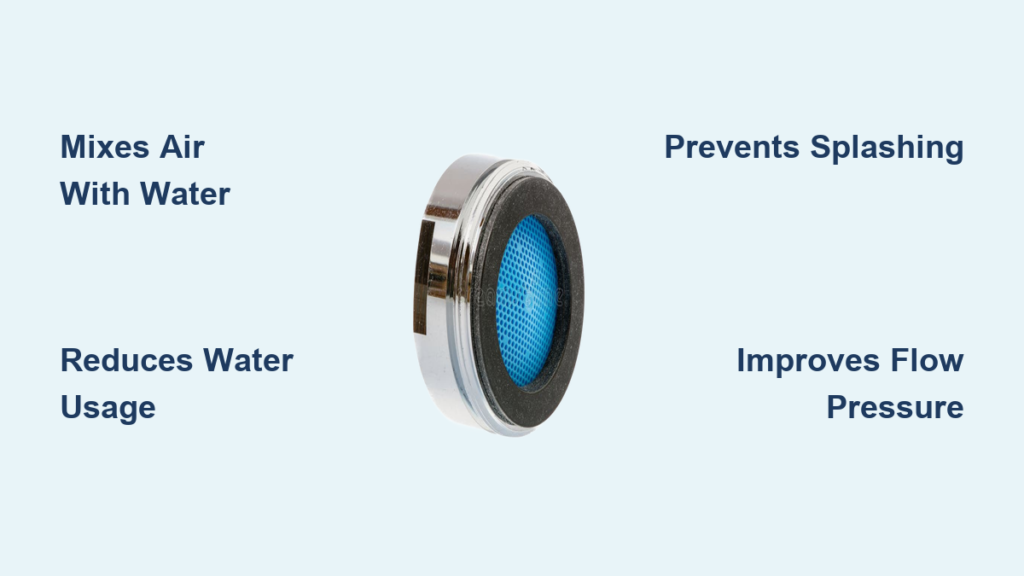
You turn on the tap and expect a smooth, steady stream, but have you ever wondered what makes that possible? The answer lies in a tiny but powerful component: the faucet aerator. This small device, often no bigger than a quarter, plays a major role in how your faucet performs. Found on about 90% of modern faucets, aerators are essential for both comfort and conservation. In this guide, you will learn exactly how they function, why they matter, and how to keep them working smoothly.
Core Functions of a Faucet Aerator
A faucet aerator does far more than just sit at the tip of your tap. It solves several common plumbing problems with simple physics.
Prevents Sink Splashing
Without an aerator, water pours out in a solid stream that hits the sink with full force, creating splashes and mess. The aerator stops this by breaking the flow into tiny droplets and mixing them with air. This creates a softer, foam-like stream that lands gently. Because each droplet splashes in a slightly different direction, their splash patterns cancel each other out, dramatically reducing water spray. The result is a clean, controlled flow, even at high pressure.
Reduces Water and Energy Use
Aerators are key to water conservation. Most limit flow to 1.0 to 1.5 gallons per minute, with some high-efficiency models using as little as 0.5 gallons per minute. This adds up fast. Switching from a 2.2 gallons per minute faucet to a 1.0 gallons per minute aerator can save thousands of gallons per year in a typical household. And since less hot water is used, you also cut energy costs for water heating. In commercial buildings and green homes, this efficiency helps meet sustainability standards and lower utility bills.
Boosts Perceived Water Pressure
Even with less water flowing, an aerated stream can feel stronger than a non-aerated one. How? Through Bernoulli’s principle. As water moves through the aerator, a pressure difference forms, pulling in air and speeding up the mixture. The added air increases velocity, making the stream feel more forceful when it hits your hands. Plus, the fuller, bubbly texture tricks your senses into thinking more water is coming out, even though you are using less.
How Aeration Actually Happens

The aeration process relies on two simple stages that happen in milliseconds every time you turn on the tap.
Air Is Drawn Into the Water Stream
The first step in aeration is air induction. As water flows through the aerator, it passes through a venturi chamber or aspiration tube. This narrow section increases water speed and drops pressure. This pressure drop sucks in ambient air from small side holes. The air enters the water stream, breaking it into fine droplets and turning it into a mist. This process is passive, no pumps or power needed, just physics in action.
Water and Air Are Mixed and Shaped
Once air is introduced, the mixture moves through a fine mesh screen and internal vanes. These components straighten the flow, distribute droplets evenly, and eliminate turbulence. The result is a smooth, laminar, foam-like stream that feels soft but consistent. Unlike a solid jet, this aerated flow covers more surface area, making it ideal for handwashing and rinsing dishes without splashing.
Inside the Aerator: Key Components
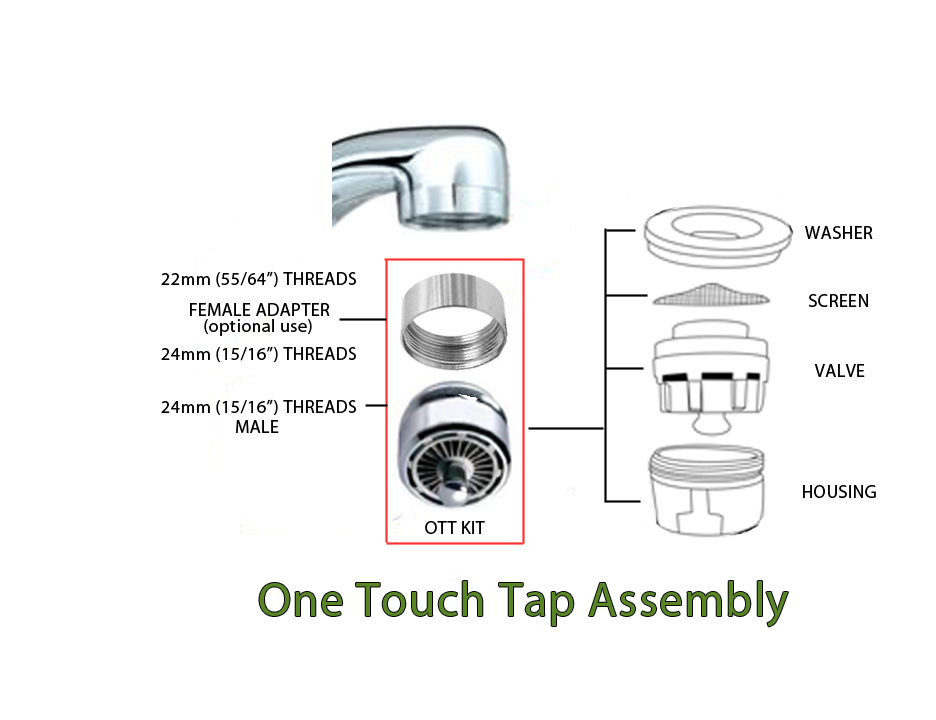
Understanding the parts of an aerator helps you maintain and replace it correctly when needed.
Outer Housing and Threads
The housing is the outer shell, usually made of metal or durable plastic, that screws onto the faucet tip. It comes in standard thread sizes. M22x1 is female and common globally. M24x1 is male. The United States uses 15/16″-27 for male and 55/64″-27 for female. Bathtub spouts often use M28x1. Always check your faucet thread type before buying a replacement, mismatched threads will not seal properly.
Internal Insert and Flow Regulator
The insert, or aerator core, contains the real mechanics. It has air intake channels, a mixing chamber, and a flow restrictor. The restrictor limits how much water can pass, ensuring the aerator meets efficiency standards. Some models use pressure-compensating technology to maintain consistent flow even when water pressure fluctuates.
Rubber Washer for Leak Prevention
A small rubber washer sits between the aerator and faucet. It creates a watertight seal, preventing leaks and protecting the threads. Over time, this washer can wear out or harden, leading to drips. It is worth replacing the washer when you clean or swap out the aerator.
Types of Aerators and Flow Rates
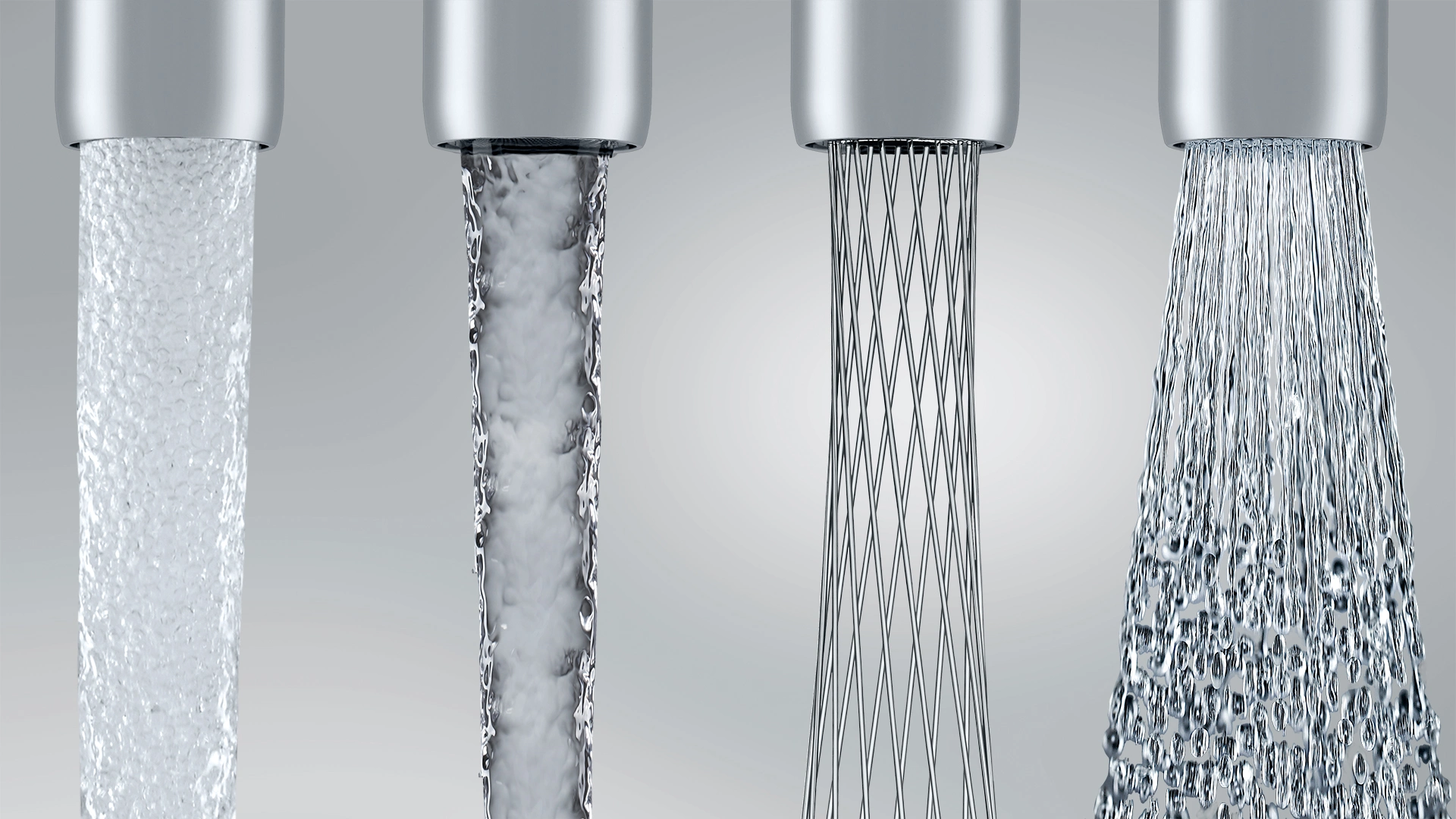
Not all aerators are created equal. Choosing the right type depends on your needs and local regulations.
Standard vs. Low-Flow Models
Aerators are rated by flow rate in gallons per minute. Standard aerators flow at 1.5 gallons per minute. Low-flow models use 1.0 gallons per minute. Ultra-efficient models reach just 0.5 gallons per minute. Many regions like California and Vermont require faucets to use no more than 1.2 gallons per minute, pushing manufacturers to adopt low-flow designs nationwide.
Aerated, Spray, and Laminar Streams
Stream type depends on the application. Aerated streams are mixed with air, soft and bubbly, ideal for bathroom sinks. Non-aerated laminar streams are solid and clear, used in kitchen faucets where air bubbles could slow filling pots. Spray streams offer shower-like dispersion, common in pull-out kitchen sprayers. Some high-end faucets offer dual-function aerators, letting you switch between spray and stream with a button.
Meeting Water Efficiency Standards
Aerators help comply with key plumbing and sustainability standards that protect resources and reduce costs.
U.S. and International Regulations
Faucet aerators help comply with several important standards. ASME A112.18.1 is the U.S. standard for faucet performance, including flow and durability. WELS in Australia and New Zealand requires labeled efficiency ratings on all faucets. EN 246 in Europe sets maximum flow limits and noise control for aerators. Even if not legally required in your area, using efficient aerators is a smart move for long-term savings and environmental impact.
Role in Green Building Certifications
Aerators contribute to LEED certification points under water efficiency categories. In green homes and commercial projects, installing low-flow aerators is a simple, cost-effective way to boost sustainability scores. Many builders include aerators specifically to earn water efficiency credits toward certification.
Common Problems and Fixes
Aerators are simple devices, but they can develop issues over time, especially in areas with hard water.
Clogged by Mineral Buildup
The biggest threat to aerators is hard water. Minerals like calcium and magnesium form lime scale that clogs the mesh and restrictor. Signs of clogging include reduced water flow, uneven or sputtering spray, and visible white crust on the aerator. If your faucet feels weaker than before, the aerator is likely the culprit.
Cleaning With Vinegar
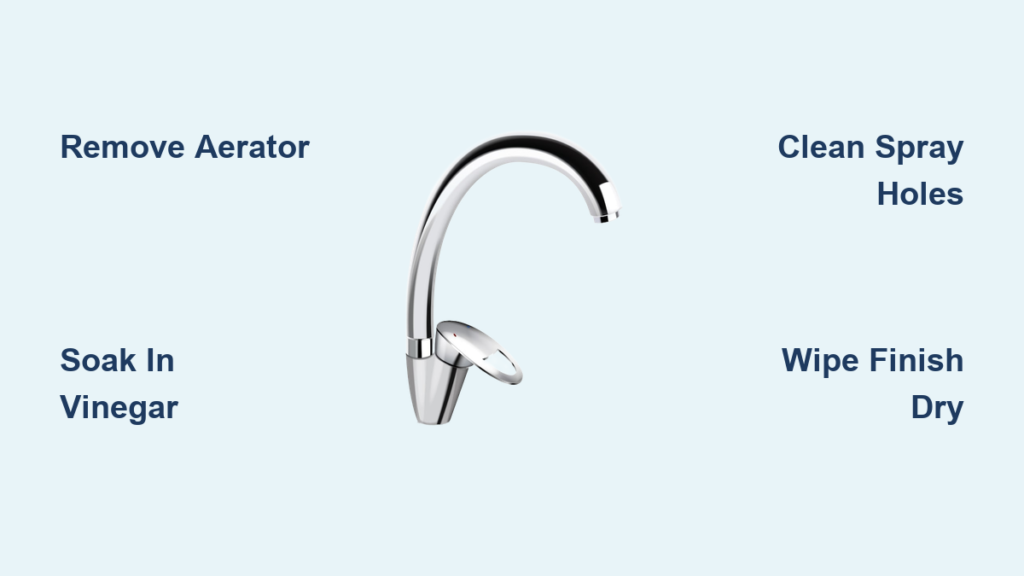
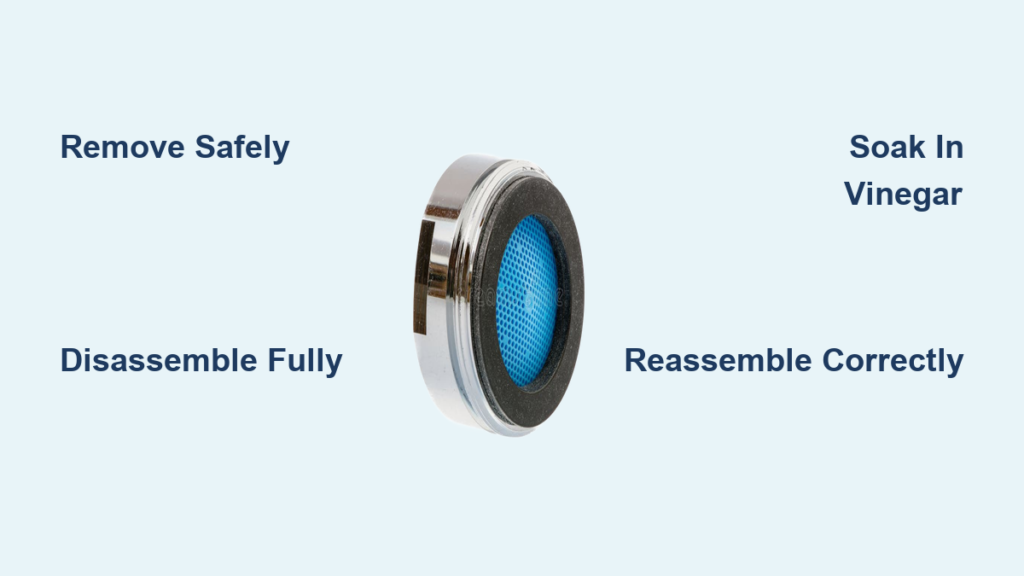
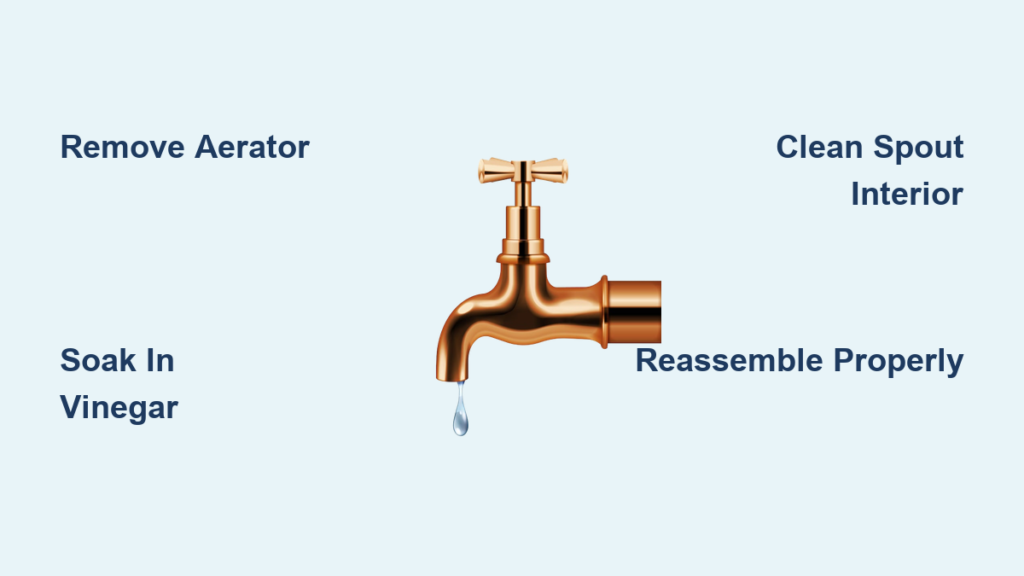
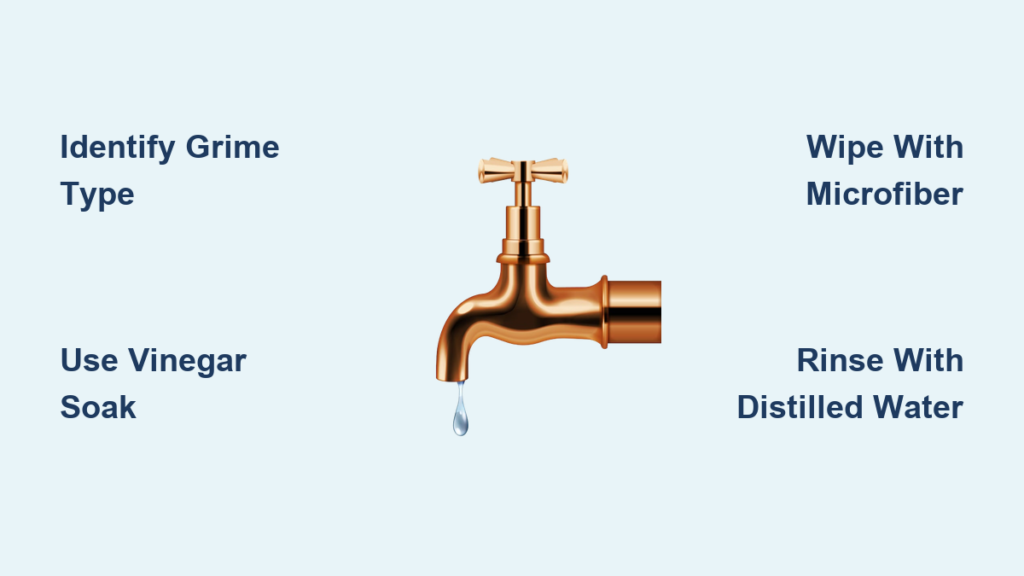
Fix a clogged aerator in minutes with household items. First, unscrew it by hand or with a wrench, wrapping the wrench in cloth to avoid scratches. Second, disassemble if possible by removing the screen, washer, and insert. Third, soak in white vinegar for 30 minutes to dissolve scale. Fourth, rinse thoroughly and reassemble. Finally, screw back on but do not over-tighten. For stubborn deposits, use a soft brush or toothpick to clear holes.
When to Replace Instead
Some aerators cannot be cleaned effectively, especially in pull-out spray heads where the aerator is sealed inside. Brands like Moen and Delta often design these units as non-serviceable. If cleaning does not restore flow, replace the entire spray head, especially if under warranty. Many offer 10-year coverage. Replacement is usually cheaper and faster than disassembly.
Installation and Maintenance Tips
Regular maintenance keeps your aerator working its best and extends its lifespan.
How to Remove and Reinstall
Removing an aerator is simple. Turn off the water if needed. Twist counterclockwise by hand. For tight fits, use an aerator removal tool or wrap pliers in cloth. To reinstall, ensure the washer is in place. Screw on by hand, then give a quarter-turn with pliers if needed. Never overtighten, this can crack the housing or damage faucet threads.
Preventing Future Clogs
Keep your aerator running smoothly with these habits. Clean every 3 to 6 months in hard water areas. Install a water softener if scale is a recurring issue. Use filtered water in high-use kitchens. Choose self-cleaning or anti-scale aerators, some models have silicone nozzles that resist buildup.
Key Takeaways: Why Aerators Matter
A faucet aerator may be small, but it is a powerhouse of efficiency and comfort.
Small Device, Big Impact
By mixing air with water, it delivers a softer, splash-free stream while cutting water use by up to 50%. It also makes low-flow faucets feel stronger, thanks to increased velocity and sensory feedback.
Easy to Maintain, Cheap to Replace
Aerators require minimal maintenance, just periodic cleaning with vinegar. When worn out, replacements cost as little as $2 to $10 and take seconds to install. There is no need to replace the whole faucet.
Essential for Modern Plumbing
From bathrooms to kitchens, aerators are standard in modern fixtures. They help meet regional water laws, green building standards, and daily user expectations for performance. Whether you are saving water, reducing splashes, or cutting energy bills, the aerator is a simple solution with lasting benefits.
Frequently Asked Questions About Faucet Aerators
What does a faucet aerator actually do?
A faucet aerator mixes air with water to create a softer, splash-free stream. It limits flow rate, reduces splashing, and makes low-pressure faucets feel stronger by increasing velocity through Bernoulli’s principle.
How often should I clean my faucet aerator?
Clean your aerator every 3 to 6 months if you have hard water. If flow seems reduced or the spray is uneven, remove and inspect it sooner. Regular cleaning prevents mineral buildup from causing permanent damage.
Can I replace my aerator myself?
Yes, replacing an aerator is one of the easiest DIY plumbing tasks. Simply unscrew the old one by hand, check that the rubber washer is in place, and screw on the new aerator. No special tools are required for most standard faucets.
Why does my aerator sometimes sputter?
Sputtering usually indicates air bubbles are not mixing properly or the aerator is partially clogged. Remove it and soak in vinegar to dissolve mineral deposits. If the problem persists, the aerator may be damaged and needs replacement.
Are all aerators the same size?
No, aerators come in several thread sizes. Common sizes include M22x1 and M24x1 for international use, and 15/16″-27 or 55/64″-27 for United States faucets. Always check your faucet specifications before purchasing a replacement.
Does an aerator really save that much water?
Yes. A standard faucet without an aerator can flow at 2.2 gallons per minute or more. A 1.0 gallons per minute aerator can save over 3,000 gallons per year in a typical household. This also reduces hot water energy costs significantly.
Final Thoughts on How a Faucet Aerator Works
The faucet aerator is a quiet hero of modern plumbing, small, affordable, and incredibly effective. Understanding how does a faucet aerator work empowers you to maintain it, upgrade it, and maximize its benefits. With proper care, it can improve your water experience for years, one drop at a time. The key is regular cleaning in hard water areas and knowing when to replace rather than repair. A few minutes of maintenance saves money on water bills, extends the life of your faucet, and contributes to environmental sustainability.