
A loose faucet handle is more than just an annoyance. It can lead to leaks, water waste, and costly damage if left untreated. Whether your kitchen or bathroom faucet wobbles when you turn it, or the entire fixture shifts under pressure, the solution is often simpler than you think. Most cases of a loose faucet handle can be fixed in under 30 minutes with basic tools and no plumbing experience. This guide walks you through how to tighten faucet handle properly without causing damage to your fixtures.
Identify Whether the Handle or Base is Loose
Before grabbing tools, determine what is actually moving. The fix depends entirely on whether the problem is with the handle itself or the faucet base.
Handle Wobble vs. Base Movement
• Loose Handle: Only the lever or knob moves side-to-side. The faucet body remains stable.
• Loose Base: The entire faucet rocks or vibrates at the sink deck when touched.
Quick Test: Grip the handle and wiggle it. If only the lever shifts, it is a handle issue. If the spout or base moves, the mounting hardware is loose. Mixing up these two issues leads to unnecessary disassembly, so always diagnose first.
Gather Required Tools for the Job
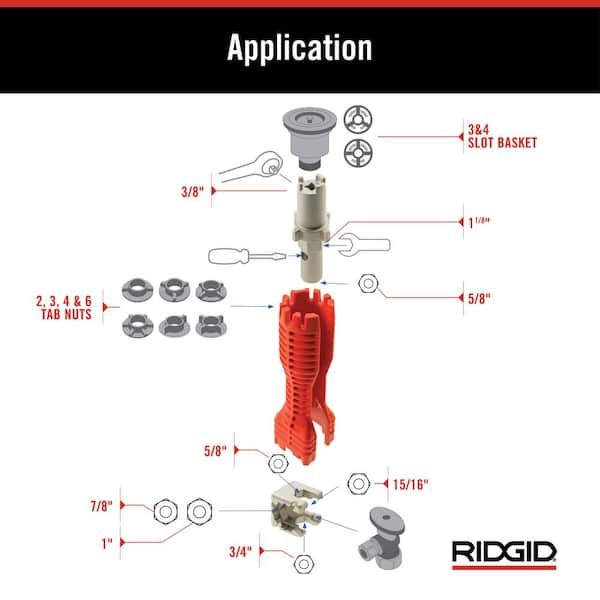
Using the correct tools prevents damage and makes the job faster.
Tools You Will Need
• Allen (Hex) Keys: 2 mm, 2.5 mm, 3 mm, or 5/64″ (common for Moen)
• Screwdrivers: Phillips and flat-head (magnetic tip preferred)
• Basin Wrench: For mounting nuts under the sink
• Adjustable Wrench or Deep Socket: Alternative to basin wrench
• Penetrating Oil: For stuck or corroded nuts
• Headlamp or Flashlight: Hands-free lighting
• Small Mirror: To see obscured nuts
• Gloves and Knee Pads: For comfort and protection
Pro Tip: Wrap screwdriver tips with tape to avoid scratching chrome or brushed nickel finishes.
Turn Off Water Supply Before Starting
Even if you are only tightening a screw, always shut off the water supply to prevent flooding.
Steps to Turn Off Water Safely
- Locate angle-stop valves under the sink.
- Turn both hot and cold valves clockwise until tight.
- Open the faucet to drain residual water and relieve pressure.
- If no shutoff valves exist, turn off the main water supply.
Why This Matters: A sudden burst of water during repair can cause flooding or damage cabinetry.
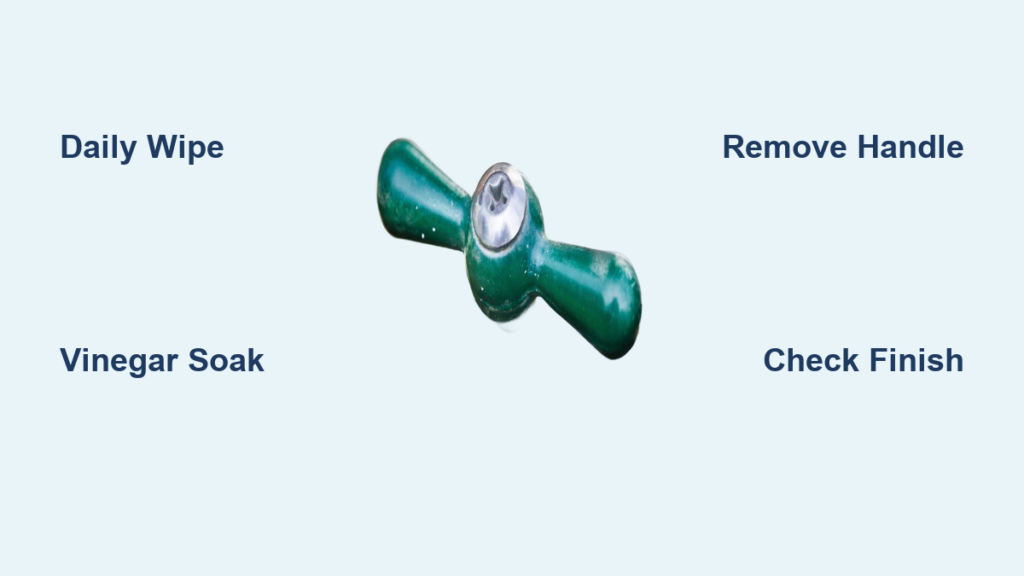
Remove the Decorative Handle Cap
Most set screws are hidden under a decorative cap that must be removed first.
How to Remove the Cap Without Damage
• Use your fingernail or a plastic pry tool.
• If using a flat-head screwdriver, wrap the tip with tape to protect the finish.
• Look for color-coded caps: red for hot, blue for cold, or “H”/”C” markings.
Brand Note: Moen lever handles often have caps on the back. Maoren models may have caps at the base. Once removed, you will see either a set screw or a handle screw.
Tighten the Set Screw or Handle Screw

This is the core fix for a wobbly handle.
Locate and Tighten the Fastener
• Set Screw (Hex): Common in Moen, Delta. Use the correct Allen key.
• Phillips/Flat-Head Screw: Found in older or budget models like Maoren.
Insert the tool and turn clockwise until snug. Do not overtighten, especially on plastic stems, because stripping occurs easily.
Fix Recurring Looseness
If the screw keeps coming loose, follow these steps:
- Remove the screw completely.
- Apply non-permanent thread sealant (e.g., Loctite 222).
- Reinsert and tighten.
Critical Warning: Never use permanent thread locker on plastic components because it prevents future repairs.
Fix a Loose Faucet Base Under the Sink
When the entire faucet rocks, the mounting nut under the sink is likely loose.
Access and Tighten the Mounting Nut
• Clear cabinet space under the sink.
• Use a headlamp and small mirror to locate the nut.
• Types include metal hex nut, plastic winged nut, or clamp bracket with side screws.
• Use a basin wrench for tight spaces.
• Turn clockwise in small increments while supporting the faucet from above.
For Plastic Winged Nuts: Hand-tighten first. Use pliers gently if needed, but never crush the wings.
Replace Degraded Gaskets
A missing or cracked gasket prevents the base from sitting flush.
How to Replace the Gasket
- Remove the mounting nut.
- Lift the faucet slightly.
- Inspect the rubber or fiber gasket around the shank.
- Replace with an identical ring-shaped seal.
- Clean the area with vinegar and a soft brush to remove limescale.
Avoid Common Mistakes During Repair
Even simple jobs go wrong without proper care.
Top Errors and How to Prevent Them
• Stripped Set Screw: Caused by over-tightening. Stop at snug.
• Damaged Finish: From metal tools on caps. Use tape or plastic tools.
• Misaligned Handle: Fails to reach stop points. Align with stem flat before tightening.
• Restricted Movement: From oversized sockets. Use hand tools or basin wrench.
• Leaks After Repair: From disturbing valve internals. Only disassemble if leaking.
Test Your Repair and Check for Stability
Always validate your work after completing the repair.
Operational Test
• Turn faucet on and off through full range.
• Check for smooth movement, correct stop points, no free-spinning, and no grinding or sticking.
Stability Check
• Gently wiggle the handle.
• No detectable play should occur.
• If wobble remains, recheck set screw, mounting nut, and internal alignment.
Prevent Future Looseness
A one-time fix is not enough in high-use or vibration-prone environments.
Maintenance Tips Every 6 Months
• Inspect handle tightness.
• Clean mineral buildup around the base.
• Check for early leaks or gasket wear.
Anti-Loosening Methods
• Apply non-permanent thread sealant on set screws.
• Install vibration-resistant washers (especially in RVs).
• Avoid chemical lockers on plastic. Use mechanical fixes instead.
When to Replace the Faucet Instead
Tightening will not fix structural damage.
Replace If You See
• Stripped mounting threads
• Cracked faucet base or sink hole
• Persistent leaks after gasket replacement
• Severe corrosion
• Non-replaceable stripped cartridge
• Warped or oversized sink deck
Cost Insight: New faucets start around $100, which is often cheaper than repeated repairs and water damage.
Frequently Asked Questions About Tightening Faucet Handles
Why does my faucet handle keep getting loose?
The most common cause is a loose set screw that has not been properly secured. If the screw keeps loosening after tightening, the threads may be worn. Apply non-permanent thread sealant, or inspect for stripped splines on the cartridge stem.
Can I tighten a faucet handle without turning off the water?
While it is technically possible to tighten a handle without shutting off water, it is not recommended. Unexpected movement or a tool slip could cause water to spray unexpectedly. Always turn off the water supply first.
What size Allen key do I need for a Moen faucet?
Most Moen faucets use a 5/64″ Allen key for the set screw. Some older models may require a 3/32″ or 1/8″ key. Check the decorative cap or consult your model number before purchasing tools.
Why does my entire faucet wobble when I touch it?
If the entire fixture moves, the problem is not the handle but the mounting nut under the sink. The nut securing the faucet to the sink deck has likely loosened. Access it from below and tighten with a basin wrench.
How do I fix a stripped set screw?
If the hex hole is stripped, try a screw extractor kit. Alternatively, apply thread sealant and use a slightly larger Allen key if the threads still hold. If the handle is damaged, consider replacing the handle or the entire faucet.
Should I use thread locker to prevent my faucet handle from loosening?
Only use non-permanent thread sealant like Loctite 222. Permanent thread lockers make future repairs extremely difficult and can damage plastic components. For plastic stems, avoid chemical lockers entirely.
Key Takeaways for Tightening Faucet Handles
Successfully tightening a faucet handle requires diagnosing whether the problem is the handle itself or the mounting base. For handle wobble, remove the decorative cap and tighten the set screw. For base movement, access the mounting nut under the sink and tighten it in small increments. Always shut off water first, avoid overtightening to prevent stripped threads, and apply non-permanent thread sealant for recurring issues. Most repairs take under 30 minutes and save $100 or more in plumber visits. With the right tools and this step-by-step approach, you can restore smooth, stable operation to your faucet and prevent future problems.