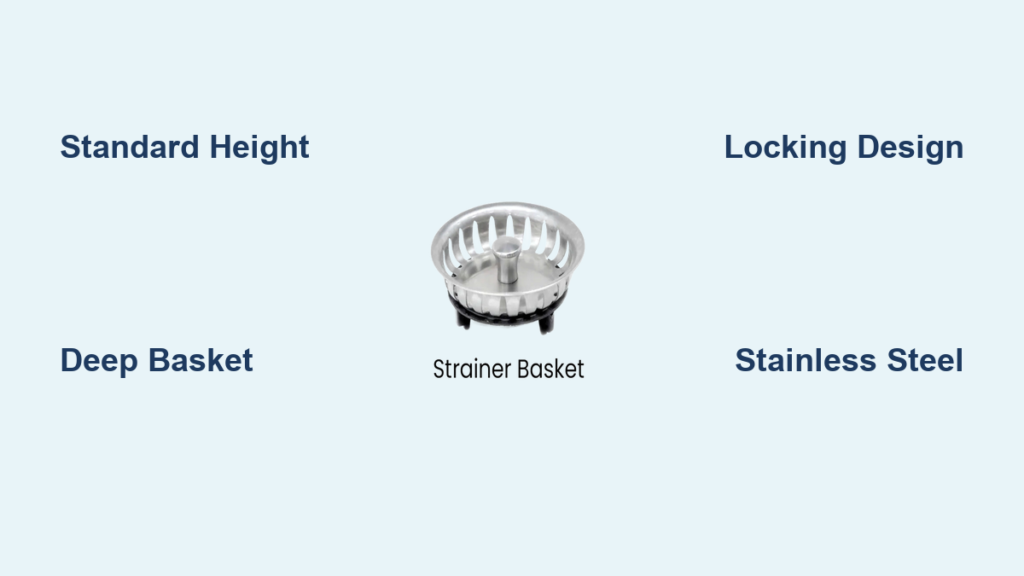
A clogged kitchen sink during dinner prep can stop your entire routine in its tracks. The most common culprit? A worn-out or wrong-sized kitchen sink strainer basket. These small fixtures sit inside your drain opening, catching food particles and debris while letting water flow through. With many kitchen sink strainer basket types on the market, picking the right one affects how well your sink drains, how often you deal with clogs, and how long your plumbing lasts. This guide explains every major type, their features, and how to match one to your specific sink setup.
Standard Basket Strainer Types

Your sink configuration, material preference, and usage habits determine which strainer body style works best. Three primary designs cover most residential and commercial needs.
Standard Height Strainers
Standard height strainers are the most widely used option in typical kitchen sinks. Their moderate depth holds a reasonable amount of debris without extending too far into the cabinet below.
- Ideal for undermount and top-mount sinks
- Fits the industry-standard 3-1/2 inch drain opening
- Compatible with stainless steel and porcelain sinks
- Often includes a threaded tailpiece for trap connection
These work best in everyday kitchens where reliable drainage matters more than maximum waste capacity.
Deep Basket Strainers
Deep basket strainers offer extended vertical space for collecting food waste. They suit busy households or commercial environments that generate large volumes of scraps.
- Holds significantly more solids before emptying
- Recommended for large families or commercial prep areas
- Requires extra cabinet clearance due to the longer body
- Fits standard 3-1/2 inch openings
Measure your under-sink space before buying. Tight cabinet layouts may not accommodate the added length.
Flat Top Strainers
Flat top strainers sit nearly flush with the sink surface, creating a clean, low-profile look. They are common in bar sinks, prep stations, and utility basins.
- Minimalist design that blends with the sink surface
- Works well in shallow basins
- Holds less debris than standard or deep models
- Frequently used in bar and utility sinks
Expect to empty these more often when handling heavy food waste.
Locking vs Non-Locking Basket Designs
Another key distinction among strainer baskets is how they stay in place. The choice affects security, ease of removal, and how likely the basket is to come loose accidentally.
Locking Basket Strainers
Locking baskets twist into the strainer body and hold firmly until you release them with a quarter turn.
- Prevents easy removal, ideal for shared or public spaces
- Reduces the chance of losing the basket during cleaning
- Simple twist-lock installation and removal
- Common in commercial kitchens and rental properties
These are especially useful in places where parts might be tampered with or accidentally dropped down the drain.
Non-Locking Basket Strainers
Non-locking baskets drop into the strainer body and lift out by hand without any twisting motion.
- Quick access for daily rinsing and cleaning
- Fewer parts, simpler construction
- Can pop out if bumped or jostled
- Most common in residential kitchens
Homeowners who clean the basket frequently usually prefer this hassle-free design.
Strainer Baskets With Rubber Stoppers
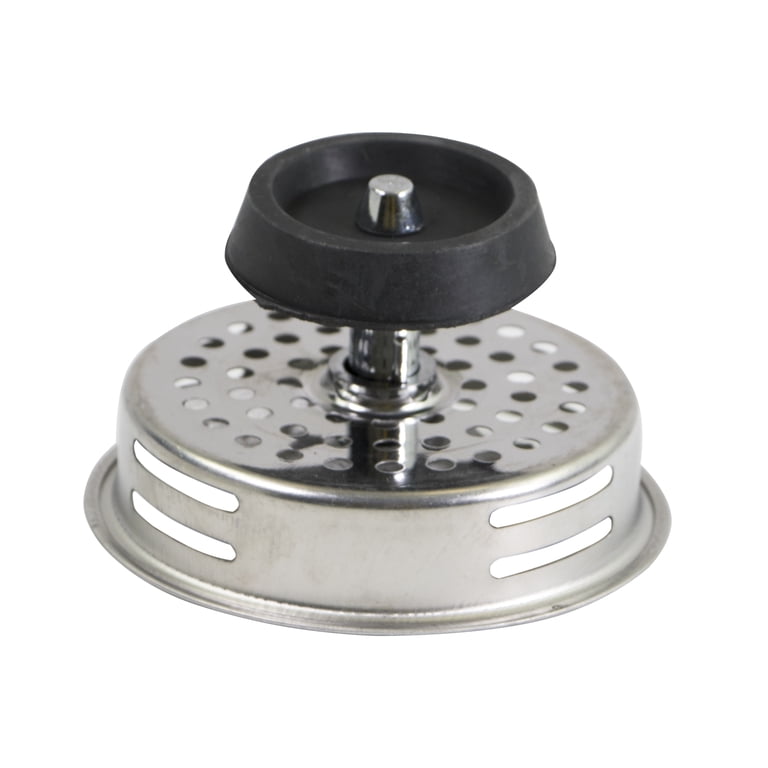
Some strainer baskets include a built-in rubber stopper, combining drainage control with waste filtration in a single unit.
How They Work
The rubber stopper seals the drain to hold water in the sink for soaking dishes or washing produce. You can then lift or push it open to drain.
- Combines strainer and stopper in one piece
- Operates with a manual lift-and-turn or push-button motion
- Available in both locking and non-locking styles
These fit well in sinks with a single control lever or pop-up drain mechanism.
Pros and Limitations
Advantages:
– Removes the need for a separate stopper
– Keeps the sink area looking clean and uncluttered
– Operates easily with one hand
Drawbacks:
– Rubber can degrade and may need replacement over time
– Seal is generally less tight than a dedicated stopper
– Not ideal for all sink depths, especially deep draw models
Check the rubber gasket periodically for cracks or warping, especially in older units.
Strainer Grids and Inserts

Beyond full baskets, some sinks use grids or perforated inserts for light-duty filtration. These offer a simpler alternative when full waste collection is not needed.
Metal Strainer Grids
Metal grids are flat, circular discs that rest on the sink ledge and cover the drain opening.
- Common in bar sinks, prep sinks, and laundry tubs
- Allows water to pass while blocking larger debris
- Lifts out easily for quick cleaning
- Usually made from chrome-plated brass or stainless steel
Grids do not form a watertight seal, so they only filter debris. They cannot hold water in the sink.
Perforated Basket Inserts
Perforated inserts fit inside an existing strainer body and add a second layer of filtration.
- Catches fine particles that slip past larger openings
- Often paired with garbage disposals
- Easy to rinse and typically dishwasher safe
These work well for homeowners who want extra clog protection without replacing the full strainer assembly.
Material and Durability: Why Stainless Steel Leads

Most kitchen sink strainer basket types are made from stainless steel because it offers excellent corrosion resistance, strength, and long service life.
Benefits of Stainless Steel
- Resists rust and staining from food acids and cleaners
- Handles high temperatures and physical impact
- Keeps its finish and structural integrity over time
- Fully recyclable and environmentally friendly
Stainless steel is especially useful in hard water areas or homes that use strong cleaning products.
Finish Options
While brushed and polished stainless are the most common, coated finishes are also available for design matching.
- Brushed nickel pairs well with modern fixtures
- Oil-rubbed bronze suits rustic kitchen designs
- Chrome-plated offers a budget-friendly alternative with less durability
Coated finishes can wear away over time and expose the base metal. For maximum lifespan, choose pure stainless steel.
Compatibility and Installation Tips
Picking the right strainer basket also means making sure it fits your sink and plumbing layout.
Sink Hole Size
Nearly all kitchen sink strainers fit a 3-1/2 inch drain opening, which is the standard for most residential sinks.
- Measure your existing hole before buying a replacement
- Some older sinks have 3-3/8 inch or 4 inch openings
- Adapters are rarely available, so correct sizing is essential
Bring your old basket to the store for a direct comparison when possible.
Garbage Disposal Compatibility
If your sink connects to a garbage disposal, confirm the strainer basket works with disposal fittings.
- Standard strainers often do not fit disposal flanges
- Use a disposal-specific basket or a disposal flange kit
- Deep baskets may conflict with disposal mounting hardware
Many disposals include their own drain kit, so avoid stacking incompatible parts.
Mounting Style Considerations
- Top-mount sinks: Use standard or flat top strainers with a visible rim
- Undermount sinks: Need strainers with secure locking nuts underneath
- Farmhouse sinks: Often require extended tailpieces for cabinet access
Always review the manufacturer’s specifications before installation.
Maintenance and Cleaning Best Practices
Even the best strainer basket will fail early without regular care. Simple maintenance keeps drains clear and prevents unpleasant odors.
Daily and Weekly Routines
- Remove and rinse the basket every 1 to 2 days
- Clean with warm, soapy water and a soft brush
- Skip abrasive pads that scratch stainless steel
For a deeper clean:
1. Soak the basket in a vinegar and baking soda solution for 15 minutes
2. Scrub with a bottle brush to remove buildup
3. Reinstall only after the basket is fully dry
Preventing Clogs
- Scrape large food scraps into compost or trash before rinsing
- Avoid pouring grease or starchy liquids down the drain
- Flush the drain monthly with hot water and an enzymatic cleaner
A clean basket reduces pressure on your entire plumbing system.
Important Notice: Non-Potable Water Use Only
Lead Compliance Alert:
This product does not meet the low-lead criteria defined in the Safe Drinking Water Act. It is not approved for potable water applications, including drinking, cooking, or any human consumption use.
Approved for non-potable uses only, such as:
– Filtering wastewater during dishwashing
– Preventing clogs in utility or service sinks
– Commercial pre-rinse stations where water is not consumed
Always verify local plumbing codes before installation. Using this product in violation of potable water regulations may pose health risks and create legal liability.
How to Choose the Right Strainer Basket
Matching the right kitchen sink strainer basket type to your needs comes down to function, durability, and ease of use.
For Home Kitchens
- Best pick: Standard height, non-locking basket in stainless steel
- Add a rubber stopper if you regularly fill the sink
- Focus on easy cleaning and a clean appearance
For Commercial Kitchens
- Best pick: Deep basket with a locking mechanism
- Choose heavy-duty stainless steel for daily wear
- Add strainer grids for backup filtration
For Bar or Prep Sinks
- Best pick: Flat top or strainer grid
- Prioritize a low profile and quick access
- Match the finish to your faucet and sink
For Laundry or Utility Sinks
- Best pick: Standard or deep basket without a stopper
- Add a strainer insert to catch lint and debris
- Choose corrosion-resistant materials for long-term use
Frequently Asked Questions About Kitchen Sink Strainer Basket Types
What size basket strainer do I need for a standard kitchen sink?
Most kitchen sinks use a 3-1/2 inch drain opening, which is the industry standard. Measure your existing hole before buying to confirm compatibility, since some older sinks may have different sizes.
Can I use a basket strainer with a garbage disposal?
Yes, but you need a strainer basket rated for disposal use. Standard residential strainers often do not fit disposal flanges, so check for a disposal-specific model or flange kit.
What is the difference between a locking and non-locking basket strainer?
Locking baskets twist into place and resist accidental removal, making them ideal for commercial or shared spaces. Non-locking baskets lift out freely, which is more convenient for residential kitchens with frequent cleaning.
Are stainless steel basket strainers better than other materials?
Stainless steel offers the best combination of corrosion resistance, strength, and longevity. Coated or chrome-plated options cost less but tend to wear down faster, especially in hard water conditions.
How often should I clean my kitchen sink strainer basket?
Rinse the basket every 1 to 2 days during regular use. For a deeper clean, soak it in a vinegar and baking soda solution weekly to remove buildup and odors.
Can I install a basket strainer myself?
Most strainer baskets install with basic tools and a threaded tailpiece connection. Always follow the manufacturer’s instructions and verify local plumbing codes, especially regarding non-potable use requirements.
Key Takeaways for Choosing Kitchen Sink Strainer Basket Types
The right kitchen sink strainer basket type comes down to matching your sink size, usage volume, and cleaning preferences. Standard height baskets cover most home kitchens, while deep models handle heavy waste in busy or commercial settings. Flat top strainers suit bar and prep sinks where a low profile matters, and locking designs add security in shared spaces. Stainless steel remains the most durable and corrosion-resistant material for long-term performance. Remember that these strainers are approved for non-potable water use only, so verify local codes before installation. Start by measuring your drain opening, then select a basket that fits your sink style and daily routine.