Choosing the right kitchen sink is about far more than appearance. Your kitchen sink design directly impacts daily workflow, cleaning routines, durability, and even your countertop’s lifespan. With dozens of styles, configurations, and materials available, the wrong choice can lead to water damage, wasted cabinet space, or constant frustration. This guide breaks down every major decision point, from undermount versus drop-in styles to stainless steel versus composite materials, so you can plan with confidence.
You will learn how to match your sink to your countertop, pick the right bowl configuration, choose a material that fits your lifestyle, and avoid the most common installation mistakes. By the end, you will have a clear framework for selecting a sink that balances form, function, and long-term value.
Match Your Sink to Your Countertop Material

Your countertop determines which sink installations are even possible. Picking an incompatible combination risks warping, leaks, or costly repairs.
Undermount Sinks: Best for Solid Surfaces Only
Undermount sinks mount beneath the countertop, hiding the rim and creating a seamless transition from counter to basin. This makes cleanup effortless, since crumbs wipe directly into the sink.
- Compatible with: Quartz, granite, Corian, solid wood, and other solid surfaces
- Not compatible with: Laminate or chipboard, since water exposure causes swelling and delamination
- Installation: Requires professional mounting and sealing
- Visual cue: No visible rim, only a clean edge where counter meets sink
Inset (Drop-In) Sinks: The Universal Option
Drop-in sinks rest on top of a cutout, with a visible lip that supports the weight and seals against the counter. They are the most flexible and budget-friendly style available.
- Works with: Laminate, plywood, solid surfaces, wood, and tile
- Pros: DIY-friendly installation, easy replacement, low cost
- Cons: The rim can trap food debris and require extra cleaning
- Best for: Renters, budget renovations, and quick upgrades
Flush-Mounted Sinks: Premium Precision
Flush-mounted sinks sit perfectly level with the countertop, offering a high-end, integrated appearance with virtually no gap.
- Requires: Precise routing of solid surface countertops
- Pros: Seamless look, easy wipe-down, modern aesthetic
- Cons: Higher fabrication cost, limited to custom builds
- Ideal for: Luxury kitchens prioritizing design cohesion
Belfast and Farmhouse Sinks: Classic and Heavy
Belfast and farmhouse sinks feature a front-facing apron that extends past the cabinet face, creating an iconic, traditional look.
- Pros: Iconic appearance, excellent for large cookware
- Cons: Very heavy, requires reinforced cabinetry
- Best for: Country, shaker, or modern farmhouse kitchens
Select the Right Sink Configuration
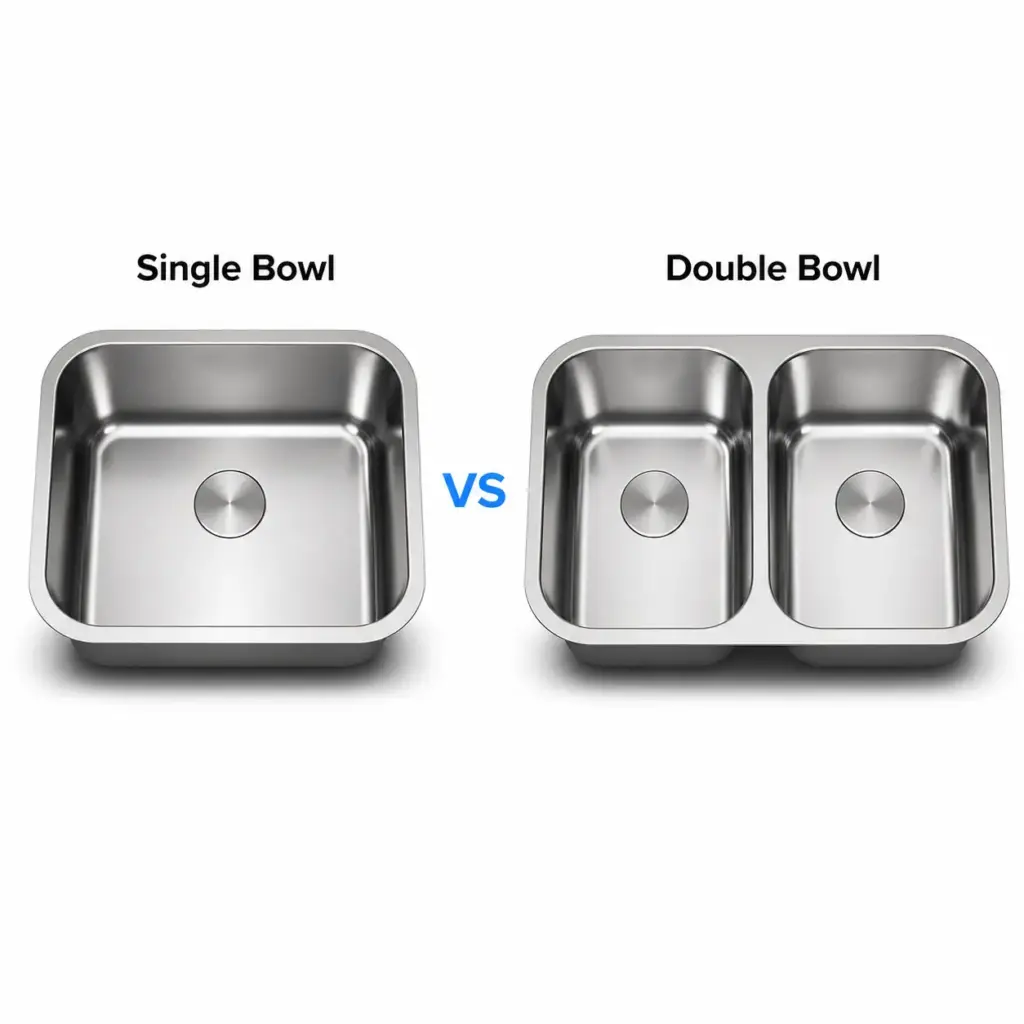
The number and size of bowls affect how efficiently you cook, clean, and multitask. Choose based on your household size and cooking habits.
Single Bowl Sinks
A single, deep bowl handles oversized pots, baking sheets, and roasting trays without the balancing act of splitting space.
- Cabinet requirement: Minimum 60 cm width
- Best for: Serious cooks and small households
One-and-a-Half Bowl Sinks
This layout combines a full-sized main bowl with a smaller secondary bowl for rinsing, defrosting, or waste disposal.
- Tradeoff: The main bowl is slightly smaller to accommodate the half bowl
- Cabinet requirement: 70 cm or wider
- Best for: Medium kitchens needing versatility
Double Bowl Sinks
Two equal-sized bowls side by side let one person wash while another rinses, making them ideal for busy families.
- Cabinet requirement: 70 to 80 cm minimum
- Best for: Families, frequent entertainers, two-cook households
Prep Sinks
A small secondary sink installed on an island or prep zone reduces trips to the main sink during meal prep.
- Best for: Large kitchens with working islands
- Requirement: Adequate plumbing access
Workstation Sinks
Workstation sinks include integrated ledges for sliding accessories like cutting boards, colanders, and drying racks.
- Best for: Home chefs who want a full prep station in one footprint
- Tradeoff: Higher cost and larger footprint
Champagne Troughs
A long, narrow basin designed to be filled with ice for chilling drinks at parties.
- Status: Luxury feature, not a functional necessity
- Best for: Entertainment-focused kitchens
Choose the Best Sink Material

Your sink material affects durability, noise, maintenance, and overall appearance. Pick based on lifestyle, not just looks.
Stainless Steel: The Reliable Standard
Stainless steel remains the most popular kitchen sink material thanks to its balance of durability, affordability, and versatility.
- Ideal gauge: 18-gauge (1.2 mm) offers the best thickness for residential use
- Pros: Heat-resistant, hygienic, affordable, works with any style
- Cons: Can scratch, and thinner gauges may sound tinny
- Maintenance: Wipe with soapy water; avoid abrasive pads
Ceramic Sinks: Timeless but Fragile
Ceramic sinks deliver a handcrafted, vintage look that suits farmhouse and traditional kitchens.
- Pros: Heat-resistant, stain-resistant, ages beautifully
- Cons: Chips if struck by heavy pots, very heavy, can damage delicate glassware
- Best for: Decorative kitchens where aesthetic outweighs heavy use
Composite Sinks: Modern and Durable
Composite sinks are made from crushed stone (granite or quartz) bound with resin, offering strength and a premium matte finish.
- Pros: Scratch-resistant, heat-resistant, stain-resistant, available in multiple colors
- Cons: Heavier than steel, darker shades may show water spots
- Best for: Modern kitchens seeking a low-maintenance, high-end look
Solid Surface Sinks
Solid surface sinks (often Corian) integrate seamlessly with matching countertops for a clean, custom appearance.
- Pros: Non-porous, hygienic, repairable if scratched
- Cons: Requires specific cleaners, can scratch if abused
- Best for: Integrated, custom kitchen designs
Plan for Drainage and Workflow
A well-designed sink should support your cooking routine, not slow it down.
Add Drainer Areas When Needed
Undermount and Belfast sinks lack built-in drainers. You can add functionality by routing drainer grooves or a recessed drainer area into the countertop.
- Benefit: Prevents water pooling and speeds drying
- Cost: Adds fabrication time and expense
Match Configuration to Cooking Style
- Single bowl: Best for large cookware and minimalists
- Double bowl: Supports multitasking and two-person kitchens
- Prep sink: Improves island efficiency
- Workstation sink: Turns the sink into a full prep zone
Avoid Costly Installation Mistakes
Even the best sink fails if installed poorly. Plan ahead to prevent structural issues and budget overruns.
Reinforce Cabinets for Heavy Sinks
Belfast, ceramic, and composite sinks can weigh significantly more than stainless steel. Without reinforcement, cabinets can sag or fail over time.
- Solution: Use reinforced base cabinets or add cross-bracing
- When to consult a builder: Before purchasing a heavy sink
Verify Cabinet Dimensions First
A sink must always be smaller than the cabinet interior. Measure width, depth, and cutout dimensions before ordering.
- Common mistake: Assuming a 60 cm cabinet fits a 60 cm sink without clearance
Budget for Modifications
Adding drainers, routing countertops, or moving plumbing all add to the final cost. Include these in your initial budget to avoid surprises.
Frequently Asked Questions About Kitchen Sink Design
What is the most durable material for a kitchen sink?
Stainless steel (18-gauge or thicker) and composite granite offer the best long-term durability for most kitchens. Composite resists scratches and stains, while stainless steel balances strength, weight, and cost.
Can you install an undermount sink with a laminate countertop?
No. Undermount sinks require solid surface countertops like quartz, granite, or Corian. With laminate, water seeps into the exposed edge and causes warping and delamination.
What is the best sink configuration for a small kitchen?
A single bowl sink is usually the best fit for small kitchens. It maximizes basin space within a narrow cabinet and accommodates oversized cookware more easily than split configurations.
Are workstation sinks worth the extra cost?
Workstation sinks are worth it if you cook frequently and want to reduce countertop clutter. The integrated accessories speed up prep, but you need cabinet space to store the accessories when not in use.
How heavy is a farmhouse or Belfast sink?
Belfast and farmhouse sinks typically weigh between 25 and 50 kg depending on material and size. They require reinforced cabinetry and professional installation.
What gauge of stainless steel is best?
An 18-gauge stainless steel sink (1.2 mm thick) is ideal for most homes. Lower numbers mean thicker steel, which is quieter and more resistant to denting.
Key Takeaways for Choosing the Right Kitchen Sink Design
The best kitchen sink design balances compatibility, workflow, and durability. Match your sink style to your countertop material first, then choose a configuration that supports your daily cooking routine. Stainless steel offers the best overall value, while composite and farmhouse styles cater to specific aesthetic and functional goals.
Before purchasing, confirm your cabinet dimensions, verify structural support for heavy sinks, and budget for installation or modifications. Taking time to plan ensures your new sink delivers years of reliable performance and elevates your entire kitchen workflow.